
REVIEW · OMO VALLEY CULTURAL TOURS
Omo Valley Tribes 6 Days Tours
Omo Valley is a living classroom. This 6-day Ethiopia trip links Addis Ababa landmarks with UNESCO sites and remote tribal communities across the Omo Valley, where hundreds of thousands of people speak 47 languages. I love the mix of big Ethiopian sights and small human details, and I especially like that you get English-speaking support as you travel. One thing to consider: some hotel service can feel inconsistent, so keep expectations grounded.
I also like how the days are built around real places, not just quick photo stops. You will ride a boat on Lake Chamo, visit Dorze beehive-shaped homes, see Konso terraces, and spend time in Lower Omo Valley communities like Bana, Hamer, Dassanech, Mursi, and Ari. The drawback is simply the style of travel, long drives and lots of moving, so you will want a calm mindset on road days.
If you want a thoughtful route that balances culture, geography, and history, this is a strong pick. You just need to go in knowing it is not a luxury, slow-paced vacation.
In This Review
- Key highlights I’d plan around
- Entering the Omo Valley story, not just the scenery
- Addis Ababa first day: Lucy, Holy Trinity, Ethnographic Museum, Mercato
- Road to Tiya and Arba Minch: UNESCO stelae and the long south drive
- Lake Chamo, crocodiles, and Dorze villages: beehive homes and birdshippo spotting
- Konso terraces, coffee roots, and the road to Turmi
- Omorate by Lake Turkana and Jinka: Dassanech delta life, then Mursi and Ari
- Price and value: what $1,400 actually buys you
- Who this tour suits best, and who should skip it
- Should you book Omo Valley Tribes 6 Days Tours?
- FAQ
- How long is the Omo Valley Tribes tour?
- Where does the tour take place?
- How much does the tour cost?
- What is included in the price?
- What is not included?
- What languages are used during the tour?
- What sites and activities are included on the route?
- Do I need cash?
- Do I need a passport?
- Is the tour suitable for everyone?
- How is booking handled?
Key highlights I’d plan around
- English-speaking driver and local guides to help you understand what you are seeing
- Lucy fossil at the National Museum plus other Addis Ababa history in a tight first day
- Lake Chamo boat trip with the crocodile market area where you can also spot hippos and birds
- Dorze and Konso UNESCO sites, including Dorze beehive huts and Konso terracing
- Lower Omo Valley tribe visits across Turmi, Jinka, and the wider Mago area
- Careful value for the route, since entrances and scout fees plus key transport are included
More Omo Valley itineraries, reviewed
- 5 Day Private tour to the Omo Valley Tribes and Adventure Tour★ 5.0 · 11 reviews
- Omo Valley Tribes 6 Days Tours★ 4.9 · 10 reviews
- 6 Days Omo valley Tribal Tour (Starts Arba Minch End Jinka)★ 5.0 · 7 reviews
Entering the Omo Valley story, not just the scenery
The Omo Valley is often described like it is one “place,” but on the ground it feels like a patchwork of communities with their own languages and daily rhythms. This tour leans into that reality, moving from Ethiopia’s main hub, Addis Ababa, down into South Ethiopia where cultures have long shaped their homes and livelihoods in the Lower Omo Valley.
What I liked most is the sequencing. You start with Ethiopian history and museum time, so later tribal visits land with context instead of feeling disconnected. Then the route shifts into the geography of the south, where lakes, mountains, and terrace farming help explain how people live.
Keep expectations balanced though. Tribal communities here are not an amusement park, and the best moments usually come from quiet attention and respectful curiosity, not speed. If you go in trying to “collect” photos, you will probably feel rushed. If you slow your pace mentally, you will likely feel the human scale.
Addis Ababa first day: Lucy, Holy Trinity, Ethnographic Museum, Mercato
Day 1 starts with arrival in Addis Ababa and then a full sightseeing loop that sets a historical backbone for the rest of the trip. You will be met on arrival and transferred to your hotel, then you will head out right away.
At the National Museum, you get the chance to see Lucy, the famous oldest hominid fossil. This is a major stop for a reason: it anchors Ethiopia’s human history in a single place, so your later South Ethiopia cultural visits feel like part of a longer timeline, not a separate chapter.
You will also visit the Holy Trinity Cathedral, built during World War II. From there, the Ethnographic Museum adds another layer because it used to be the palace of Emperor Haile Selassie. That building matters, because it is not just a room full of objects, it is a former seat of power.
To wrap the day, you drive to Mercato, described as the biggest market in East Africa. This is a practical ending point after museum-heavy time. Markets are where you can see everyday movement, trade, and variety in one place.
Hotel note: you spend the night at the Triple-E Hotel & Spa in Addis Ababa. In a trip like this, that matters because you will want a predictable base after a long day of stops.
Road to Tiya and Arba Minch: UNESCO stelae and the long south drive
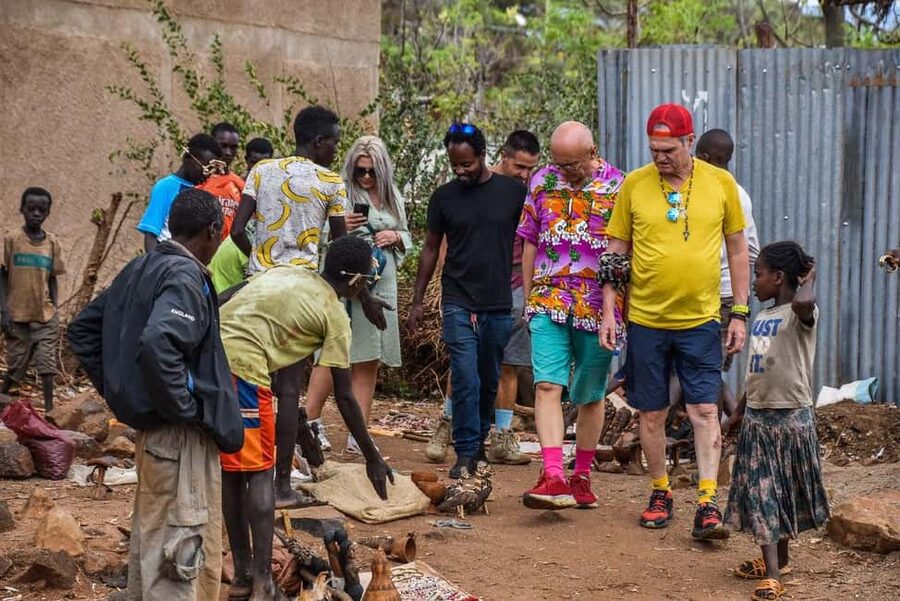
On Day 2, you head south after early breakfast. The first major stop is Tiya, a UNESCO World Heritage site. You can see a northern example of standing stelae with engraved designs that stretch across parts of Southern Ethiopia. It is a good change of pace from city museums, and it also helps you feel how the landscape and human markings connect over centuries.
After Tiya, you make your way toward Welayta for a lunch stop, then continue on to Arba Minch for the overnight stay. The exact rhythm depends on road conditions, but you should expect a day where the views from the car and the gradual change in environment are part of the experience.
I like that this day gives you an easy “entry” into the south. It is not all tribal visits right away. Instead, you get a UNESCO site, then a town lunch break, then you arrive ready for Lake Chamo the next day.
Hotel note: you stay at Paradise Lodge in Arba Minch. For this kind of route, lodges like this are often chosen because they are positioned for access to nearby lakes and early starts.
Lake Chamo, crocodiles, and Dorze villages: beehive homes and birdshippo spotting
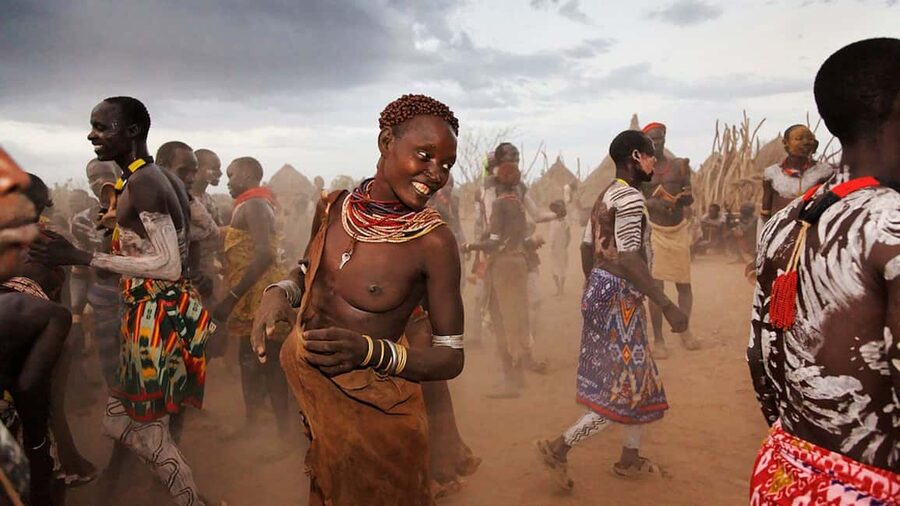
Day 3 is where the itinerary becomes clearly “Omo Valley adjacent,” centered on nature and then moving into specific cultural architecture. You start with a boat trip on Lake Chamo.
The highlight here is the crocodile market area, a local name for a place where crocodiles go out of the water and rest. Importantly, this is not described as a buying or selling site, so you are not going there to watch trade. You are going there to see animals in their environment.
While you are on the water, you might also spot hippos and different kinds of birds. That wildlife window is valuable because it breaks up the day. Even if you mainly came for tribal culture, this boat segment helps you remember that these communities live next to ecosystems that shape daily life.
After lunch back in Arba Minch, you drive to Dorze villages. The Dorze live high up in the Gughe Mountains, and you can see traditional Dorze beehive-shaped huts. These homes are recognized as one of the visually attractive structural houses by UNESCO. Whether you are into architecture or not, this is one of those stops where you can see how design answers a place, elevation, and practical daily living.
Then you continue driving to Konso for the night. This is a transition day, nature into culture, then more driving.
Hotel note: you overnight at Kanta Lodge in Konso.
Six days, other shapes
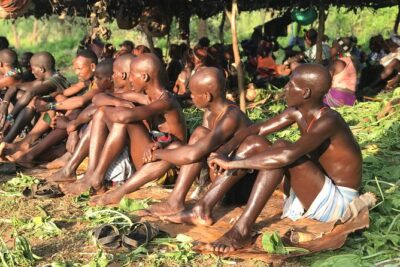
Konso terraces, coffee roots, and the road to Turmi
Day 4 begins in Konso with time to see Konso village, known as a UNESCO site because of its terracing. Terraces are more than “pretty steps on a hillside.” In places like this, terraces often reflect centuries of adapting farming to steep land and water patterns. It helps you read the area instead of treating it like a backdrop.
You also hear about coffee tied to this village. The itinerary specifically points out that one of the best types of coffee for the country comes from Konso. That is a small detail, but it is a useful one because it shows that cultural stops can connect to livelihoods, not only identity and dress.
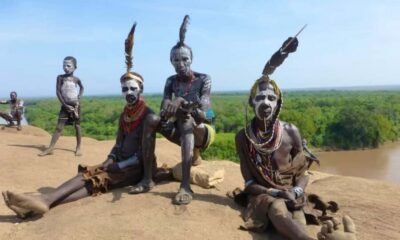
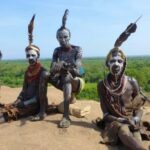
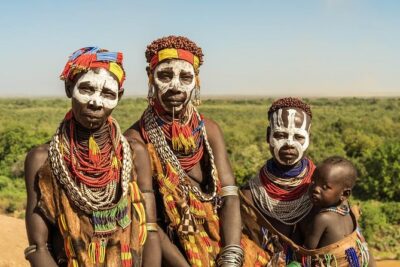
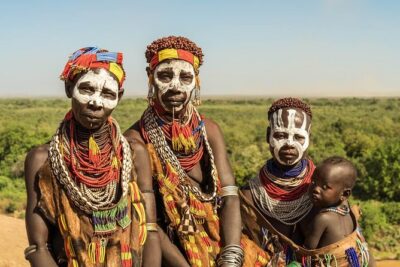
After Konso, you go to Bana village. The Bana are described as indigenous pastoral and semi-nomadic people living in the harsher environment of Lower Omo Valley. You will see the men’s hair dressed up with a colorful clay cap decorated with feathers. Those specific markers matter because they are not generic “tribal costume” vibes. They point to local style and tradition.
Then you proceed to Turmi, where the Hamer people live. You stay for the night at Emerland Lodge in Turmi.
What to consider on a day like this: you will be moving through multiple communities and settings. The best approach is to let each stop have its own “attention window.” When you try to compare everyone back-to-back, you can miss what makes each community different.
Omorate by Lake Turkana and Jinka: Dassanech delta life, then Mursi and Ari

Day 5 is travel plus two major cultural shifts. After breakfast you go on an excursion to Omorate, described as a 75 km, about 2 hour drive.
Here you visit the Dassanech people, also described as the people of the delta. They live on the northern shore of Lake Turkana. That geographic clue is key. Lake Turkana is not close to Addis Ababa or most standard itineraries, so this part of the route helps you understand how the north and lower regions of the south differ in daily life.
After the Dassanech visit, you return to Turmi for lunch, then you drive to Jinka for the overnight stay.
Hotel note: you spend the night at Jinka Resort in Jinka.
Day 6 continues the Lower Omo theme with a day excursion. First, you visit the Mursi. The itinerary describes their low huts made of straw leaves. It also notes that women like to wear terra cotta on their enormously stretched lower lips and ear lobes. This is the kind of cultural detail that can feel intense if you are unprepared. My advice is simple: focus on listening and context, not staring. Give the moment respect, and you will often get more from it.
After returning for lunch, you drive to the Ari people, described as the largest population in the Lower Omo Valley. Then you head back toward Addis Ababa.
One practical note: this route asks a lot of your stamina. It is doable, but it is not a restful “sit by the pool” itinerary. If you tend to get cranky after long drives, build in quiet time whenever you can, especially in the evenings at the hotels.
Price and value: what $1,400 actually buys you
The tour price is listed as $1,400 per person. For Ethiopia, that is not just a flight and a hotel. It is a structured route with key inclusions that matter for this part of the country.
Here is what you get included:
- Accommodation with breakfast
- A professional guide
- Entrance and scout fees
- Boat trip on Lake Chamo
- A car with a professional driver
Those inclusions are important because in remote regions, transport and permissions can be the hidden costs. Bundling “entrance and scout fees” into the price reduces surprises. The boat trip on Lake Chamo is also a specific activity, not just “free time.”
What is not included:
- Tip
- Lunch and dinner
- Local flight
- Alcohol drinks
- Entrance fee to any cultural ceremony or festival
So the true cost depends on how much you spend on food beyond breakfast. You should also plan for extra ceremony or festival fees if you choose to participate in anything that requires separate payment. If you prefer to keep spending tight, you can do that by focusing on included breakfasts and planning budget meals for lunch and dinner.
Also, this tour is offered in English. That helps a lot in Omo Valley areas where language barriers can shut down real understanding. You are not relying on guesswork.
Who this tour suits best, and who should skip it
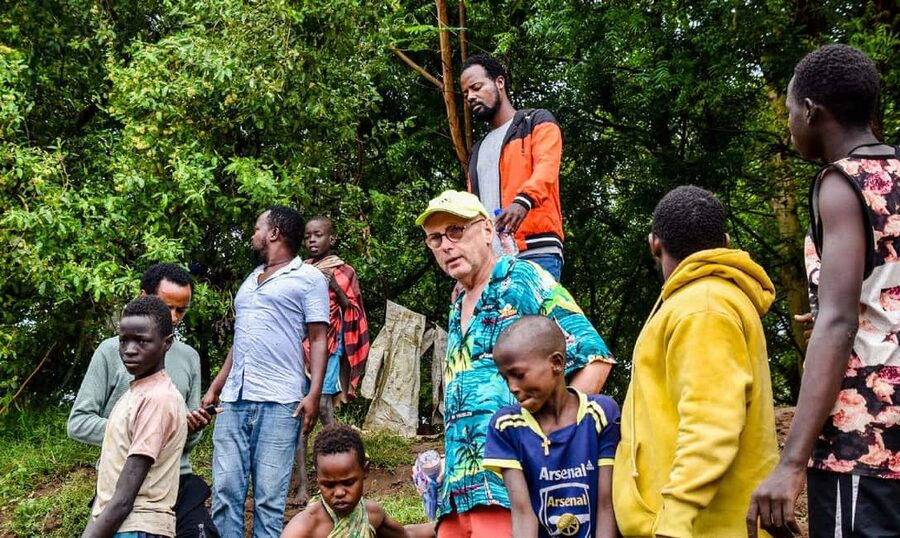
This trip is a strong match if you want culture in real settings. You are drawn to Addis Ababa history like Lucy and the museum housed in the former palace of Haile Selassie, but you also want the day-to-day presence of communities across Konso, Turmi, Omorate, and Jinka.
You will likely enjoy it most if you:
- Like a structured route with transport and fees handled
- Want UNESCO sites like Tiya, Dorze huts, and Konso terracing as anchors
- Are comfortable with long driving days and early starts
A couple of fit notes from the tour details:
- It is not suitable for babies under 1 year
- It is not suitable for people over 309 lbs (140 kg)
Finally, based on feedback about lodging, I would be cautious if you only feel happy with full-service, high-attention hotels. One experience note raised concerns about hotels being stingy with hospitality. That does not mean every stay will feel the same, but it is a reason to keep your expectations realistic and focus on the route itself.
Should you book Omo Valley Tribes 6 Days Tours?
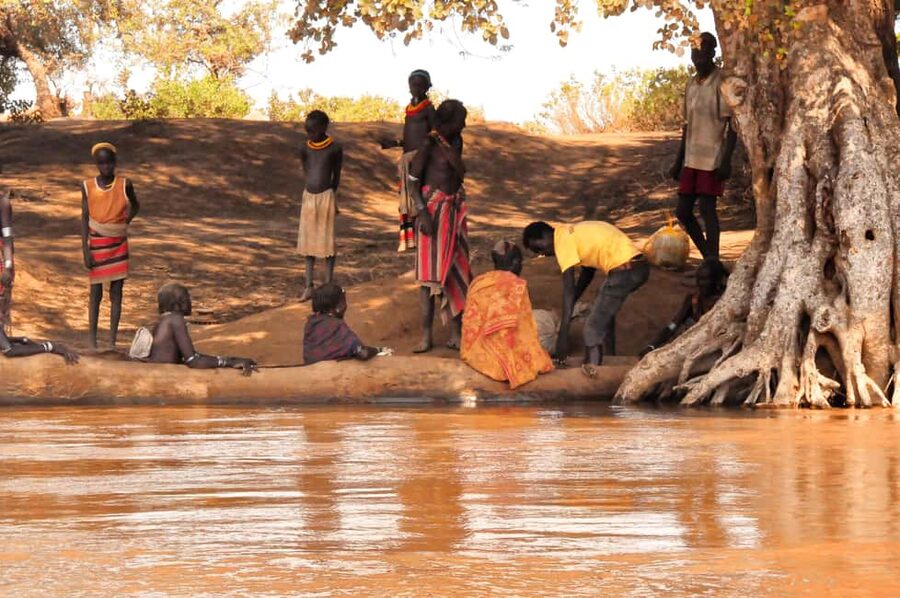
I think you should book this tour if your priority is a guided cultural circuit that connects Ethiopia’s big historical landmarks to the Omo Valley’s living communities. The included driver, guide, entrance and scout fees, plus the Lake Chamo boat trip make it feel like you are paying for access and structure, not just scenery.
You might want to choose something else if you dislike long days on the road or if you expect consistent, high-touch hotel service every night. For this kind of itinerary, the payoff comes from the people and the places, not from luxury pacing.
If you can bring patience and curiosity, this is a memorable route with strong value for what is included.
FAQ
How long is the Omo Valley Tribes tour?
It runs for 6 days, with overnight stays in Addis Ababa, Arba Minch, Konso, Turmi, and Jinka.
Where does the tour take place?
It travels through Ethiopia’s Oromia Region, focusing on Addis Ababa and South Ethiopia, including the Omo Valley area.
How much does the tour cost?
The price is listed as $1,400 per person.
What is included in the price?
Included are accommodation with breakfast, a professional guide, entrance and scout fees, a boat trip on Lake Chamo, and a car with a professional driver.
What is not included?
Not included are tips, lunch, dinner, local flights, alcohol drinks, and any entrance fee to cultural ceremonies or festivals.
What languages are used during the tour?
The tour is described as being in English.
What sites and activities are included on the route?
You can visit the National Museum to see the Lucy fossil, the Holy Trinity Cathedral, the Ethnographic Museum, Mercato, UNESCO Tiya, a boat trip on Lake Chamo, Dorze villages, Konso village (UNESCO terracing), Konso coffee context, and visits to groups including Bana, Hamer, Dassanech, Mursi, and Ari.
Do I need cash?
Yes. The tour notes say to bring cash.
Do I need a passport?
Yes. Passport is listed as something to bring.
Is the tour suitable for everyone?
It is not suitable for babies under 1 year and not suitable for people over 309 lbs (140 kg).
How is booking handled?
The tour includes Reserve & Pay Later, with the note that you keep travel plans flexible and book your spot without paying today. It also states you can cancel up to 24 hours in advance for a full refund.
Browsing Ethiopia More Widely
- 3 days around Arbaminch and Konso Adventure Tours Life Time
★ 5.0 · 24 reviews - Private 3 Days Adventure Tour Through Arba Minch
★ 5.0 · 16 reviews - 5 Day Private tour to the Omo Valley Tribes and Adventure Tour
★ 5.0 · 11 reviews - 6 Days Omo valley Tribal Tour (Starts Arba Minch End Jinka)
★ 5.0 · 7 reviews - 6 days private Sight Seeing Tours.
★ 5.0 · 4 reviews
The Rest of the Ethiopia List
- 3 days around Arbaminch and Konso Adventure Tours Life Time
★ 5.0 · 24 reviews - Private 3 Days Adventure Tour Through Arba Minch
★ 5.0 · 16 reviews - 5 Day Private tour to the Omo Valley Tribes and Adventure Tour
★ 5.0 · 11 reviews - 6 Days Omo valley Tribal Tour (Starts Arba Minch End Jinka)
★ 5.0 · 7 reviews - 3 days, Arba Minch and Dorze
★ 5.0 · 7 reviews
South to the Omo Valley
- 5 Day Private tour to the Omo Valley Tribes and Adventure Tour
★ 5.0 · 11 reviews - 6 Days Omo valley Tribal Tour (Starts Arba Minch End Jinka)
★ 5.0 · 7 reviews - 4 Days tour in omo valley.
★ 4.5 · 3 reviews
Other Ethiopia tours we have written up

Omo Valley Cultural Tours, compared.
 ★ 5.06 Days Omo Valley Tribes Tours From Addis AbabaFrom $1,39933 reviews
 ★ 5.0Lalibela, Axum, Danakil and Omo Valley 8 DAYSFrom $2,05129 reviews
 ★ 5.03 Days Omo Valley TourFrom $80024 reviews
 ★ 5.05 Days Omo Valley ToursFrom $75015 reviews
 ★ 5.06 Days Lalibela, Omo Valley and HararFrom $1,53815 reviews
 ★ 5.0Private Omo Valley Tours From Addis AbabaFrom $1,89012 reviews
 ★ 5.05 Day Private tour to the Omo Valley Tribes and Adventure TourFrom $1,29011 reviews
 ★ 5.09 Days Tours To Danakil Depression, Simen MNP, Lalibela With Omo Valley TribesFrom $1,80011 reviews
Browse the lists this tour appears in