

REVIEW · OMO VALLEY CULTURAL TOURS
Omo Valley Cultural Tours 7 Days From Addis Ababa
Omo Valley is where Ethiopia shows its many faces. I like the private-tour setup with an English-speaking guide and driver, because it keeps the day-to-day pace realistic on long roads. I also love that the trip mixes village culture with wildlife time on Lake Chamo, so it is not all talk and no nature. One thing to consider, though, is that this is a full itinerary with early starts and lots of driving, so you will want a bit of patience for transit days.
The cultural visits here focus on specific communities and everyday life, from weaving traditions to terraced farming, so you can ask better questions and spot patterns across regions. You also get practical support built in, with accommodation for six nights plus breakfast and lunch during the main travel days. The tour is private for your group, which usually means fewer compromises on timing.
As for animal spotting, you are in luck sometimes, not always. Lake Chamo wildlife viewing depends on conditions that day, and the program also requires good weather, so you should be flexible.
In This Review
- Key Things That Make This Omo Valley Tour Worth Your Time
- Addis Ababa Warm-Up: Markets, Museums, and a Big City View
- Mount Entoto, Lucy, and Mercato: Why Day 1 Sets Up the Whole Trip
- Heading Toward Arba Minch: Dorze Weavers and Enset on the Road
- Lake Chamo Boat Safari Plus Konso Terraces and Coffee
- Mago National Park and the Mursi and Hamer Culture Stops
- Dassanech on Lake Turkana, Then Overnight in Turmi
- Drive Back Toward Arba Minch, With More Tribal Stops En Route
- Closing in Addis: Folkloric Dinner, Dances, and Traditional Coffee
- Price and Value: What $1,545 Buys You in Real Terms
- Guides, Pro Touch, and the Ethiopia-Driving Reality
- Who Should Book This Omo Valley Cultural Tour, and Who Might Prefer Another Option
- Should You Book Omo Valley Cultural Tours from Addis Ababa?
- FAQ
- How long is the Omo Valley Cultural Tours trip from Addis Ababa?
- What time does the tour start?
- Is this tour private or group-based?
- What’s included in the tour price?
- What is not included?
- Does the tour include a boat trip on Lake Chamo?
- Which cultural communities are included in the visits?
- Is there an end-of-trip cultural dinner in Addis Ababa?
- What is the cancellation policy and weather requirement?
Key Things That Make This Omo Valley Tour Worth Your Time

- Private, guided travel: English-speaking guide plus a professional driver, so the logistics do not chew up your energy.
- Lake Chamo boat safari: a dedicated boat trip where you might spot hippos, birds, and Nile crocodiles.
- Village culture built around real skills: weaving, terracing, pastoral life, and traditional food systems show up across the route.
- Museums and history in Addis on Day 1: start with Lucy at the National Museum and then hit the Ethnographic Museum and Holy Trinity Church.
- Meals are handled for you most days: breakfast and lunch are included during the trip window.
- A cultural evening to close: a folkloric dinner with dance performance and a traditional coffee ceremony in Addis.
More Omo Valley itineraries, reviewed
- 6 Days Omo Valley Tribes Tours From Addis Ababa★ 5.0 · 33 reviews
- 3 Days Omo Valley Tour★ 5.0 · 24 reviews
- 5 Days Omo Valley Tours★ 5.0 · 15 reviews
- 6 Days Lalibela, Omo Valley and Harar★ 5.0 · 15 reviews
Addis Ababa Warm-Up: Markets, Museums, and a Big City View

Your trip begins in Addis Ababa with a transfer to your hotel, then you waste no time getting oriented. You start with a drive up to Mount Entoto for a panoramic view, then head back down into the city rhythm. If you are arriving fresh, this is a smart way to get your bearings fast.
Day 1’s museum-and-church combo works because it gives you context before you go south. You visit the National Museum for a chance to see the oldest hominids fossil known as Lucy, then stop at the Holy Trinity Church, which was built during WWII. After that you go to the Ethnographic Museum, which is housed in the former palace of Emperor Haile Selassie, so you are looking at culture inside a building with major political history.
Then comes the real-world bustle: Mercato Market. It is described as the biggest market in East Africa, and even if you just walk through the first aisles, you get the sense that Ethiopia is alive here, not staged.
If you want one practical tip, it is this: day 1 is structured and fairly packed. Wear shoes that handle uneven surfaces and plan to take breaks when you need them.
Mount Entoto, Lucy, and Mercato: Why Day 1 Sets Up the Whole Trip
This first day does more than check boxes. It gives you a framework for what you will see later in the Omo Valley, because you learn how Ethiopia thinks about history, identity, and everyday life.
Mount Entoto is your altitude and viewpoint reset. Lucy at the National Museum is a powerful anchor moment, especially if you have not seen the exhibit before. And the Ethnographic Museum in the former royal palace adds an extra layer: it is one thing to learn about cultural diversity, it is another to learn it in a space tied to Ethiopia’s modern story.
Mercato ties it together with sensory contrast. Museums are structured. Markets are not. You leave Day 1 knowing what kind of information the trip will give you later: grounded, human-scale, and full of details you can actually talk about with your guide.
Heading Toward Arba Minch: Dorze Weavers and Enset on the Road
After Addis, the route turns toward the south. You drive to the area around Arba Minch Airport, with a stop en route at the Dorze village. This is not a generic photo stop. The visit is framed around weaving, and the guide points you toward the Shammas weaving tradition.
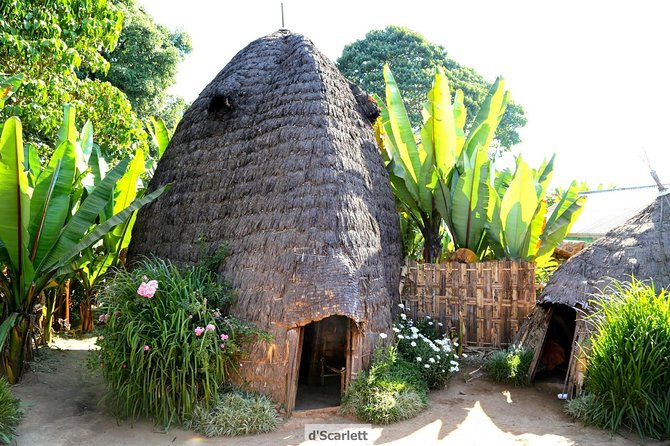
You will also hear an origin-style memory built into the village setting. The houses are described as being shaped like elephants, said to help people remember animals that existed in the area years ago. That kind of detail matters, because it shows how environment and memory get built into architecture.
Food gets attention too. Enset, often called a fake banana, is listed as a stable food for the Dorze people. Even if you do not taste it, hearing it explained helps you understand how agricultural systems support daily life in this region.
This is also a long travel day by design. The upside is that it turns transit time into learning time. The drawback is that you should expect the day to move at a steady clip.
Lake Chamo Boat Safari Plus Konso Terraces and Coffee

One of the standout moments here is the Lake Chamo boat cruise. Lake Chamo is described as the third biggest lake in Ethiopia, and the boat time gives you a different lens on the south. The chance of spotting Nile crocodiles, hippos, and different kinds of birds is specifically mentioned. Wildlife viewing is never guaranteed, but having it as a scheduled activity means you are not just hoping for sightings from a roadside pull-off.
From the water, the route moves into Konso, with a stop at the Konso Cultural Centre. Konso is named as a UNESCO site and known for terracing. If you have ever wondered how people make steep terrain work, this is where you start to see the answer.
Coffee also shows up. The tour notes that one of the best coffee types in Ethiopia comes from Konso. That gives you a concrete example of how culture and agriculture overlap, not as a slogan, but as a livelihood.
Then you continue through the region with more community visits. You go onward past Konso to Jinka, and the tour includes stops at the Bana village and then the Ari people. For Bana, you are told they are indigenous pastoral and semi-nomadic people living in the harsher environment of the lower Omo Valley. The description of men wearing a colorful clay cap decorated with feathers is the kind of visual detail that helps you recognize individuals and clothing styles as you move through the day.
If you dislike long days, this is the one to pace yourself. It is cultural stops plus wildlife time, and the schedule is naturally busy.
A full week, other itineraries

Mago National Park and the Mursi and Hamer Culture Stops
Day 4 is a day excursion to Mago National Park, focused on a Mursi village visit. The tour describes the Mursi as living in low huts made of straw leaves. Women’s adornment is also specifically mentioned, including terra cotta on stretched lower lips and earlobes.
I want you to think of this as cultural context, not a circus of curiosities. Ask questions about daily life and community traditions, because the most meaningful parts tend to be the ones that connect body adornment to identity, social roles, and history. A good guide helps you keep the visit respectful and grounded.
After the Mursi village, you drive back to Jinka for lunch, then continue to Turmi. This is where the Hamer people are highlighted. The Hamer village stop is part of the day’s flow, so you are again in a full day mix: a protected area setting plus human community visits.
A practical note: because this is a mix of park driving and village time, it can be physically demanding. This tour asks for a moderate physical fitness level, so build in water breaks and slow down when you need to.
Dassanech on Lake Turkana, Then Overnight in Turmi

On Day 5, you go to Omorate, described as a 75 km, about 2 hours drive excursion. The destination is the Dassanech people, also called people of the Delta, living on the northern shore of Lake Turkana.
This stop is valuable for two reasons. First, it shifts your frame from one lake system to another. You already had Lake Chamo on the boat earlier, and now you are in the Lake Turkana world, which feels different in daily life and setting. Second, the tour emphasizes the Dassanech as a group tied to delta life, so the conversation tends to be about how water and land shape livelihoods.
After the visit, you drive back to Turmi for your overnight stay. That matters because Turmi is where you will slow down a bit compared with constant driving. Having at least one night in the region also helps you avoid the feeling of constantly checking out of rooms.
Drive Back Toward Arba Minch, With More Tribal Stops En Route
Day 6 is a return drive, Turmi to Arba Minch. En route, you visit the Arobre tribes. This is another example of how the route uses transit as cultural learning time, not just transportation.
Then you move to Arba Minch Airport, which signals the trip is wrapping up. The schedule makes sense: you need to reposition back toward Addis for the final day, and the tour does it in stages rather than trying to cram everything into one frantic day.
This kind of split is often where value shows. You are paying for a driver, a plan, and an order that keeps you from losing half your time to guesswork.
Closing in Addis: Folkloric Dinner, Dances, and Traditional Coffee
You finish where you started, with a transfer back to Addis Ababa for your flight. Day 7 includes the travel part, then in the evening you attend a folkloric dinner with national dishes and dances of Ethiopia’s various ethnic groups. The traditional coffee ceremony is also included in the program.
This ending works well because it gives you a final emotional punctuation mark after days of daytime village visits. You have context by then, so when dances and food appear, they feel like part of a bigger mosaic instead of random entertainment.
If you are someone who dislikes late nights, plan your energy carefully. The dinner is a bonus, but it is still an end-of-day activity after travel.
Price and Value: What $1,545 Buys You in Real Terms
At $1,545 per person, you are not paying for a vague sightseeing loop. You are paying for a private route with a car and driver, an English-speaking guide, and six nights of hotel accommodation with breakfast. Lunch is included for six days, and there is a scheduled boat trip on Lake Chamo.
You are also getting admission tickets noted across the itinerary, including museum time in Addis and cultural centre or attraction entries tied to the daily program. That detail matters because it reduces the small extra charges that can otherwise pop up on the road.
Not everything is included, though, and you should read the fine print. The package lists alcohol drinks as not included. It also lists video and photographing fees as not included, plus gratuity and related personal expenses. Domestic flights are not included either, which is relevant if you are planning any additional internal travel around your Ethiopia trip.
One more value angle: the tour is structured with daily starts, so you do not have to negotiate timing between different stops. Based on strong feedback patterns about the company being professional and responsive, the big benefit is that you are not left to manage the gaps.
Guides, Pro Touch, and the Ethiopia-Driving Reality
This is the part you feel on the ground. Omo Valley travel is about more than destination names. It is about timing, communication, and how well someone translates daily life into something you can understand.
In feedback about Aman Ethiopia Tours, guides such as Joseph, Yihun, and Nico are praised for being helpful and for providing detailed information, including animal context and general explanations about parks and tribes. Even if your guide is someone else, the consistent praise is about professionalism and trustworthiness, plus being proactive and kind.
That matters because the itinerary includes both wildlife time and village visits. The question is not just where you go, it is how you go there and what you can ask while you are there.
Also, the tour is private, meaning it is just your group. You avoid the friction that can come with shared tours, where you might be rushed through a moment you want to slow down for.
Who Should Book This Omo Valley Cultural Tour, and Who Might Prefer Another Option
This trip is a good fit if you want three things at once: structured cultural visits, real animal time on a boat, and a guide who can connect dots so the experience feels coherent.
It suits couples and small groups who want a private setup and do not want to manage transport. It also works for travelers who enjoy meeting specific communities and learning about traditions tied to everyday life, from weaving to terraced agriculture.
You might want to consider a different option if you dislike long drives or you prefer more free time. This route is dense, and the balance is intentional: every day has purpose.
Should You Book Omo Valley Cultural Tours from Addis Ababa?
Yes, if you want a guided, private 7-day route that does not treat Omo Valley as only a set of roadside stops. The best reason to book is the mix: Addis museums and market energy on Day 1, Lake Chamo wildlife on the water, Konso terracing and coffee culture, then Mago National Park plus Mursi and Hamer village visits, ending with Dassanech at Lake Turkana and a folkloric dinner in Addis.
Hold off or ask more questions if you know you get exhausted by constant movement. Also confirm what the meal coverage really is for your exact dates, because the package includes breakfast and lunch for six days, while the notes also list lunch and dinner under not included. That mismatch is worth clarifying before you pay.
If you can handle a full schedule and you want guided context, this is a strong value way to see Ethiopia beyond one highlight.
FAQ
How long is the Omo Valley Cultural Tours trip from Addis Ababa?
It is listed as 7 days approximately.
What time does the tour start?
The start time is 7:00 am.
Is this tour private or group-based?
It is private. Only your group participates.
What’s included in the tour price?
The package includes hotel accommodation with breakfast, a car with a professional driver, an English-speaking guide, a boat trip on Lake Chamo, and breakfast and lunch during the trip (breakfast 6 times and lunch 6 times).
What is not included?
Not included are lunch and dinner, alcohol drinks, video and photographing fees, gratitude and other personal expenses, and domestic flights. The itinerary also notes lunch and dinner in the not included list, so it is smart to confirm what meals are covered for your exact dates.
Does the tour include a boat trip on Lake Chamo?
Yes. The itinerary includes a boat cruise on Lake Chamo, with chances to see hippos, Nile crocodiles, and birds.
Which cultural communities are included in the visits?
The itinerary includes stops at multiple communities, including Dorze, Konso, Bana, Ari, Mursi, Hamer, Dassanech, Arobre, and also visits around Jinka, Turmi, and the south Omo region.
Is there an end-of-trip cultural dinner in Addis Ababa?
Yes. In the evening you attend a folkloric dinner with national dishes and dances, and a traditional coffee ceremony is served.
What is the cancellation policy and weather requirement?
Cancellation is free, and you can cancel up to 24 hours in advance for a full refund. The experience requires good weather, and if it is canceled due to poor weather you are offered a different date or a full refund.
Browsing Ethiopia More Widely
- Full Day Tour of Addis Ababa with Hotel Pickup and Drop-off
★ 5.0 · 430 reviews - Addis Ababa: Debre Libanos, Blue Nile Gorge, and Cave Tour
★ 4.5 · 256 reviews - Addis Ababa Guided City Tour With Airport & Hotel Pick Up
★ 5.0 · 237 reviews - Breathtaking Nature, Wildlife and Cave Church Tour – Free Pickups
★ 5.0 · 225 reviews - Full-Day Private City Tour of Addis Ababa
★ 5.0 · 147 reviews
The Rest of the Ethiopia List
- Full Day Tour of Addis Ababa with Hotel Pickup and Drop-off
★ 5.0 · 430 reviews - Taste of Ethiopia
★ 5.0 · 406 reviews - Day Trip From Addis Ababa See Historical Monastery,Stunning Nature,Animals,Birds
★ 5.0 · 303 reviews - Addis Ababa: Debre Libanos, Blue Nile Gorge, and Cave Tour
★ 4.5 · 256 reviews - Addis Ababa Guided City Tour With Airport & Hotel Pick Up
★ 5.0 · 237 reviews
South to the Omo Valley
- 6 Days Omo Valley Tribes Tours From Addis Ababa
★ 5.0 · 33 reviews - 3 Days Omo Valley Tour
★ 5.0 · 24 reviews - 5 Days Omo Valley Tours
★ 5.0 · 15 reviews - 6 Days Lalibela, Omo Valley and Harar
★ 5.0 · 15 reviews - Private Omo Valley Tours From Addis Ababa
★ 5.0 · 12 reviews
Other Ethiopia tours we have written up
Omo Valley Cultural Tours, compared.
 ★ 5.06 Days Omo Valley Tribes Tours From Addis AbabaFrom $1,39933 reviews
 ★ 5.0Lalibela, Axum, Danakil and Omo Valley 8 DAYSFrom $2,05129 reviews
 ★ 5.03 Days Omo Valley TourFrom $80024 reviews
 ★ 5.05 Days Omo Valley ToursFrom $75015 reviews
 ★ 5.06 Days Lalibela, Omo Valley and HararFrom $1,53815 reviews
 ★ 5.0Private Omo Valley Tours From Addis AbabaFrom $1,89012 reviews
 ★ 5.05 Day Private tour to the Omo Valley Tribes and Adventure TourFrom $1,29011 reviews
 ★ 5.09 Days Tours To Danakil Depression, Simen MNP, Lalibela With Omo Valley TribesFrom $1,80011 reviews
Browse the lists this tour appears in