
REVIEW · LALIBELA TOURS
Lalibela churches Guided Tour
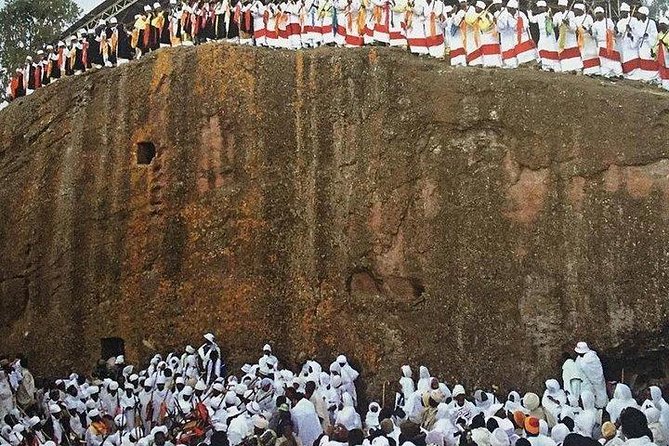
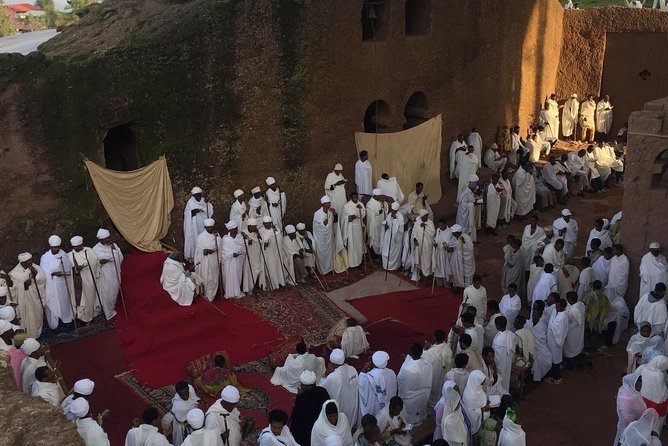
Rock-carved churches stop you mid-step. In Lalibela, one of Ethiopia’s most famous historic stops, you’ll see 11 rock-hewn churches in a focused day, moving between two church clusters before finishing with the cross-shaped Bet Giyorgis. Expect world-class architecture cut into stone, plus views toward the Chain Mountains, all explained in a way that helps the site make sense fast.
I like two things most. First, the flow between the Northwestern cluster and the Southeastern cluster makes it easier to follow where you are and why each church matters. Second, the guide adds real context, including what the carvings and layout mean, and you also get the relaxed cultural finish with a Tij bar stop and Ethiopian music. One consideration: lunch and dinner are not included in the price listing, even though the plan includes a sit-down dinner moment, so you should budget separately for food on the day.
In This Review
- Key Highlights Worth Your Time
- First Look at Lalibela’s Rock-Hewn Layout
- Entering The Day: Timing, Pace, and Private Group Comfort
- Stop 1, Northwestern Cluster: Bet Medhane Alem and Friends
- A realistic drawback for Stop 1
- Stop 2, Southeastern Cluster: Bet Gabriel-Rufael to Bet Abba Libanos
- The Finale, Bet Giyorgis: The Cross-Shaped Monolith
- Sunset, Dinner, and a Tij Bar With Ethiopian Music
- What Makes the Guiding Stand Out Here
- Price and Value: Is $176 Per Person Fair?
- What to Expect Day-To-Day: Practical Comfort in Lalibela
- Who This Tour Is Best For
- Should You Book This Lalibela Churches Guided Tour?
- FAQ
- How long is the Lalibela churches guided tour?
- What is the price per person?
- Does the tour include entrance tickets for the churches?
- Is pickup included?
- Is this a private tour?
- Is lunch or dinner included?
- Does the tour include a Tij bar stop?
- What is the cancellation policy?
Key Highlights Worth Your Time
- Two church clusters in one day: Northwestern churches first, Southeastern churches next, then Bet Giyorgis
- Bet Giyorgis, the cross-shaped monolith: the showstopper you’ll finish with
- Entrance fees covered: admission tickets for the church visits are included
- Pickup offered, private tour style: your group handles the day with no mixed crowds
- Coffee, tea, and bottled water included: small comfort during a long stone-filled day
- Tij bar with Ethiopian music: a cultural bookend after the churches
More of Lalibela, reviewed one by one
- Tour 11 monolithic rock churches & museum in Lalibela & cave church with mummies★ 5.0 · 37 reviews
- Lalibela, Axum, Danakil and Omo Valley 8 DAYS★ 5.0 · 29 reviews
- Rock Churches of Lalibela Guided Tour★ 5.0 · 27 reviews
- Lalibela churches , church museum & Yemrehan kirstose ( cave church)★ 5.0 · 19 reviews
First Look at Lalibela’s Rock-Hewn Layout
Lalibela can feel like a puzzle at first glance. The churches are cut into rock, connected by pathways, and scattered in clusters that look random until someone helps you see the pattern. That is where this guided day earns its keep. You’re not just collecting church names. You’re learning how the sacred spaces are grouped, how you move between them, and what to notice when the stone starts to blur together.
The good news is that the day is structured so you don’t waste time. You start with pickup from the meeting point, then head straight to the first cluster. That matters because in Lalibela, lighting, crowd timing, and walking pace all affect your photos and your attention span. A plan keeps you from turning the churches into an exhausting checklist.
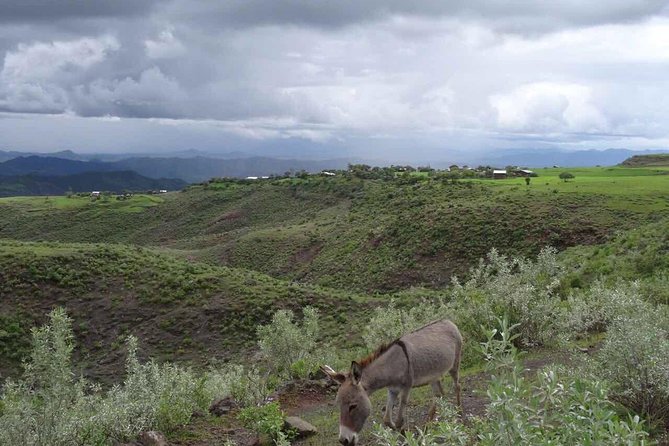
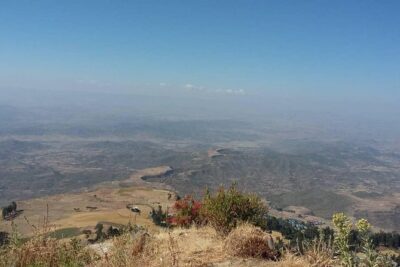
And yes, the setting is dramatic. The Chain Mountains show up in the background, and the town’s stone churches feel even more intense because you can’t escape the scale. You’re looking at huge rock-cut spaces carved by hand, then trying to make sense of them with your eyes and your memory. Having a guide in your corner makes that mental work much easier.
Entering The Day: Timing, Pace, and Private Group Comfort
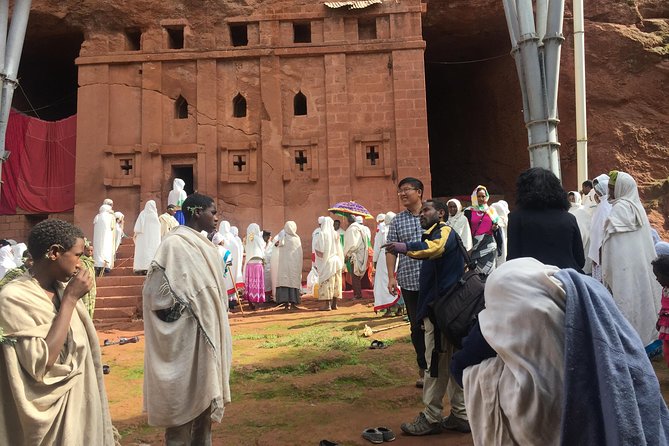
This is listed as an approximately 1-day experience, and it’s designed as a private tour/activity, meaning only your group participates. That helps in two ways. You can ask more questions without waiting for a group vote, and you can slow down or speed up if your attention shifts between architecture details and overall views.
The schedule is built around two main church blocks plus a final highlight. Stop 1 is about 3 hours for the Northwestern cluster. Stop 2 is about 4 hours covering the Southeastern cluster and ending with Bet Giyorgis. That’s a long stretch of stone exploration, but the split matters because it gives your brain a reset point. Instead of trudging through all churches in one unbroken blur, you get a clear before-and-after feeling.
You’ll also appreciate the small included basics: coffee or tea and bottled water. In places where you’re walking between churches and taking in details, those little stops prevent fatigue from turning into impatience.
One practical note: you’ll want to keep your phone charged for the mobile ticket. The experience uses a mobile ticket, so bring whatever you need to access it on the day.
Stop 1, Northwestern Cluster: Bet Medhane Alem and Friends
Your first major block focuses on the Northwestern cluster of churches. This is where the day starts to feel epic because the churches aren’t just standing there. They are carved into the rock in a way that makes you look up, then look again, then notice how entrances, interiors, and stone forms work together.
Here are the churches on Stop 1, each with its own personality:
- Bet Medhane Alem
- Bet Maryam
- Bet Meskel
- Bet Danaghel
- Bet Mikael
- Bet Golgotha
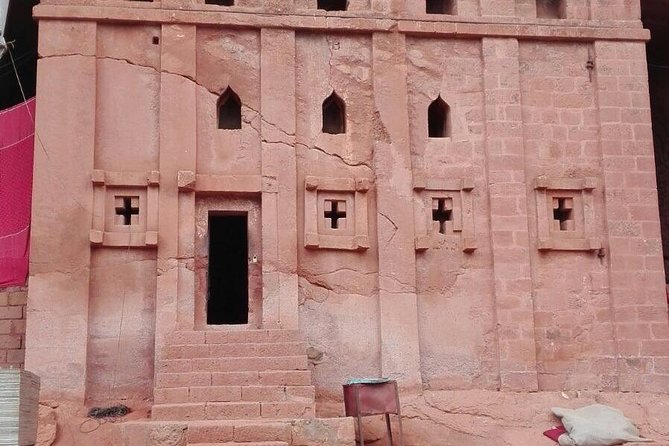
Bet Medhane Alem is a key opening point. It’s part of the big underground monolith energy that makes Lalibela so famous. If you want one takeaway from the first cluster, it’s this: the scale is hard to understand until you see it from different angles. A guide helps by pointing out what to watch for, so you’re not only impressed in general but also paying attention to specific details that make the design work.
Bet Maryam and Bet Meskel keep the momentum going. You’re likely to start noticing patterns by then. The stone work and the church shapes begin to echo across sites, which helps you recognize what’s unique to each church rather than treating them all as copies.
Then Bet Danaghel, Bet Mikael, and Bet Golgotha help round out the cluster. By the time you reach the later churches in this Northwestern group, you’ll usually feel more confident navigating the area. That confidence matters because your energy will carry into Stop 2.
A realistic drawback for Stop 1
This first cluster can still feel like a lot, even with a guide. If you’re sensitive to long standing or slow walking, it might be wise to pace yourself early and plan small breaks when your guide offers them, especially around photo stops.
Other guided departures

Stop 2, Southeastern Cluster: Bet Gabriel-Rufael to Bet Abba Libanos
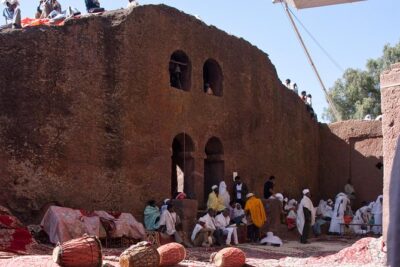
After Stop 1, the day shifts into the Southeastern cluster. This second block is where the tour earns a reputation for being more than a drive-by. You’ll visit:
- Bet Gabriel-Rufael
- Bet Merkorios
- Bet Amanual
- Bet Abba Libanos
- then Bet Giyorgis
This cluster helps you compare the vibe of Lalibela’s rock-cut churches across different sections of the site. You’ll likely notice that the churches don’t feel identical, even if they share the same stone-cut style. The guide’s job is to keep the meanings clear so you aren’t just reading church names off a list.
Bet Gabriel-Rufael and Bet Merkorios often help you regain that sense of wonder. By now, you’ve seen enough to know what you should pay attention to. A good guide makes it easier to spot what changes from church to church: how entrances are shaped, how the spaces feel inside, and how the stone forms guide your eyes.
Bet Amanual and Bet Abba Libanos add more depth. This is where the day starts to feel less like sightseeing and more like understanding a religious landscape that was designed to be visited, lived with, and remembered.
The Finale, Bet Giyorgis: The Cross-Shaped Monolith
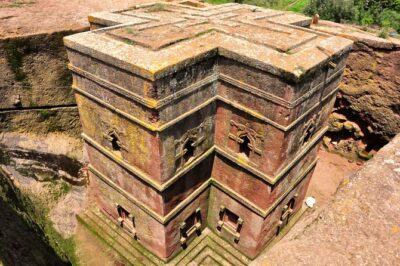
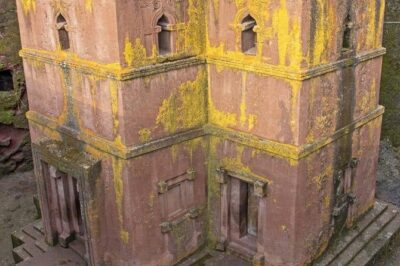
Bet Giyorgis is the big finale, the most famous church on the list, and it’s also the one that instantly explains why Lalibela is on so many bucket lists. You’ll visit it after the Southeastern cluster, when the tour includes time for the most famous monolith shaped like a cross.
St. George is the patron saint of Ethiopia, and Bet Giyorgis was constructed in honor of him. That matters because it gives the church meaning beyond the visual. You can stand in front of the cross-shaped stone and understand why the shape is the point, not just a clever design.
The tour also includes a sunset component. Timing can be tricky at stone churches, since the light changes fast and the space can limit where you can stand. Still, finishing at Bet Giyorgis near sunset is a smart choice. The stone looks different in evening light, and it becomes easier to see the church as sculpture, not just construction.
Sunset, Dinner, and a Tij Bar With Ethiopian Music
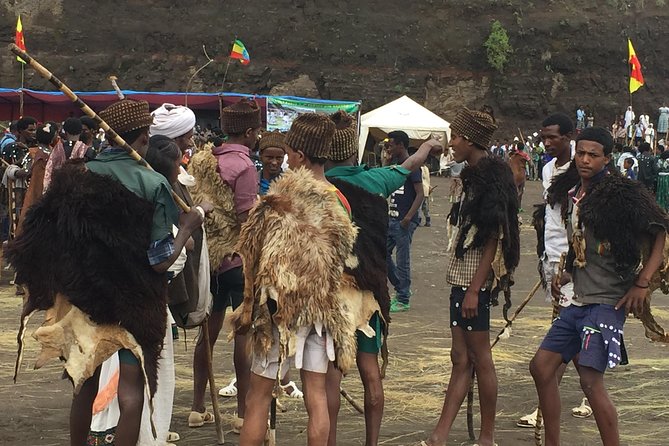
After the churches, the day turns cultural. The plan includes enjoying the sunset and sitting down for dinner, then experiencing an Ethiopian traditional Tij bar with Ethiopian music.
Here’s how to think about value versus cost. Your tour price listing includes coffee or tea and bottled water, but it lists dinner as not included. So you should treat the sit-down dinner moment as part of the schedule, not something automatically covered in the price. You can still use that time well. In many places like this, the best dinner is the one you eat slowly after a day of stone walking, when you’re finally ready to relax.
The Tij bar stop is a different kind of travel moment. It’s not about churches or monuments. It’s about listening, watching, and letting the evening be part of the experience. Ethiopian music can sound completely different than what you expect if you’re only used to Western styles, and it’s usually more fun when you aren’t rushing.
Practical tip: if you want photos in the Tij bar setting, keep your phone or camera handy during the transition from sunset to the evening. Once the music starts, your best angles can disappear quickly.
What Makes the Guiding Stand Out Here
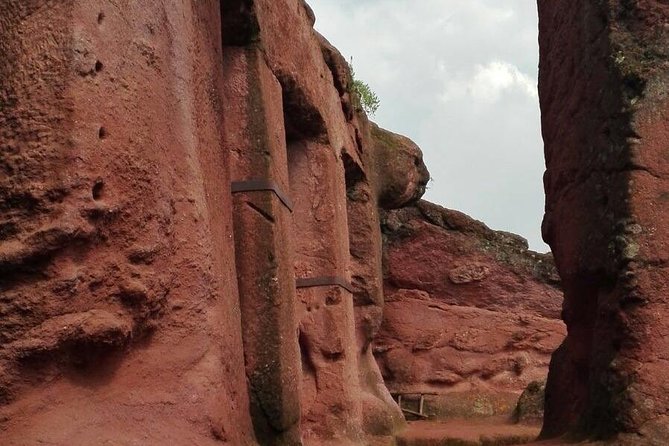
A strong guide is the difference between impressive buildings and a memorable day. The guides connected with this experience have been described as reliable, friendly, and respectful, with strong English skills and even fluent French for some guests. I’d pay attention to that if you want a smoother experience.
The most consistent praise is about the human side: guides who explain not just what you’re looking at, but how it connects to the culture and religion of Ethiopia. You also get the feeling of a guide who wants you to succeed, not just arrive at the next stop on time.
One specific plus from guide stories: some guides are also experienced photographers. If photography matters to you, that can be a quiet advantage. You get help with timing, angle, and how to frame Bet Giyorgis and the other carved spaces.
Price and Value: Is $176 Per Person Fair?
At $176 per person, this isn’t the cheapest option. But it also isn’t just a casual walk with a stranger. Here’s what your price does cover:
- All fees and taxes
- Entrance fees for the churches
- Coffee and/or tea
- Bottled water
That matters because admission costs can add up when you’re visiting multiple churches in one day. It also helps you avoid awkward cash moments in the middle of the visit.
What’s not included is equally important. Alcoholic beverages are not included. Lunch and dinner are listed as not included, and you should also plan for tips and shopping costs.
So the real question becomes budget, not sticker price. If you’re willing to handle your own meals and perhaps an evening drink, you’re paying for a guided route that saves time and covers entrance fees. If you want a fully all-inclusive food plan, you might end up spending extra anyway.
Also note: the experience offers group discounts and pickup is offered. If you’re traveling with friends or family, the value can improve.
What to Expect Day-To-Day: Practical Comfort in Lalibela
This tour is designed for most travelers can participate. That’s a helpful starting point if you’re choosing between “easy sightseeing” and “hard adventure.” Still, Lalibela is not the kind of place where you sit the whole time. You’ll spend hours moving between clusters and standing to look at stone carvings.
The best way to enjoy the day is to treat it like a slow museum visit, not a sprint. Give yourself permission to pause when a church pulls your attention. The point is to understand what you’re seeing, not just to check off names.
I also recommend wearing practical footwear and keeping your clothing layers ready. The day involves travel between stops and then a sunset phase. Even if the weather is mild when you start, lighting and temperature can shift as the day moves on.
Finally, keep an eye on your water intake. Bottled water is included, so take advantage of it, especially if you know you get tired from walking or from the intensity of warm stone environments.
Who This Tour Is Best For
This is a good fit if you want:
- A guided day that focuses on major Lalibela sites without leaving you scrambling for logistics
- A structured route through the Northwestern and Southeastern church clusters
- A clear finale at Bet Giyorgis with a sunset finish
- A mix of religious architecture and local evening culture with Ethiopian music
It may be less ideal if you prefer total freedom to wander without guidance, or if you have a strict budget for meals and don’t want to spend extra for lunch and dinner.
It’s also a nice choice for small groups because it’s a private tour activity, meaning your time doesn’t get stretched by waiting for others.
Should You Book This Lalibela Churches Guided Tour?
Book it if you want a high-impact day that covers the core Lalibela churches in a logical, guided route, with entrance fees handled and a cultural ending at a Tij bar. The structure makes the site easier to understand, and the guide quality seems to be a standout point, with reliable, friendly service and strong language skills reported by guests.
Skip it or compare options if you need lunch and dinner included in the upfront price, or if you want a lighter, more flexible day with no set cluster timing. In your budget, remember to plan for meals and any evening drink, since they are listed as not included.
If you’re aiming for one day that feels both meaningful and efficient in Lalibela, this tour hits the right balance: churches plus context plus local music, without turning the day into logistics math.
FAQ
How long is the Lalibela churches guided tour?
It’s listed as approximately 1 day, with about 3 hours for the Northwestern church cluster and about 4 hours for the Southeastern cluster plus Bet Giyorgis.
What is the price per person?
The price is $176.00 per person.
Does the tour include entrance tickets for the churches?
Yes. Entrance fees for the churches are included, and admission tickets for the visits are listed as included at both stops.
Is pickup included?
Pickup is offered from the meeting point.
Is this a private tour?
Yes. It’s described as a private tour/activity, so only your group will participate.
Is lunch or dinner included?
Lunch and dinner are not included. The tour plan includes a sit-down for dinner, so you should expect to pay for it separately based on what’s available on the day.
Does the tour include a Tij bar stop?
Yes. The schedule includes an Ethiopian traditional Tij bar with Ethiopian music.
What is the cancellation policy?
Free cancellation is available. You can cancel up to 24 hours in advance for a full refund, with local time used for cutoff.
Browsing Ethiopia More Widely
- Tour 11 monolithic rock churches & museum in Lalibela & cave church with mummies
★ 5.0 · 37 reviews - Rock Churches of Lalibela Guided Tour
★ 5.0 · 27 reviews - Lalibela Rock Churches Guided Tour
★ 5.0 · 15 reviews - 2 Days 1 night tour to Lalibela Rock-hewn churches
★ 5.0 · 12 reviews - Walking tours
★ 5.0 · 11 reviews
The Rest of the Ethiopia List
- Visiting Lalibela churches
★ 5.0 · 40 reviews - Visit the rock hewn churches
★ 5.0 · 39 reviews - Tour 11 monolithic rock churches & museum in Lalibela & cave church with mummies
★ 5.0 · 37 reviews - Lalibela, Axum, Danakil and Omo Valley 8 DAYS
★ 5.0 · 29 reviews - Rock Churches of Lalibela Guided Tour
★ 5.0 · 27 reviews
Lalibela, Reviewed
- Visiting Lalibela churches
★ 5.0 · 40 reviews - Tour 11 monolithic rock churches & museum in Lalibela & cave church with mummies
★ 5.0 · 37 reviews - Lalibela, Axum, Danakil and Omo Valley 8 DAYS
★ 5.0 · 29 reviews - Rock Churches of Lalibela Guided Tour
★ 5.0 · 27 reviews - Lalibela churches , church museum & Yemrehan kirstose ( cave church)
★ 5.0 · 19 reviews
Other Ethiopia tours we have written up
Lalibela Tours, compared.
 ★ 5.012 Days SIMIEN MOUNTAIN-LALIBELA-DANAKIL-TIGRAY CHURCHESFrom $1,64145 reviews
 ★ 5.0Visiting Lalibela churchesFrom $20040 reviews
 ★ 5.0Tour 11 monolithic rock churches & museum in Lalibela & cave church with mummiesFrom $35537 reviews
 ★ 5.05 DAYS Lalibela, Axum, Tigray churches and DanakilFrom $1,02534 reviews
 ★ 5.06 Days tour Package (Simien Mountains, Lalibela, and Danakil Depression)From $1,43532 reviews
 ★ 5.0Lalibela, Axum, Danakil and Omo Valley 8 DAYSFrom $2,05129 reviews
 ★ 5.0Danakil Depression and Lalibela 5 Days ToursFrom $95028 reviews
 ★ 5.0Rock Churches of Lalibela Guided TourFrom $4627 reviews
Browse the lists this tour appears in