

REVIEW · LALIBELA TOURS
5 DAYS Lalibela, Axum, Tigray churches and Danakil
Some places in Ethiopia hit your eyes first. Then your legs have their say, because this route mixes UNESCO churches with Danakil and the Erta Ale lava lake. I like how the trip is packed but still sensible, with domestic flights smoothing out the distances between Lalibela, Axum, and Mekele.
Two things I especially like: first, the Rock-Hewn Churches of Lalibela are handled in a clear, time-efficient way, including admission and a focused church circuit. Second, the Danakil days are organized around the moments that matter, like early starts for sunrise and the short walkouts near the pits. One thing to consider is that the Danakil portion demands moderate physical fitness, and the roads can be rough, so this is not a comfort-only trip.
In This Review
- Key highlights at a glance
- Day 1 Lalibela, UNESCO rock churches and a Jordan River vibe
- Day 2 Axum ruins, Adwa route drive, and the Hawzien base for Gheralta
- Day 3 Erta Ale and the world’s permanent lava lake
- Day 4 Sunrise at the Erta Ale pits, then toward Afar salt country
- Day 5 Ragad salt mining, Dallol’s mineral colors, and Lake Assal steps
- Price and value: what $1,025.65 buys you
- What to expect on the ground: comfort level and pacing
- Who should book, and who should skip
- Should you book this Lalibela, Axum, Tigray churches, and Danakil route?
- FAQ
- How long is the tour?
- Where does the tour start and end?
- Are flights included?
- Is pickup included?
- Are meals included?
- Are admission tickets included?
- What is the physical demand level?
- Is this a private tour?
- Is there anything to know about camel caravans and travel months?
- What is the cancellation policy?
Key highlights at a glance
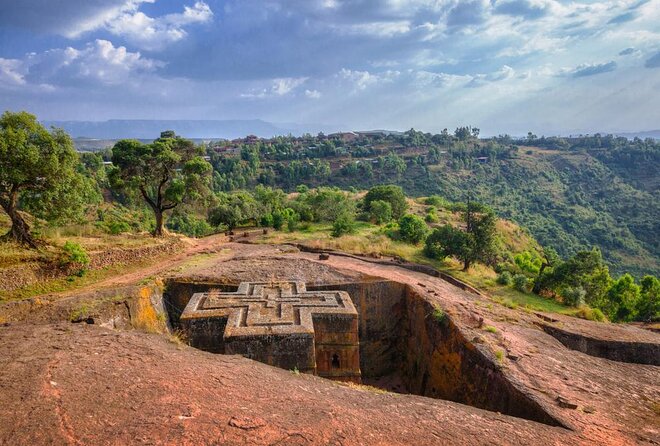
- UNESCO time in Lalibela with a planned set of rock-hewn churches
- Aksum and Gheralta area touring after a morning flight
- Erta Ale’s permanent lava lake with early timing and a real-world sense of scale
- Sunrise at the Erta Ale pits with a short walk for views over the crater area
- Ragagd salt mining and Dallol with stops that focus on geology and local work
More of Lalibela, reviewed one by one
- 5 DAYS Lalibela, Axum, Tigray churches and Danakil★ 5.0 · 34 reviews
- Danakil Depression and Lalibela 5 Days Tours★ 5.0 · 28 reviews
- 5 DAYS Axum, Lalibela, Tigray churches and Danakil★ 4.5 · 22 reviews
- 6 Days Lalibela, Omo Valley and Harar★ 5.0 · 15 reviews
Day 1 Lalibela, UNESCO rock churches and a Jordan River vibe
Lalibela is one of those places where you stop thinking in a straight line and start thinking in carved stone. You fly north from Addis Ababa and then get transferred to your hotel, which is a smart way to keep day one from feeling like a travel day with side quests.
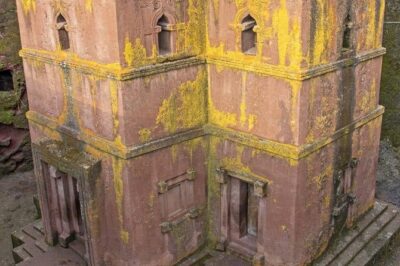
After lunch, you visit the first group of Lalibela churches that sit north of a small stream referred to as the Jordan River. The churches were carved during the reign of King Lalibela (1181-1221), and the cluster is a UNESCO World Heritage Site. Even if you do not know Ethiopian church history in depth, the layout is easy to follow once you see the way the sites are grouped.
You will spend the night in Lalibela at Lalibela Lodge. Your tour plan groups the rock churches into around eleven sites in sets of three, which matters because otherwise people tend to bounce around with no pattern. Here, the route gives you a rhythm, and you can compare the stonework from church to church without feeling rushed.
Practical note: this is a walking and stairs kind of day, because churches are carved into the earth and into the rock. Wear shoes you trust on uneven ground, and bring a layer you can adjust for changing light.
Day 2 Axum ruins, Adwa route drive, and the Hawzien base for Gheralta
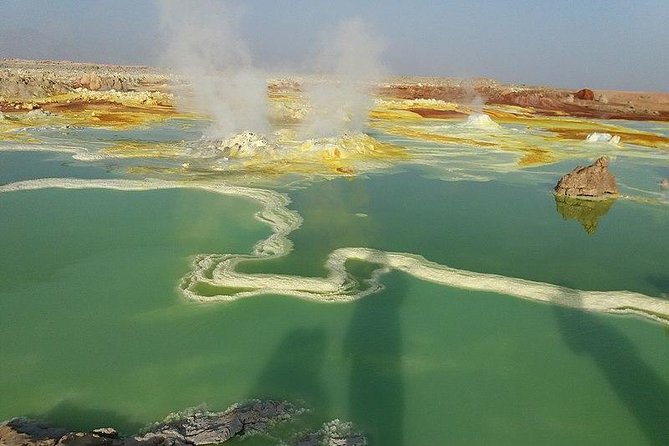
Day two starts with a morning flight from Lalibela to Axum. Axum is one of Ethiopia’s anchor points for ancient history, and you get hours here rather than a quick photo stop. If you like archaeology and monuments that feel lived-in, Axum’s ruins do a good job of rewarding time.
After your Axum visit, you drive the route toward Hawzien, covering about 190 km in around 2 hours. You also pass via Adwa, which is useful because it turns the drive into more than just getting from A to B. Along the way, you get that “this is real Ethiopia, not a theme park” sense.
You then continue from Axum to Hawzen via the Gheralta plains, where you stay overnight. Hawzen is a practical base for visiting the rock-hewn churches around Gheralta. Your lodging is listed as Gerealta Lodge or Wukro Lodge, and either way the idea is the same: you are not trying to sleep in one city and tour in another, you are basing yourself where you will be touring.
Why this day is valuable: it connects Ethiopia’s ancient crown jewels (Axum) with the rock-hewn church tradition in the highlands (Gheralta). You end up with a theme, not just a checklist.
Trade-off: travel days in Ethiopia add up. This one is a flight plus a long drive, so it helps to keep expectations flexible. The benefit of a private tour setup is that your timing stays with your group, not with random extra stops that do not fit your plan.
Day 3 Erta Ale and the world’s permanent lava lake
If you are the kind of traveler who likes geology more than gift shops, Day 3 will feel like a movie scene that is somehow too real. You start early around 9:00 AM, driving to Erta Ale via Mekele, where the region’s name is tied to the idea of smoky mountains in Afar.
Erta Ale is described as a shield volcano with a summit caldera, and the headline is what makes it famous: it contains the world’s only permanent lava lake. The details matter because they give you scale when you are standing there. The volcano has a caldera at the summit, and the lava lake is noted as existing continuously since the early years of the 20th century.
You drive to Dodom at the base of Erta Ale, and then the tour focuses on reaching the area where the lava lake is visible. The route is flagged as one of the rougher roads in the region, and that is not just a warning for the squeamish. It is a sign that your comfort level will depend on how you handle bumpy vehicle time.
What I like about how this tour handles the day: it focuses on timing and the big target, not a pile of minor detours. The world-class part is the lava lake, and the day is built to get you there.
What to prepare for: bring patience for slow moments, and plan for a day where the main work is staying alert and steady. Also, pack for extreme contrast. Even when the days are bright, the air near volcanic areas can feel sharper than you expect.
Day 4 Sunrise at the Erta Ale pits, then toward Afar salt country
Day four is built around an early morning window. You go for sunrise at the northern pit area, which corresponds to the main crater. You then do a short walk, about five minutes, for views toward the southern and central pits.
The description of the pits is specific enough to set expectations before you get there. The main pit-crater is noted as about 200 m deep and 350 m across, and the smaller southern pit is listed as about 65 m wide and roughly 100 m deep. Standing near features like this changes how you understand what you saw the day before. It is no longer just a lava lake story, it is a whole system of collapse and geological shaping.
Around 9:00 AM, you descend from the Erta Ale area back toward Dodom. The itinerary notes that you should return for the early breakfast if possible around 07:00. If your body is not used to early mornings, this is the day to plan simple. Sleep matters, and so does hydration.
After you reach camp by around 10:30 AM, there is time to relax. Then the plan is to drive toward Lake Giulietti (also referred to as Lake Afrera), with a note that it may be optional and might not be available during some periods. Since the schedule does not promise it every time, I would treat this as a nice add-on if you get it, not a fixed requirement.
Why day four works: it gives you the best light and angles. Sunrise is one of the few times when volcanic terrain looks both dramatic and readable. Later in the day, the details can wash out in heat shimmer and glare.
Energy check: by the end of this day, you will likely feel it in your legs and your head. That is normal. A well-run tour keeps you from chasing the wrong thing, so you can focus on the right views.
Other Axum trips we have looked at
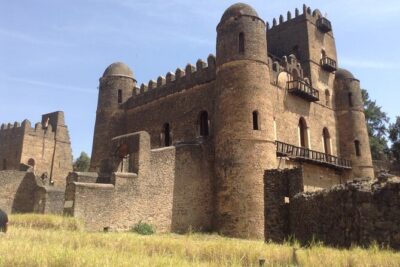
Day 5 Ragad salt mining, Dallol’s mineral colors, and Lake Assal steps
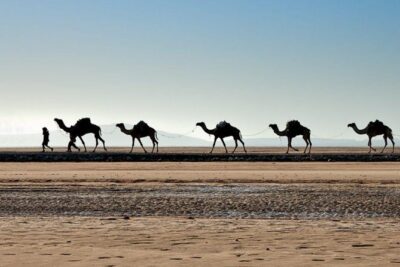
Day five shifts from the lava-lake world to the Afar region’s salt and mineral landscapes, with a big geology hit at Dallol. You drive to Ragad (also called Asebo), a place where localities mine salt. You can watch workers break salts from the ground, cut the salt into rectangular pieces, and then load it on camels.
There is an important seasonal note here: there may be no camel caravan during July, August, and early September. So if your trip dates fall in those months, you should expect the walking and touring plan to look a little different, even though the salt mining stop remains part of the day.
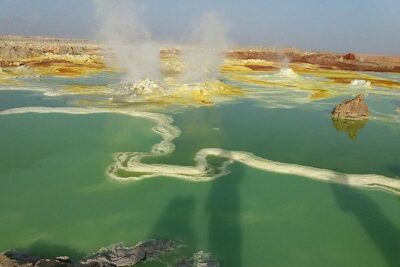
From Ragad you continue toward Dallol and the surrounding sights, including Lake Assal and visits that are framed around volcanic action and mineral formations. Dallol is noted as about 116 m below sea level, one of the lowest places in the world. This is one of those spots where the visuals can feel unreal, even though you are seeing straightforward geology on a massive scale.
After the sightseeing, you drive back to Hamedela and then continue to Mekele. The day ends with a flight back to Addis Ababa at 7:50 PM, arriving at 9:10 PM. That late arrival matters if you are connecting to a hotel check-in plan. I recommend having your Addis night schedule clear so you do not end up rushing right after landing.
What I like: the day is structured so you do not just stare at Dallol. You also see the working side of the region through salt processing and animal labor where it is available. It turns the scenery into something human.
Price and value: what $1,025.65 buys you
At about $1,025.65 per person for a five-day route, this is not a budget add-on. But it is also not just a sightseeing sprint. The value comes from how many moving parts are covered without you doing the math.
First, the trip includes three domestic flights with Ethiopian Airlines. Those flights are doing real work, saving time and reducing the chance you spend days trapped on long roads. For a route that includes Lalibela, Axum, and the Danakil area, that is a big part of the cost justification.
Second, the tour includes admissions for the key stops on the schedule, and it includes meals: breakfasts (5), lunches (3), and dinners (3). In practice, meal support matters most on remote days when you cannot easily find a reliable option.
Third, you get pickup offered and a private tour setup, so you are traveling as a group rather than mixing into an unknown flow of other visitors. That matters in Ethiopia because timing and coordination can be unpredictable, and a private plan can absorb small changes better.
One more value point based on real-world experience: when regional conditions force a schedule shift, this operator has shown flexibility by splitting the time and adjusting the order to keep your overall route intact, and by asking what you want to prioritize. That kind of problem-solving is hard to price, but you feel it when plans get messy.
What to expect on the ground: comfort level and pacing
This tour is marked for moderate physical fitness. That does not mean you need to train for a marathon. It does mean you should be comfortable with uneven ground, early mornings, and some rough driving time.
You will spend time walking on volcanic terrain and around crater areas where footing can be tricky. You will also be climbing and navigating within the church sites, which are carved and uneven by nature.
Comfort-wise, you will not have a resort rhythm. You will have Ethiopian hospitality and real lodging stops like Lalibela Lodge and the Hawzen lodges listed, plus camp time during the Erta Ale portion. Think practical, not precious.
Also note the tour is private, meaning you are only sharing the experience with your group. The benefit is less waiting and fewer mismatched energy levels. The downside is there is no mixing-and-matching flexibility with other groups if someone in your party is delayed, so keep your timing tight.
Who should book, and who should skip
I think this tour is a strong fit if you want Ethiopia in three layers: ancient sacred sites (Lalibela and Axum), then the highland rock churches around Gheralta, then the extreme geology of Danakil and Erta Ale.
It is also a good match for travelers who like structure. You get admissions, meals, and planned routes, and you do not have to assemble everything yourself across flights and remote driving.
You might want to look for a different option if you are sensitive to early mornings and physical strain. The Erta Ale day plus sunrise pits are the core of the experience, and they are not optional for the best payoff.
If your travel style is mostly slow and café-based, this route may feel like too much intensity in too few days. If you love contrast and can handle rough-road days, you will likely feel grateful you booked a guided plan instead of trying to stitch it together.
Should you book this Lalibela, Axum, Tigray churches, and Danakil route?
Yes, if you want a single trip that covers Lalibela and Axum while still committing to the harder-to-reach Danakil highlight, especially Erta Ale. The combination of domestic flights, admissions, and meal coverage helps you keep your energy for the real work: seeing what makes this corner of Ethiopia scientifically and spiritually unforgettable.
I would say go for it if you are comfortable with a demanding environment and you like being on a schedule. I would hesitate if you want maximum comfort, minimal walking, or if your plans are so tight that a shift in timing would ruin your trip.
In plain terms, this is the right booking when you are chasing depth, not just distance.
FAQ
How long is the tour?
The tour runs for about 5 days.
Where does the tour start and end?
It starts from Addis Ababa and ends with a flight back to Addis at 7:50 PM, arriving at 9:10 PM.
Are flights included?
Yes. The tour includes three domestic flights with Ethiopian Airlines.
Is pickup included?
Yes, pickup is offered.
Are meals included?
Yes. Breakfast is included 5 times, lunch is included 3 times, and dinner is included 3 times.
Are admission tickets included?
Yes. Admission tickets are included for the listed main stops on the schedule.
What is the physical demand level?
The tour is for travelers with moderate physical fitness.
Is this a private tour?
Yes. It is a private tour, and only your group participates.
Is there anything to know about camel caravans and travel months?
Camel caravans are noted as not available during July, August, and early September.
What is the cancellation policy?
You can cancel for free up to 24 hours in advance for a full refund. The experience can also be canceled due to poor weather, with an option for a different date or a full refund.
Tigray and the Gheralta Ridges
- 12 Days SIMIEN MOUNTAIN-LALIBELA-DANAKIL-TIGRAY CHURCHES
★ 5.0 · 45 reviews - 5 DAYS Axum, Lalibela, Tigray churches and Danakil
★ 4.5 · 22 reviews
Axum and Its Stelae
- 5 DAYS Axum, Lalibela, Tigray churches and Danakil
★ 4.5 · 22 reviews - Historical tours – in five days, Addis Ababa, Axum, Laliebla and Gonder
★ 5.0 · 9 reviews
Lalibela, Reviewed
- 12 Days SIMIEN MOUNTAIN-LALIBELA-DANAKIL-TIGRAY CHURCHES
★ 5.0 · 45 reviews - Danakil Depression and Lalibela 5 Days Tours
★ 5.0 · 28 reviews - 5 DAYS Axum, Lalibela, Tigray churches and Danakil
★ 4.5 · 22 reviews - 6 Days Lalibela, Omo Valley and Harar
★ 5.0 · 15 reviews - Lalibela 3 Days/ 2 Nights Tour package
★ 5.0 · 13 reviews
Other Ethiopia tours we have written up
Lalibela Tours, compared.
 ★ 5.012 Days SIMIEN MOUNTAIN-LALIBELA-DANAKIL-TIGRAY CHURCHESFrom $1,64145 reviews
 ★ 5.0Visiting Lalibela churchesFrom $20040 reviews
 ★ 5.0Tour 11 monolithic rock churches & museum in Lalibela & cave church with mummiesFrom $35537 reviews
 ★ 5.06 Days tour Package (Simien Mountains, Lalibela, and Danakil Depression)From $1,43532 reviews
 ★ 5.0Lalibela, Axum, Danakil and Omo Valley 8 DAYSFrom $2,05129 reviews
 ★ 5.0Danakil Depression and Lalibela 5 Days ToursFrom $95028 reviews
 ★ 5.0Rock Churches of Lalibela Guided TourFrom $4627 reviews
 ★ 4.55 DAYS Axum, Lalibela, Tigray churches and DanakilFrom $1,00022 reviews
Browse the lists this tour appears in