
REVIEW · LALIBELA TOURS
12 Days SIMIEN MOUNTAIN-LALIBELA-DANAKIL-TIGRAY CHURCHES
Simien and Danakil in one trip. This 12-day circuit strings together rock-hewn churches, big cat views from the Simien escarpment, and the otherworldly Danakil Depression. I especially like that the price bundles entry fees and guides, so you spend more time looking around and less time sorting paperwork.
I also like that the group stays small, with a maximum of 10 people. That matters on long drives and early starts, because you move as one unit without feeling herded. One drawback to consider: you will spend time on rough roads and do some real walking, including cliffside sections at Gheralta.
In This Review
- Key things to know before you go
- Price and logistics: what you truly get for $1,641
- The small-group advantage: moving fast without feeling rushed
- Day 1 and Gondar: Fasil Ghebbi and Debre Birhan Selassie
- Simien Mountains intro hike: escarpment views and gelada baboons
- Simien escarpment to Gich: waterfalls, barley fields, and coffee ceremony time
- Lalibela: Northern and Western groups in one focused visit
- Mek’ele and the road to Erta Ale: swapping smooth travel for pure drama
- Danakil Depression sunrise, craters, and the Lake Afdera option
- Salt mining and Dallol colors: the Danakil days you won’t forget
- Gheralta rock churches: Abuna Yemata Guh and ledge walking reality
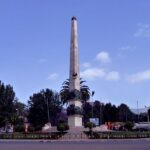
- Axum after the cliffs: stelae fields, Dungur, and St. Mary’s of Zion
- Addis Ababa finale: Entoto mountain views, Lucy, and Merkato
- Who should book this tour, and who should think twice
- Should you book this Ethiopia route?
- FAQ
- What is the group size for this tour?
- What is included in the price?
- Are domestic flights included, or is it all overland travel?
- Does the tour include meals?
- What kind of hiking or physical effort should I expect?
- Is pickup offered?
- Is this tour dependent on weather?
- How early does the tour start?
- What is the cancellation policy?
- Is a mobile ticket provided?
Key things to know before you go
- Small group size (max 10) keeps the pace human, especially on hiking days
- Entry fees and most meals included, which helps the trip feel like one clean package
- Domestic flights on Ethiopian Airlines save serious time across regions
- Simien Mountains National Park permits and scouting, so your hikes are set up properly
- Danakil is not a sightseeing day, it is craters, salt mining, and volcanic landscapes
- Gheralta rock churches include steep climbs and narrow ledges, so pack for careful steps
More of Lalibela, reviewed one by one
- 5 DAYS Lalibela, Axum, Tigray churches and Danakil★ 5.0 · 34 reviews
- Danakil Depression and Lalibela 5 Days Tours★ 5.0 · 28 reviews
- 5 DAYS Axum, Lalibela, Tigray churches and Danakil★ 4.5 · 22 reviews
- 6 Days Lalibela, Omo Valley and Harar★ 5.0 · 15 reviews
Price and logistics: what you truly get for $1,641
At $1,641.03 per person, this isn’t a bargain tour. But it is also not just “transport and a bed.” The price covers all entry fees, domestic flights (three on Ethiopian Airlines), and full board in Simien and Danakil. That combination is the difference between doing Ethiopia in pieces versus doing it as one continuous route.
You also get transfers and sightseeing in tourist-standard vehicles, plus English-speaking local guide services. For a country with big distances and complicated routes, having those moving parts arranged for you can save both time and stress.
One more practical point: you start early (start time listed as 6:00 am). If you are the type who hates rushed mornings, plan to go to bed early the night before. This style of trip runs on daylight, especially when you’re aiming for sunrise crater views in Danakil.
The small-group advantage: moving fast without feeling rushed
With a maximum of 10 people, your group stays manageable. That affects more than comfort. It changes how the day feels on the ground, because you are not constantly waiting for big numbers of people to filter in and out.
It also helps on hiking days. When you are tracking views along the escarpment or dealing with stop-and-start terrain, a smaller group means fewer bottlenecks at scenic overlooks and fewer delays when a guide is coordinating with a scout.
And since your guides are local and English-speaking, you are not just following a route. You’re also getting the “why” behind what you’re seeing, whether that is the meaning behind church names or what a landscape tells you about Ethiopia’s geological story.
Day 1 and Gondar: Fasil Ghebbi and Debre Birhan Selassie
Your trip starts with a flight from Addis Ababa to Gondar. In the afternoon, you tour Fasil Ghebbi, the Royal Compound, with its 17th-century castles. Gondar is one of those places where the stonework feels theatrical, like the city was built for drama. It is also a good warm-up before the churches and the mountains turn things more spiritual and more remote.
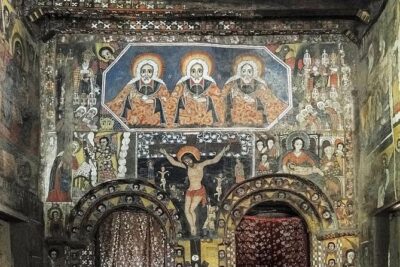
Then you visit Debre Birhan Selassie Church, often described as Trinity at the Mount of Light. From the outside it is striking for its stone walls, arched doors, and thatched roof tiers. Inside, the frescos are the real focus, and it is sobering that the church’s legacy includes damage or near destruction like many of Gondar’s churches.
If you like history that you can walk through, Gondar works. If you prefer only big natural scenery, Gondar is still worth it because it sets the cultural tone for what comes next in Lalibela and Tigray.
Simien Mountains intro hike: escarpment views and gelada baboons
The next days move into the Simien Mountains National Park area. You drive from Gondar toward the park headquarters in Debark, then sort permits and pick up your scout. That might sound like admin, but it matters. In protected areas, you want the right permissions and the right local support, especially when wildlife and terrain are part of the plan.
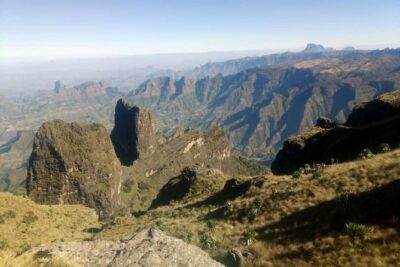
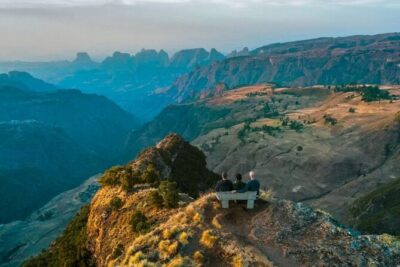
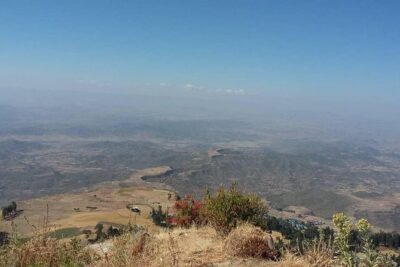
Your first day walk is described as easy along the northern edge of the escarpment, with viewpoints over northern Ethiopia’s foothills and plains. This is the day to get your legs sorted and to enjoy the rhythm of “walk, stop, look.”
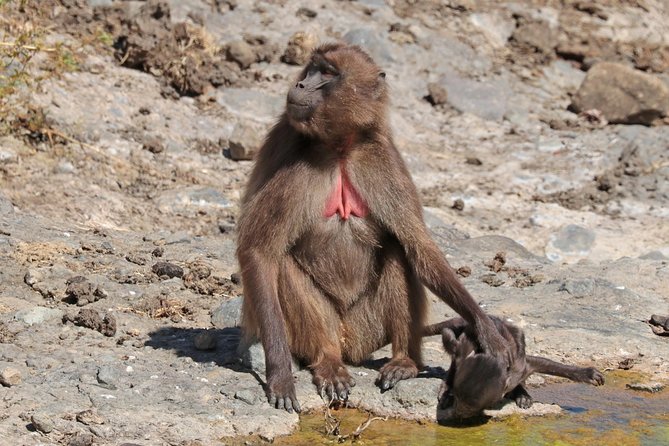
You may also encounter gelada baboons. This is one of those Ethiopia moments where the wildlife feels like it belongs on the same stage as the mountains. It is not guaranteed, but with a park scout involved, your odds are improved.
This is also the day where you’ll feel the trip’s pace. Seven hours is a long day, but the hike itself is framed as an intro, so you can settle into the higher altitude and the slower travel rhythm.
Other Simien treks, compared
Simien escarpment to Gich: waterfalls, barley fields, and coffee ceremony time
After the introduction, you follow the northern escarpment eastward, then descend into the Kaba Valley and climb again toward Gich Abyss. The route includes a narrow ridge with a dramatic view toward the Simien foothills. Here, the highlight is the Jinbar River, which plunges about 500 meters into the abyss.
You stop for about two hours and have lunch at the Jinbar River. That combination is important: you do not just sprint through scenery. You sit down where the landscape forces you to slow down.
Then you walk through fields of barley and reach the village of Gich. This is where the trip shifts from “spectacle” to “daily life.” You can enjoy a traditional coffee ceremony in a hut and learn more about local farm life, then you head on to Gich camp for the night.
I like this stretch because it balances big views with an on-the-ground cultural moment. If you are hoping for photo after photo with zero human interaction, this might feel a bit more grounded than you expected. But if you enjoy real context, it is one of the best uses of your time.
Lalibela: Northern and Western groups in one focused visit
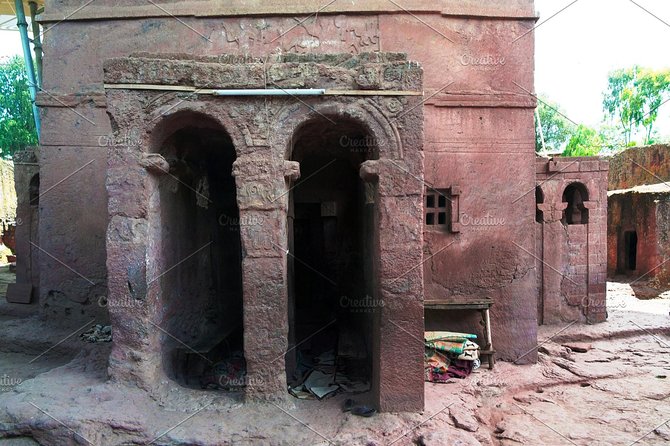
Next you fly and head into Lalibela, a town tied to the rock-hewn churches that people call a New Jerusalem. When you arrive, you check in and refresh, then you start with the Northern Group.
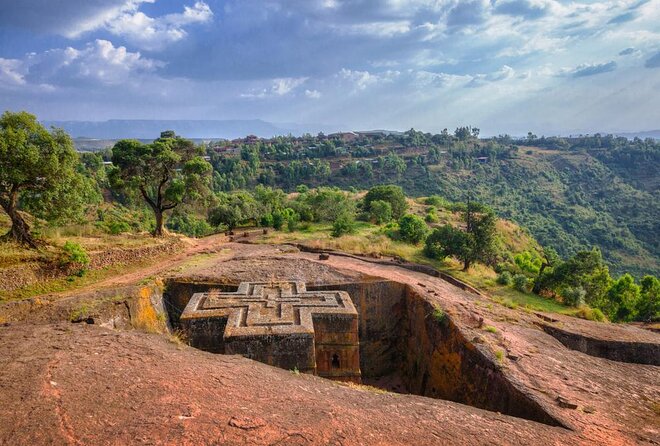
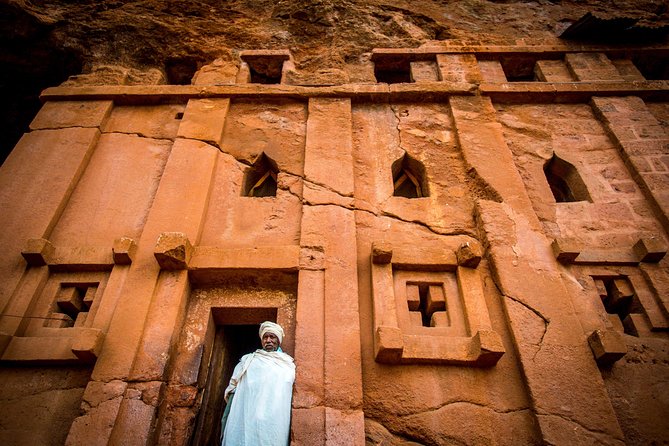
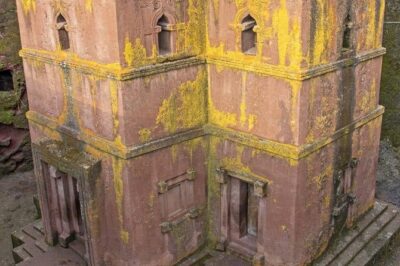
The itinerary calls out Bet Medhane Alem, home to the Lalibela Cross and described as possibly the largest monolithic church in the world. It is linked with Bete Maryam (possibly oldest), Bete Golgotha (known for its arts and said to contain the tomb of King Lalibela), the Selassie Chapel, and the Tomb of Adam.
Then after a break you switch to the Western Group, starting with Bete Giyorgis. Even without getting lost in every detail, the overall experience is clear: you are stepping into churches carved from rock, grouped in ways that feel designed for pilgrimage.
A practical tip here is to pace yourself. Churches like these can be emotionally intense and physically tiring because you’re constantly looking up, walking around, and adjusting to narrow entrances. Build time for slow viewing, especially if you want to focus on the carvings and interior frescos where accessible.
Mek’ele and the road to Erta Ale: swapping smooth travel for pure drama
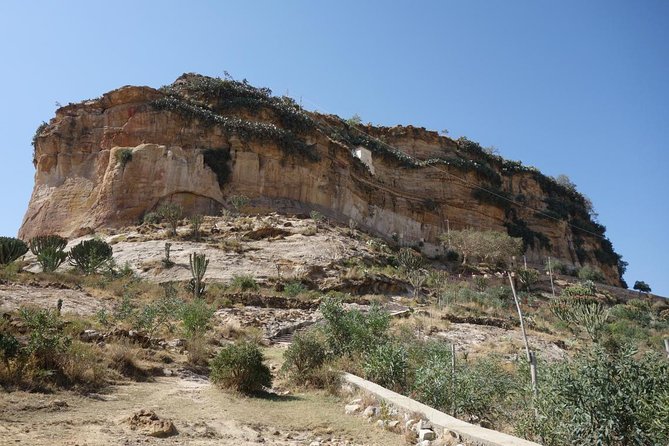
After Lalibela, you transition toward Mek’ele, with an eight-hour drive noted. This is a reminder that even with domestic flights, Ethiopia still throws real travel time at you.
From Mek’ele, the itinerary shifts hard into adventure mode for Erta Ale. You start early, then drive to Dodom at the base of the volcano. The route is described as one of the roughest roads, about 80 km, taking around six hours. Expect changing terrain, including solidified lava, rock, sand, and occasional palm-lined oases.
When you arrive at Dodom camping site (around 17 km from Erta Ale), dinner is served around 17:00, then you trek up about 30 minutes to the Ertale area. The description also notes that camels transport camping materials and some food, including sleeping materials like light mattresses and mat and water, up toward the rim.
This day is for people who are okay with discomfort in exchange for a real sense of place. You are not just looking at a volcano from a road. You are getting close enough that the experience becomes physical.
Danakil Depression sunrise, craters, and the Lake Afdera option
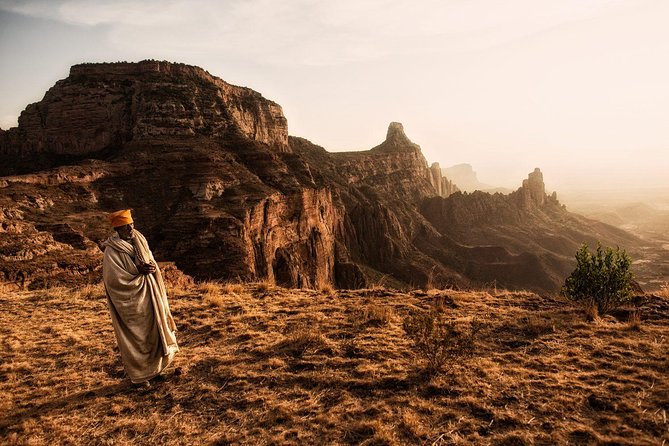
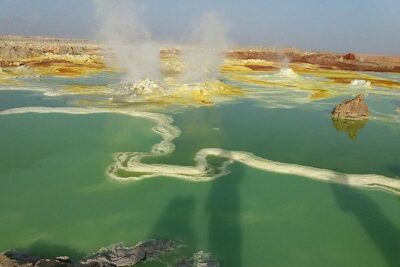
Danakil starts early, with sunrise timing. You rise with the sun, then walk around pits and craters. The main pit is described as 613 meters above sea level, about 200 meters deep, and 350 meters across, with a sub-circular, three-storied shape. There’s also a smaller southern pit listed at 65 meters wide and about 100 meters deep.
You leave around 7:00 to head back to Askoma for breakfast, then reach camp by about 10:30 and have time to relax before driving to Lake Afdera. Lake Afdera is described as optional, and it may not be available during summertime. It is also linked with the mythical Lake Giulietti or lake Afrera, described as a saltwater lake located more than 100 meters below sea level.
This is one of those days where the “why it’s special” is the geology. The space feels wrong in a fascinating way. It also helps if you are mentally ready for the fact that Danakil is not a polished tourist destination. You will be out there, close to active-looking terrain and extreme elevations.
Bring patience for the heat and the odd footing. Even when you are just walking around pits, you need to stay focused on your steps.
Salt mining and Dallol colors: the Danakil days you won’t forget
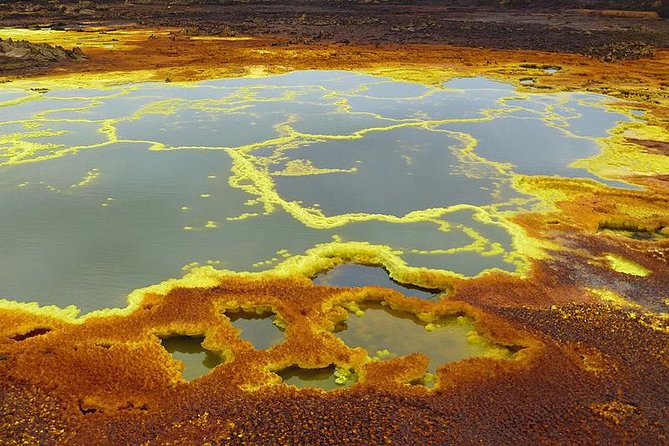
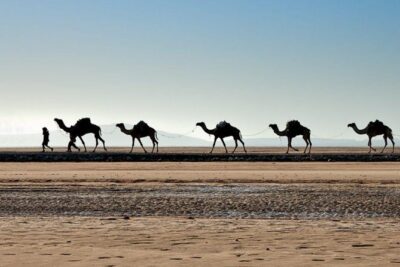
The second Danakil day is where the itinerary turns from views to work that humans do. You visit the place where salts are mined, observe salt breaking from the ground, then watch it cut into rectangular pieces and loaded on camels.
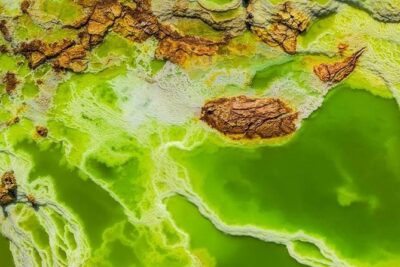
After that you drive to Dallol, listed at about -130 meters. You visit the distinctive volcanic landscape formed by Dallol and Lake Assal (also around -130 meters), plus camel caravans. The itinerary notes that there is no camel caravan on July, August, and early September, so timing matters.
You also get an excursion centered on Dallol, including colorful salts mining, then visit Lake Assal and follow camel caravans, plus a walk with the Afar people. Finally, you drive back to Hamedela and proceed to Mek’ele.
If you are the type who enjoys learning through observation, you’ll love these moments. It is not just pretty scenery. It’s a snapshot of how people adapt to harsh landscapes and extract resources in a place that feels almost alien.
Gheralta rock churches: Abuna Yemata Guh and ledge walking reality
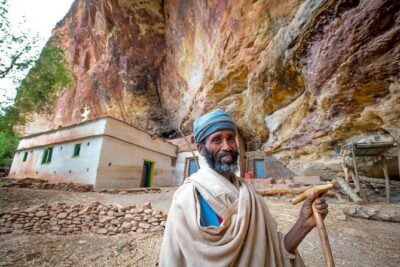
From Mek’ele, the itinerary moves to Gheralta Rock, focused on the church Abuna Yemata Guh. You walk about an hour to begin a steep ascent along the side of the Gheralta massif. The climb uses footholds and handholds chipped into sandstone through repeated passage.
Then comes the part you need to respect: narrow ledges with sheer drops, and reaching the church involves walking out on a ledge about one meter wide with a 200 meter drop to the left-hand side. The entrance is described as a small cave and a wooden door built into the rock.
This is not a “casual photo stop.” It is a focused hike with real exposure. If you have vertigo or you dislike heights, you will need to think carefully, or consider whether other portions of the trip will satisfy you.
The itinerary also mentions that Maryam Korkor is the most impressive architecturally among the three churches referenced for the day’s rock church focus. Even without getting into every architectural label, you can expect structures that feel like they were carved to fit the cliffs rather than built on top of them.
Axum after the cliffs: stelae fields, Dungur, and St. Mary’s of Zion
On the next morning you trek around rock churches of Tigray, then drive to Axum. After lunch, you visit the Northern Stelae field, with 4th-century obelisks that lend the region its name. Even if tombs have been robbed over the centuries, the itinerary notes that more than 90 percent of the ancient burial sites remain unearthed.
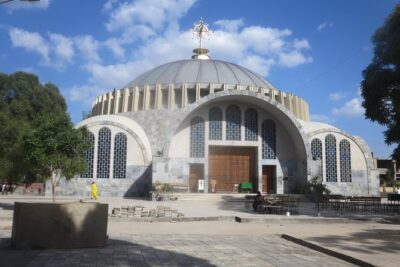
Then you explore the ruins of Dungur, also known as the Queen of Sheba’s Palace, plus tombs associated with ancient figures like King Kaleb and King Gebre Meskel. You end the day at St. Mary’s of Zion Cathedral, described as fabled home of the Ark of the Covenant.
Axum can feel like a study in layers. You’re not only looking at structures, you are looking at what is left after time, conflict, and changing empires. If you like connecting the visible ruins to the stories people tell, this day lands well.
Addis Ababa finale: Entoto mountain views, Lucy, and Merkato
Your last day starts with a morning flight from Mek’ele to Addis Ababa. You then go up to Mount Entoto for panoramic views of the city, with fresh air coming from eucalyptus forests. The itinerary also includes an option for a city walking tour or a car with driver/guide, with stops for coffee and lunch breaks.
Then you head to the National Museum of Ethiopia, described as a top choice. The highlight is the palaeontological exhibition in the basement, home to Lucy. The important detail here is that this section is said to be well labeled in English, which can help when your time is limited.
You also get time at the National Museum again as part of the day’s schedule. Finally, you end with Merkato, described as the largest market in Africa, with about 45 minutes allotted.
This finale is a strong “contrast day.” You go from cliffside ledges and volcanic craters to a museum that anchors you in human origins, then to a market where you see modern Ethiopia at street level.
Who should book this tour, and who should think twice
This tour is a fit if you want Ethiopia in a single sweep: churches, mountains, desert volcanic terrain, and major historical sites. It also suits you if you like a structured plan because the itinerary includes permits, guides, and domestic flights.
It is also best for people with moderate physical fitness. There’s a mix of hiking levels, from an easier Simien intro walk to more demanding ledge walking at Gheralta. If you are comfortable taking careful steps and dealing with uneven terrain, you’ll likely enjoy it more.
Think twice if you strongly dislike heights. Abuna Yemata Guh includes narrow ledges and major exposure. Even if you don’t do every leg, you’ll still be in that environment with steep terrain nearby.
Finally, Danakil is weather dependent, and the tour notes it requires good weather. If you tend to cancel plans easily, read that line twice and plan for flexibility.
Should you book this Ethiopia route?
I would book this tour if you want one trip that mixes Lalibela rock churches, serious scenery in Simien, the extreme drama of Danakil, and the historic gravity of Axum, all while someone handles the moving pieces. The value looks best when you price it mentally as a bundle of flights, permits, and guides, not just a sightseeing schedule.
I’d hesitate if heights and long travel days wear you down. This is not a couch-and-cafes vacation. It is an active route through places that feel far from ordinary travel, and that is the point.
If you can handle some rough roads, early starts, and careful hiking, this is an excellent way to see a large slice of Ethiopia without turning it into a logistics project.
FAQ
What is the group size for this tour?
The tour is limited to a maximum of 10 travelers.
What is included in the price?
Entry fees are included. Domestic flights on Ethiopian Airlines are included. Accommodation with breakfast outside Simien and Danakil is included, along with full board for Simien and Danakil and guides, transfers, and sightseeing in tourist-standard vehicles. Taxes are included as well.
Are domestic flights included, or is it all overland travel?
Domestic flights are included. The tour includes three flights with Ethiopian Airlines.
Does the tour include meals?
Yes. Breakfast (11), lunch (6), and dinner (4) are listed as included.
What kind of hiking or physical effort should I expect?
The tour calls for travelers with moderate physical fitness. It includes hiking in Simien Mountains National Park, and it also includes steep ascent and narrow ledges at the rock churches in Gheralta.
Is pickup offered?
Yes, pickup is offered.
Is this tour dependent on weather?
Yes. The experience requires good weather, and if it is canceled due to poor weather, you will be offered a different date or a full refund.
How early does the tour start?
The start time is listed as 6:00 am.
What is the cancellation policy?
You can cancel up to 6 days in advance for a full refund. A 50% refund applies if you cancel 2 to 6 days before the start time. If you cancel less than 2 days before the start time, the amount paid is not refunded.
Is a mobile ticket provided?
Yes, a mobile ticket is included.
Tigray and the Gheralta Ridges
- 5 DAYS Lalibela, Axum, Tigray churches and Danakil
★ 5.0 · 34 reviews - 5 DAYS Axum, Lalibela, Tigray churches and Danakil
★ 4.5 · 22 reviews
Up Into the Simien Mountains
- 9 Days Tours To Danakil Depression, Simen MNP, Lalibela With Omo Valley Tribes
★ 5.0 · 11 reviews - Simien Mountains Trekking Adventure
★ 5.0 · 8 reviews - 3 Days Trekking Simien Mountains Tours
★ 5.0 · 6 reviews - Northern Ethiopia & Trekking Simien Mountains , 10 Days
★ 4.5 · 5 reviews - 5 Day Addis,Bahir Dar,Gondar,Simien Mountains and Lalibela Tours
★ 5.0 · 4 reviews
Lalibela, Reviewed
- 5 DAYS Lalibela, Axum, Tigray churches and Danakil
★ 5.0 · 34 reviews - Danakil Depression and Lalibela 5 Days Tours
★ 5.0 · 28 reviews - 5 DAYS Axum, Lalibela, Tigray churches and Danakil
★ 4.5 · 22 reviews - 6 Days Lalibela, Omo Valley and Harar
★ 5.0 · 15 reviews - Lalibela 3 Days/ 2 Nights Tour package
★ 5.0 · 13 reviews
Other Ethiopia tours we have written up
Lalibela Tours, compared.
 ★ 5.0Visiting Lalibela churchesFrom $20040 reviews
 ★ 5.0Tour 11 monolithic rock churches & museum in Lalibela & cave church with mummiesFrom $35537 reviews
 ★ 5.05 DAYS Lalibela, Axum, Tigray churches and DanakilFrom $1,02534 reviews
 ★ 5.06 Days tour Package (Simien Mountains, Lalibela, and Danakil Depression)From $1,43532 reviews
 ★ 5.0Lalibela, Axum, Danakil and Omo Valley 8 DAYSFrom $2,05129 reviews
 ★ 5.0Danakil Depression and Lalibela 5 Days ToursFrom $95028 reviews
 ★ 5.0Rock Churches of Lalibela Guided TourFrom $4627 reviews
 ★ 4.55 DAYS Axum, Lalibela, Tigray churches and DanakilFrom $1,00022 reviews
Browse the lists this tour appears in