
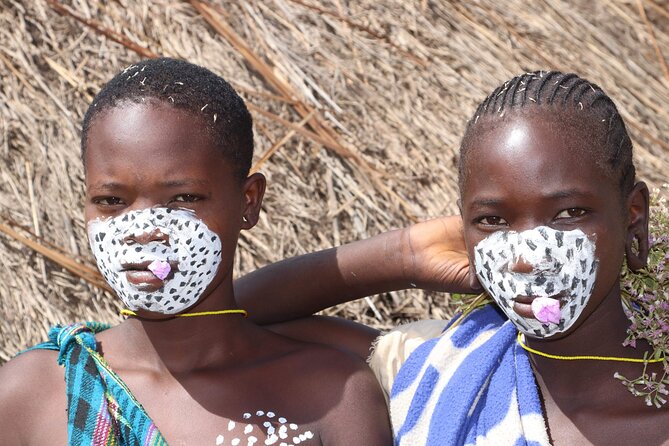
REVIEW · OMO VALLEY CULTURAL TOURS
9 days Omo Valley Tribes and Photography Tour
Omo Valley photos need strong light and respect. This nine-day private route strings together Ethiopia’s big-city landmarks, then swings hard into south Ethiopia for tribes, markets, and wildlife moments. I like that the trip is built for photography and real contact, not just quick photo stops. One thing to think about: you’ll cover long drives on paved and rough roads, so comfort and stamina matter.
I also like the human side. With Sycamore Ethiopia Tours, the guide support feels personal, and Haile is mentioned in reviews as a steady, caring presence who makes the trip feel like you’re traveling with family rather than being processed. The possible drawback is simple: the itinerary moves fast from one region to the next, so if you want long, slow stays in fewer places, you might feel a little rushed.
In This Review
- Key things I’d plan around
- Addis Ababa warm-up: Lucy, Entoto views, and Merkato
- Practical note
- From Addis to Jinka: Ari villages and Mago National Park
- A possible trade-off
- Turmi and Hammer country: Mursi connections and sunset photos
- How I’d approach photography here
- Konso and Karo: terraces, big markets, and Saturday energy
- For your comfort
- Arba Minch and Chamo Lake: Nile crocodiles and aquatic birds
- Hawassa and the return north: Sodo stops, lake highlights, and fish market energy
- A small mindset shift that helps
- Price and value: what $0.00 likely means, and what the package covers
- Where the value really shows
- Guide quality: Haile’s impact and what it means for your trip
- Who should book, and who should skip this Omo Valley route
- Should you book this Omo Valley tribes and photography tour?
- FAQ
- What is the duration and starting point of the tour?
- What is included in the tour price?
- What meals are included?
- Is a flight included?
- What parts of the itinerary do not have admission costs?
- Do I need to pay for a visa or extra air tickets?
- Are tips and alcoholic drinks included?
- What cancellation timing is allowed for a full refund?
- What fitness level is recommended?
Key things I’d plan around

- Addis Ababa warm-up: Lucy at the National Museum, Entoto hill views, and Trinity Cathedral plus the huge Merkato market.
- Birds and big wildlife breaks: a boat trip for Nile crocodiles and aquatic birds near Arba Minch.
- Omo Valley tribe focus: Mursi and Hammer-area stops, plus Karo and Konso terraces in the lower Omo region.
- Photography-friendly pacing: early starts on key days and sunset timing in Turmi.
- One private group: pickup is offered, and it’s just your party, which helps with timing and comfort.
More Omo Valley itineraries, reviewed
- 6 Days Omo Valley Tribes Tours From Addis Ababa★ 5.0 · 33 reviews
- 3 Days Omo Valley Tour★ 5.0 · 24 reviews
- 5 Days Omo Valley Tours★ 5.0 · 15 reviews
- 6 Days Lalibela, Omo Valley and Harar★ 5.0 · 15 reviews
Addis Ababa warm-up: Lucy, Entoto views, and Merkato
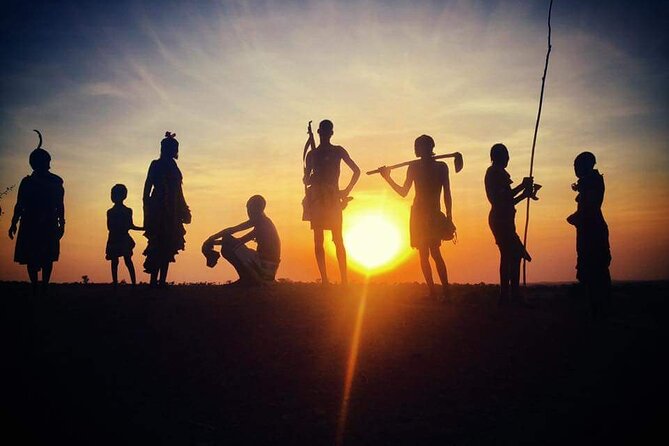
Your trip starts in Addis Ababa, and that matters more than people think. The Omo Valley days are intense, hot, and culturally specific. Spending day one acclimating in the capital helps you reset your eyes and your expectations before you chase dust, smiles, and natural light south.
You’ll hit the National Museum area first, including Lucy, Ethiopia’s most famous fossil find. Even if fossils are not your thing, this stop gives you context for why Ethiopia feels different in the region. It’s not just a place with history. It’s a place that tells its own story through artifacts, exhibits, and a museum that draws real attention.
Next, you head up to Entoto Natural Park. This is your altitude-and-view moment. If you’re a photographer, this kind of high vantage can save your trip, because it teaches you how the light behaves over the city. It also helps you catch Addis Ababa’s layout quickly, before you’re later driving through totally different terrain.
Then you’ll visit Trinity Cathedral, built in 1944 under Emperor Haile Selassie. Ethiopian Orthodox churches tend to reward patient looking, not speed. You’ll want to pay attention to color, form, and the everyday rhythm of worship spaces, even if you only know a few words of the story.
Finally, you end day one in Merkato, described as the largest open market in Africa. Whether you shop or not, this is a strong sensory lesson. It shows you how daily life works when trade is public and communal. Bring small cash for snacks or simple purchases, keep your phone secure, and expect to move at walking speed.
Practical note
With private transport included, you won’t be negotiating shared minivans on your first day. You’ll still be walking and standing around sights, so wear shoes that can handle city sidewalks and museum entry lines.
From Addis to Jinka: Ari villages and Mago National Park
Day two and three feel like the trip’s hinge. You fly from Addis Ababa to Jinka and then start moving toward the Omo Valley’s tribe country through Mago National Park.
In Jinka, you’ll visit a museum tied to the local area and then go to the Ari tribe village. This part works well if you like learning before photographing. A museum stop gives you some vocabulary for what you’ll later see in daily life: crafts, settlement patterns, and the way communities explain their world.
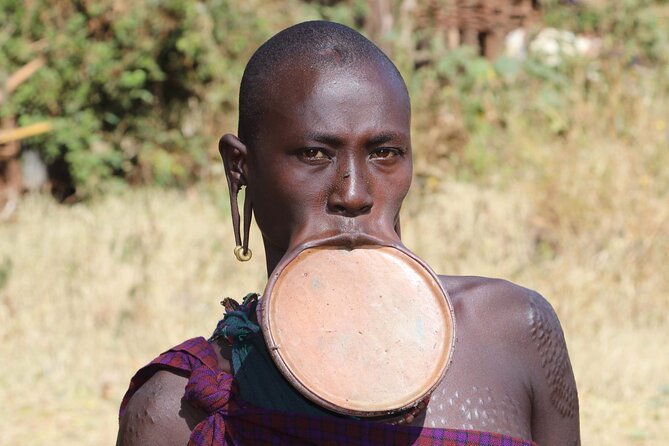
On day three, the morning drive takes you to Mursi territory. The Mursi are widely known for body adornment and the famous lip plate tradition. For photography, this is one of those moments where you should slow down and watch first. Ask questions through your guide, then frame your shots respectfully. If people are busy, treat it like a working day, not a photo booth.
Then you move onward toward Turmi, described as the heart of the Hammer tribes. That transfer day can feel long, but it’s also when you’ll start getting your eyes trained. The terrain changes, the light gets warmer, and the people look more like they belong to the land than to the camera.
A possible trade-off
These are not “look at one village for hours” days. You’re building a route. If you want time to chat deeply with families and not just witness cultural scenes, you may need to plan for extra conversation time when opportunities appear.
Other trips built around a camera

Turmi and Hammer country: Mursi connections and sunset photos
Turmi is where the trip’s tone shifts. Days here combine tribe visits with timing that supports your camera. You’ll meet communities in the morning region, then after lunch, you’ll see more Hammer-area villages and a beautiful sunset.
Before Turmi village visits, there’s a boat crossing moment as you travel along the Omo River route to the Dassanech villages near the Ethio-Kenya border. This is a classic Omo Valley feel: water, long river lines, and a sense of geographic scale. Even if you mostly photograph, try to spend a few minutes without shooting. It helps you understand where the light is coming from and how sound carries across the river.
When you return to Turmi, the afternoon rhythm is the key. Visiting villages later in the day can be easier on your energy and can produce softer, more forgiving light on faces and clothing. If you’re photographing, this is where you get your best shots without forcing flash.
How I’d approach photography here
- Keep your wide lens ready for village scenes and daily life.
- Save tighter portraits for moments where you’ve already established a respectful conversation.
- Use your guide for introductions. It reduces tension and helps everyone stay comfortable.
You’ll get a lot of “wow” moments here. Just pace yourself, because day five ramps up quickly.
Konso and Karo: terraces, big markets, and Saturday energy
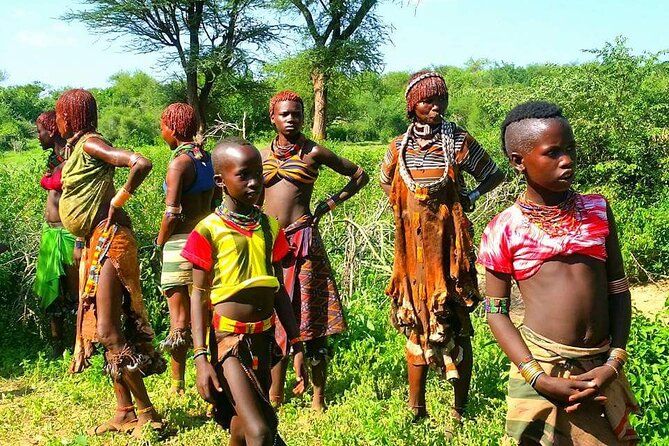
Day five and day six are about rhythm shifts. You leave Turmi toward Konso, but you don’t just rush there. Along the way, you visit Karo tribes and a Hammer town at Dimeka, described as having the biggest tribal market held at Saturday.
This is one of the most interesting parts of the route, because markets compress culture into a few hours. You see exchange, clothing choices, household items, and group identity all in one place. For your camera, markets can be chaos, but they can also be the most honest slice of life.
When you arrive in Konso, you get time for the Konso museum and later terrace-focused village visits. Konso terraces are not just scenery in the usual travel sense. They represent engineering, land management, and generations of adaptation. If you’re the type who likes landscape in the literal sense, you’ll appreciate how work and architecture match.
A long drive also appears here as part of the experience. The tour moves across the south in a loop, and that means you’ll accept travel days as part of the story. Bring a small day bag, water, and a way to keep your gear dust-managed.
For your comfort
The tour notes moderate physical fitness as important. That doesn’t mean extreme hikes every day, but it does mean walking in heat, standing for photos, and handling long sit-down travel.
Arba Minch and Chamo Lake: Nile crocodiles and aquatic birds
Arba Minch is your wildlife and water break. After Konso, you drive to the Arba Minch area, then later you head toward Chamo Lake for a boat trip.
The highlight here is the chance to see the biggest Nile crocodiles plus aquatic birds. For photography, this is a different problem than tribe portraits. You’ll want to think about shutter speed and light bouncing off water. If the day feels bright and windy, keep your camera secure and be ready to shoot in short bursts.
The stop at Dorze village afterward focuses on traditional bamboo houses and a waving system. Even if your photos are the priority, these human-style details often end up being the best part of your memory, because they tell you how people build community around daily routines.
Arba Minch also gives you a breather. You’ll have time to relax at your hotel with views of the area, and that matters because the rest of the trip keeps moving.
Hawassa and the return north: Sodo stops, lake highlights, and fish market energy
On day eight, you drive from the south toward Hawassa, passing through a scenic route with green mountains in the description. On the way, you stop at Sodo town to see Wolayta and Sidamo tribe villages, then continue to Hawassa for the afternoon.
Hawassa includes Hawassa Lake and city highlights. Even though the route is still “cultural,” this part can feel lighter. You’ll have space to recover, and the lake setting helps balance the earlier days of dust, market noise, and constant introductions.
On day nine, the final morning includes a fish market visit. Fish markets are busy and very photogenic, but they’re also sensitive to your timing. Try to keep your camera steady, don’t block vendors, and keep the vibe respectful.
The drive back to Addis Ababa includes a stop at Ziway Lake with birds. That kind of bird-and-water moment is a nice visual “closing chapter,” especially after tribe photography days. Then you return to Addis late afternoon and end with a welfare program in the evening before transfer to the airport.
A small mindset shift that helps
After Omo Valley days, your eyes will crave nature and water for a while. This last stretch gives that, so it doesn’t end on a hard cultural note.
Price and value: what $0.00 likely means, and what the package covers
The price shown here is listed as $0.00, which looks like a placeholder rather than a real quote. So treat it as a prompt to confirm the actual total cost. What you can evaluate right now is the value structure based on what’s included.
This trip includes private transport, accommodation, and all fees and taxes. It also includes one flight per person, plus meals: breakfast (9), lunch (9), dinner (9). That’s a meaningful chunk of the cost on long multi-region trips, because it reduces the number of separate payments you’ll need to handle day by day.
Alcohol is not included, and neither are visa fees or air ticket expenses beyond the included flight. Tips and gratitude’s also aren’t included. That means your real budget is going to depend on your visa status, your final international flights, and how much extra you choose to spend on drinks or small purchases at markets.
Where the value really shows
For photographers and culture-focused people, private transport is a big deal. Shared travel adds delays and makes it harder to time village visits, sunrise light, and sunset sessions. The tour is also private, meaning it’s only your group. That can lower stress and keep your pace realistic.
Guide quality: Haile’s impact and what it means for your trip
One of the strongest signals from the trip’s feedback is the personal support from the operator and guide. In reviews, Haile is repeatedly named as part of what made the experience special, with clients describing the care and attention they felt.
That matters because Omo Valley travel is not just logistics. It’s relationships. You’re photographing people and visiting communities with their own rhythms. A guide who understands how to introduce you and how to manage your time can make the difference between awkward moments and smooth, respectful interactions.
You’ll also want a guide who can help you ask practical questions. Even simple things, like when it’s polite to shoot, or how to approach a market scene without blocking sales, makes your photos better and your experience easier.
Who should book, and who should skip this Omo Valley route
This is a strong fit if:
- You want tribes, markets, and photography in one organized private circuit.
- You don’t mind early starts and long drives to cover a lot of ground.
- You like mixing city culture in Addis with south Ethiopia experiences.
- You can handle warm conditions, active walking, and repeated transitions between regions.
It’s not a great fit if:
- You have health problems that could be affected by heat, long travel days, or walking.
- You prefer slow travel, deep stays, and minimal driving.
The tour also says it requires good weather, and if it’s canceled due to poor weather, you’ll be offered another date or a full refund. That’s important in south Ethiopia planning, where rain can change access and travel conditions.
Should you book this Omo Valley tribes and photography tour?
I’d book if your priority is a structured, private route that gives you both culture and wildlife moments, plus enough photography time for portraits, markets, and water scenes. The included meals and transport remove a lot of day-to-day friction, and the route covers Addis Ababa landmark context before it hits the Omo Valley’s tribe focus.
I’d hesitate if you want lots of unhurried time in just one or two places. This is a “see many regions” trip. The upside is variety. The downside is that you’ll move on before the fatigue fully fades.
If you do book, plan for a photo kit that can handle dust and bright light, keep extra memory cards ready, and let your guide set the tone for introductions. That’s the path to images you’ll be proud of, not just screenshots.
FAQ
What is the duration and starting point of the tour?
It runs for about 9 days and starts in Addis Ababa. The route then returns to Addis Ababa by the end, with departure from the airport after the evening program.
What is included in the tour price?
Included items are private transport, accommodation, all fees and taxes, one flight per person, and meals (breakfast, lunch, and dinner each day listed).
What meals are included?
Breakfast is included for 9 days, lunch is included for 9 days, and dinner is included for 9 days.
Is a flight included?
Yes. The tour includes one flight per person.
What parts of the itinerary do not have admission costs?
The tour details list some stops as free and others as included, and it also states all fees and taxes are included as part of the package.
Do I need to pay for a visa or extra air tickets?
Visa fees and air ticket expenses are not included.
Are tips and alcoholic drinks included?
Alcoholic drinks are not included, and tips and gratuities are not included.
What cancellation timing is allowed for a full refund?
You can cancel up to 3 days in advance for a full refund. If you cancel less than 3 days before the start, the amount paid is not refunded.
What fitness level is recommended?
The tour recommends a moderate physical fitness level and says it is not recommended for anyone with health problems.
Browsing Ethiopia More Widely
- Full Day Tour of Addis Ababa with Hotel Pickup and Drop-off
★ 5.0 · 430 reviews - Addis Ababa: Debre Libanos, Blue Nile Gorge, and Cave Tour
★ 4.5 · 256 reviews - Addis Ababa Guided City Tour With Airport & Hotel Pick Up
★ 5.0 · 237 reviews - Breathtaking Nature, Wildlife and Cave Church Tour – Free Pickups
★ 5.0 · 225 reviews - Full-Day Private City Tour of Addis Ababa
★ 5.0 · 147 reviews
The Rest of the Ethiopia List
- Full Day Tour of Addis Ababa with Hotel Pickup and Drop-off
★ 5.0 · 430 reviews - Taste of Ethiopia
★ 5.0 · 406 reviews - Day Trip From Addis Ababa See Historical Monastery,Stunning Nature,Animals,Birds
★ 5.0 · 303 reviews - Addis Ababa: Debre Libanos, Blue Nile Gorge, and Cave Tour
★ 4.5 · 256 reviews - Addis Ababa Guided City Tour With Airport & Hotel Pick Up
★ 5.0 · 237 reviews
South to the Omo Valley
- 6 Days Omo Valley Tribes Tours From Addis Ababa
★ 5.0 · 33 reviews - 3 Days Omo Valley Tour
★ 5.0 · 24 reviews - 5 Days Omo Valley Tours
★ 5.0 · 15 reviews - 6 Days Lalibela, Omo Valley and Harar
★ 5.0 · 15 reviews - Private Omo Valley Tours From Addis Ababa
★ 5.0 · 12 reviews
Other Ethiopia tours we have written up
Omo Valley Cultural Tours, compared.
 ★ 5.06 Days Omo Valley Tribes Tours From Addis AbabaFrom $1,39933 reviews
 ★ 5.0Lalibela, Axum, Danakil and Omo Valley 8 DAYSFrom $2,05129 reviews
 ★ 5.03 Days Omo Valley TourFrom $80024 reviews
 ★ 5.05 Days Omo Valley ToursFrom $75015 reviews
 ★ 5.06 Days Lalibela, Omo Valley and HararFrom $1,53815 reviews
 ★ 5.0Private Omo Valley Tours From Addis AbabaFrom $1,89012 reviews
 ★ 5.05 Day Private tour to the Omo Valley Tribes and Adventure TourFrom $1,29011 reviews
 ★ 5.09 Days Tours To Danakil Depression, Simen MNP, Lalibela With Omo Valley TribesFrom $1,80011 reviews
Browse the lists this tour appears in