

REVIEW · OMO VALLEY CULTURAL TOURS
5 days Omo valley
Color meets clay in Ethiopia’s Omo Valley. This 5-day trip takes you south to the Omo Valley where people turn daily life into walking color, from Dorze highlanders to Turmi-area markets, with pickup and air-conditioned transport. I love the small-group pace (maximum 13), because you can actually slow down for conversations.
I also like that you are not left hunting details: an English speaker driver guide, a professional guide, four nights of hotel accommodation, and village visits with entry coverage handled. The main drawback to plan for is the schedule pressure and the weather requirement, since the experience needs good weather and involves lots of road time between communities.
In This Review
- Key highlights you will feel fast
- Why The Omo Valley Looks Like a Moving Art Exhibit
- Day 1 to Day 2: Flying to Arbaminch, Lake Chamo Calm, Then Turmi
- Dorze and Konso: Highlands, Markets, and Real-Day Trade
- Karo, Nyangatom, and Hamer: Body Art, Ornament Details, and Respect
- Dassenech by the Omo River, Ari Near Jinka, and the Museum Stop
- Transport, Time on the Road, and How to Make It Feel Comfortable
- Guides, Small Groups, and Why Service Quality Makes a Difference
- Price and Value: Is $830 Worth It?
- Who This Omo Valley Trip Fits Best
- Should You Book This 5-Day Omo Valley Tour?
- FAQ
- What is the group size for this Omo Valley tour?
- Is pickup offered for this experience?
- What is included in the tour price?
- Are village and market entrance fees covered?
- When do Keyafer and Dimeka markets happen on this tour?
- What if weather is bad?
Key highlights you will feel fast
- Lake Chamo boat safari breaks up the driving with a calmer, scenic stretch.
- Max 13 group size makes village visits feel more personal than rushed.
- Admission tickets are included for the named villages and markets on the route.
- Market days matter: Keyafer is tied to Thursdays, Dimeka to Saturdays.
- Hands-on cultural focus on body art, ornaments, and outfit choices as part of identity.
- Big-country logistics handled via private transportation and an air-conditioned vehicle.
More Omo Valley itineraries, reviewed
- 6 Days Omo Valley Tribes Tours From Addis Ababa★ 5.0 · 33 reviews
- 3 Days Omo Valley Tour★ 5.0 · 24 reviews
- 5 Days Omo Valley Tours★ 5.0 · 15 reviews
- 6 Days Lalibela, Omo Valley and Harar★ 5.0 · 15 reviews
Why The Omo Valley Looks Like a Moving Art Exhibit
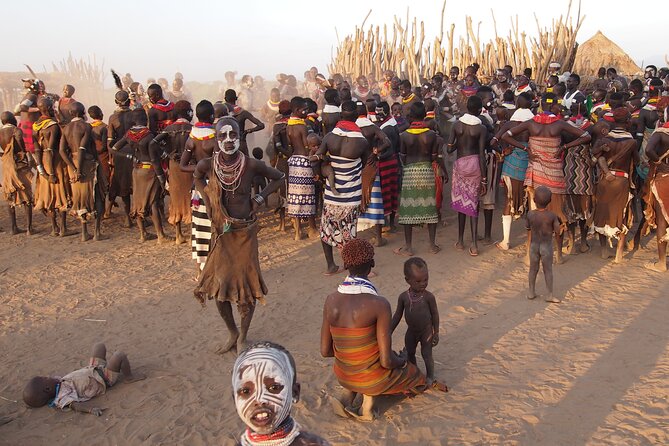
The Omo Valley is not a museum you stand in front of. It is a living region where style, identity, and community ties show up in daily choices, and you will see that right away in how people dress, adorn themselves, and even paint each other’s bodies for special moments.
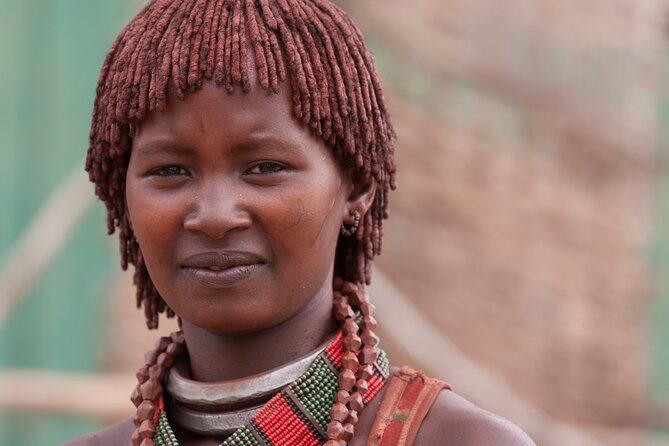
This trip is built around the idea that these communities are not just “performing for visitors.” They live in a landscape of wild trees, exotic flowers, lush vegetation, and clay soil that shapes color and materials. You can expect bold earth-reds from clay, striking whites, and vivid yellows, plus accessories and head decorations that make people look like they are wearing culture itself.
My practical take: go in with curiosity, and keep your expectations simple. Think of this as cultural encounters plus a lot of time outdoors. It is not the kind of tour where every stop feels identical. Each community has its own look and social rhythm, and the best moments come when you keep asking calm, respectful questions.
Day 1 to Day 2: Flying to Arbaminch, Lake Chamo Calm, Then Turmi
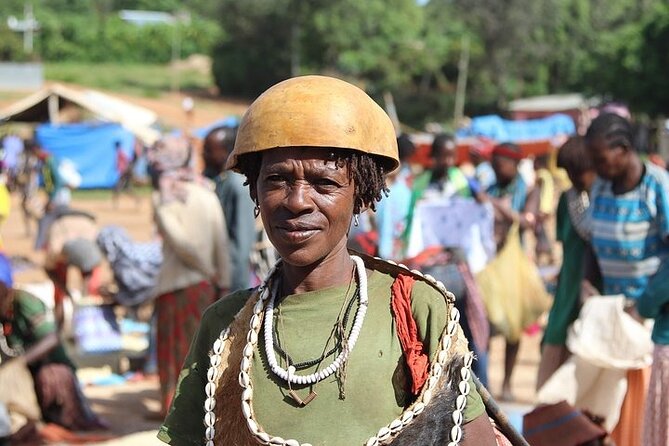
Day 1 starts with flying to Arbaminch, then a cultural safari in the mountains above the town. That first shift, from Addis Ababa to the highland setting, matters because it changes how the air feels, how the light hits the slopes, and how villages appear when you are not stuck inside a city.
You will then move into a Dorze village experience. The Dorze are tied to their mountain environment, and this stop is your early lesson in how geography shapes daily life and appearance.
On Day 2, you get a boat safari on Lake Chamo, which is a smart design choice in a tour like this. After the bustle of landing, driving, and walking around villages, a boat day gives your body a break and gives you time to watch the water and shoreline life at a slower tempo.
Then you head toward Turmi. This is also where the tour starts stacking in the Omo Valley’s signature rhythms: Konso village time, plus market culture when your day lines up. If you plan for the long travel gaps and bring patience, you will enjoy how quickly your trip becomes more than sightseeing.
Dorze and Konso: Highlands, Markets, and Real-Day Trade
The Dorze stop is one of the best ways to start, because it feels grounded in place. Mountains overlooking Arbaminch mean you are not only viewing traditions, you are seeing how community life fits into the setting it evolved in. You can also expect a more village-focused introduction, the kind where a guide helps you connect what you see with how people live.
Then Day 2 pivots to Konso. Konso village time gives you a different style of cultural context than the Dorze experience, and that contrast is part of the value of the route. You are comparing communities, not just checking off names.
Markets are where the trip becomes more “everyday.” Keyafer is scheduled for Thursdays, and Dimeka for Saturdays. If you hit those market days, you will see social life expressed through trading, gathering, and the movement of people. That is useful for your brain, because it adds a layer beyond clothing and body art, it shows how communities organize their day-to-day.
Practical tip: markets are crowded by nature. Keep your belongings zipped, expect dust and sun, and plan to wear something you can sit, stand, and walk in for a while.
Karo, Nyangatom, and Hamer: Body Art, Ornament Details, and Respect
Day 3 is where the tour leans harder into the Omo Valley’s visual identity. You drive to Karo, known for skin scarification and ornamental decorations. Even if you have seen photos before, in person it hits differently because you are seeing the work on bodies alongside the social purpose around it.
From there, you continue to Nyangatom. Then you finish the afternoon with the Hamer tribe village. This sequencing works well because it gives you a line of sight across related cultural expressions and keeps you from feeling like you got one dramatic stop and then were rushed through the rest.
A key consideration: body art and scarification are not props. They can carry meaning, status, age markers, and personal or communal identity. So the best way to handle this day is with patience and a respectful attitude. If you feel uncertain about what is appropriate to ask or photograph, slow down and let your English speaker driver guide lead the pacing.
Also, expect emotion in your experience. Not all emotion is comfortable. That is normal with cultural travel. Your job is to stay curious, stay kind, and remember this is people’s lives first.
Note on included villages: the package includes admission coverage for multiple named villages, including Mursi. If your route day includes that village, you should not have to worry about separate entry fees for it.
Five-day runs across the country


Dassenech by the Omo River, Ari Near Jinka, and the Museum Stop
Day 4 brings a major geography shift. You visit the Dassenech tribe village in Omorate town by the Omo River. River towns tend to feel different because the water affects daily schedules, transport, and the way people gather. This stop is the kind that helps you understand why the Omo Valley can be both harsh and richly cultural at the same time.
After that, you return toward Turmi, then drive to Jinka. In Jinka you visit the Ari village and also stop at the South Omo Ethnography Museum. That museum add-on is not just a break, it is a chance to process what you saw outdoors with a bit more context and structure.
Again, markets can appear in your schedule depending on the day of week. Keyafer is tied to Thursdays, Dimeka to Saturdays, and those market visits show up more than once in the trip structure.
My advice for this day: treat it like two experiences stacked together. First, the village and river context. Second, the museum as your way to connect meaning and history to what looked visual. It is an efficient way to stop feeling like you only watched colors and started learning why those colors matter.
Transport, Time on the Road, and How to Make It Feel Comfortable
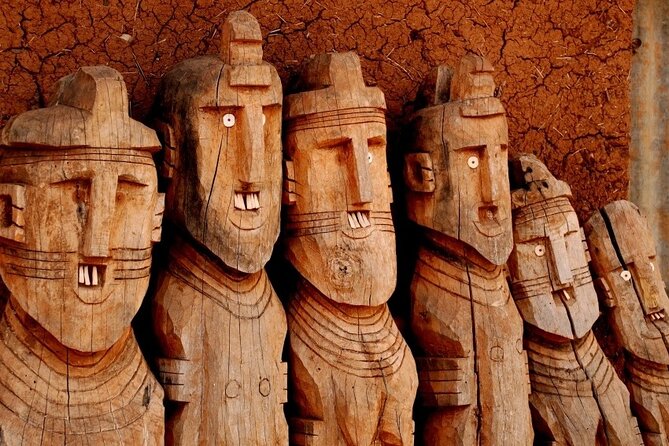
This tour runs over five days with about four nights of hotel accommodation, and it uses private transportation in an air-conditioned vehicle. That is a big practical win for a route that includes multiple drives, some village walking, and long stretches of changing scenery.
But comfort is not the same as luxury. Expect warm conditions, sun exposure, and dust. The itinerary design makes frequent stops, so you are never far from something interesting, but you are also never in one place long enough to truly “rest.”
Here is what I’d pack mentally, even if you are the flexible type:
- Bring breathable layers for sun and shade changes.
- Have a hat, sunscreen, and something to protect your eyes.
- Bring cash for personal purchases at markets, since the tour includes admissions but not necessarily your own shopping.
- Stay hydrated, especially on market and river-adjacent days.
Also, because the experience requires good weather, keep your schedule brain calm. If weather shifts, you may need to accept a different plan date or timing, because outdoor parts matter here.
Guides, Small Groups, and Why Service Quality Makes a Difference
The tour caps at 13 travelers, which is a real difference-maker. Small groups help in two ways. First, village visits feel more respectful because people are not being pushed through like a crowd at a theme park. Second, you get more time for questions, and it is easier for an English speaker driver guide to manage pacing.
GishAbay Ethiopia Tours shows up in the way they handle people, not only places. In other Ethiopia experiences tied to the same company, guides like Henok are praised for explaining the city with real passion, even turning a stopover into a memorable local food moment. Coordinators such as Yenew are also described as highly professional and attentive during a trip. I treat that as a sign that your day-to-day support matters here, especially on a route that crosses multiple communities.
So when you book, lean on your guide. Ask what you should and should not photograph. Ask what each stop means in plain terms. If the guide tells you when to slow down or when not to hover, take that seriously. It makes your experience smoother and it keeps interactions respectful.
Price and Value: Is $830 Worth It?
At $830 per person for about five days, this is not a budget day-trip. But value comes from what is included, not from the sticker price alone.
What you get in the package is substantial:
- Private transportation throughout
- Air-conditioned vehicle
- Hotel accommodation for four nights
- English speaker driver guide plus a professional guide
- Entry and admission coverage for the listed villages and markets, including Dorze, Konso, Kara, Nyangatom, Mursi, Hamer, Dassenech, Ari, plus Keyafer and Dimeka markets
When you look at it this way, your biggest costs are already absorbed by the tour. You are paying for planning, guiding, logistics, and admissions across several different community stops, plus at least one boat safari and the museum component. In places like the Omo Valley, those details are what often decide whether a trip feels organized or chaotic.
Group discounts may apply, and the maximum group size suggests you are paying for a more controlled experience rather than a free-for-all. If your alternative is arranging a similar route with separate guides and separate admissions, the tour price can start looking like good sense.
The drawback is simply this: you are paying for structure, and the tradeoff is that your schedule is set. If you hate time limits and road travel, you might find that harder than the price itself.
Who This Omo Valley Trip Fits Best
This trip is best for you if you want a focused cultural route and you like to learn in real time, not just look at photos. You will probably enjoy it if you:
- Like small group travel and hate feeling herded.
- Are curious about how communities express identity through clothing, paint, and ornaments.
- Enjoy markets and are okay with crowds and heat outdoors.
- Want a route that includes both village visits and a museum stop for context.
It might be less ideal if you:
- Want a slow vacation with long free mornings and afternoons.
- Struggle with lots of driving days.
- Are very sensitive to emotionally intense cultural scenes tied to body art and scarification.
The good news is that the tour includes an English speaker driver guide and a professional guide, and the company has a reputation for being attentive to people’s needs, which can help if you get tired or overwhelmed.
Should You Book This 5-Day Omo Valley Tour?
Book it if you want a structured, small-group cultural route that includes transport, four nights of lodging, guiding, and the main admission pieces. The combination of a Lake Chamo boat safari, multiple named village encounters, market days at Keyafer (Thursdays) and Dimeka (Saturdays), plus the South Omo Ethnography Museum gives you more than one way to understand the region.
Skip it or think twice if you hate road time, you need a very flexible schedule, or you cannot handle heat and sun. Also, take the weather requirement seriously. Outdoor components matter, so choose your date with realistic expectations.
If you do book, go with a calm attitude and a respectful mindset. This trip is at its best when you treat each stop as a human interaction, not a photo opportunity checklist.
FAQ
What is the group size for this Omo Valley tour?
The tour has a maximum of 13 travelers.
Is pickup offered for this experience?
Yes, pickup is offered.
What is included in the tour price?
Included are private transportation, all fees and taxes, an air-conditioned vehicle, hotel accommodation for 4 nights, an English speaker driver guide, a professional guide, and entry and admission for the listed villages and markets.
Are village and market entrance fees covered?
Yes. Entry and admission for the listed villages and markets are included, and the experience lists admission ticket as free.
When do Keyafer and Dimeka markets happen on this tour?
Keyafer market is scheduled for Thursdays, and Dimeka market is scheduled for Saturdays.
What if weather is bad?
The experience requires good weather. If it is canceled due to poor weather, you will be offered a different date or a full refund.
Five-Day Circuits
- 5 DAYS Lalibela, Axum, Tigray churches and Danakil
★ 5.0 · 34 reviews - Danakil Depression and Lalibela 5 Days Tours
★ 5.0 · 28 reviews - 5 Days North Ethiopia Tours
★ 5.0 · 23 reviews - 5 DAYS Axum, Lalibela, Tigray churches and Danakil
★ 4.5 · 22 reviews - 5 Days Omo Valley Tours
★ 5.0 · 15 reviews
The Rest of the Ethiopia List
- Full Day Tour of Addis Ababa with Hotel Pickup and Drop-off
★ 5.0 · 430 reviews - Taste of Ethiopia
★ 5.0 · 406 reviews - Day Trip From Addis Ababa See Historical Monastery,Stunning Nature,Animals,Birds
★ 5.0 · 303 reviews - Addis Ababa: Debre Libanos, Blue Nile Gorge, and Cave Tour
★ 4.5 · 256 reviews - Addis Ababa Guided City Tour With Airport & Hotel Pick Up
★ 5.0 · 237 reviews
South to the Omo Valley
- 6 Days Omo Valley Tribes Tours From Addis Ababa
★ 5.0 · 33 reviews - 3 Days Omo Valley Tour
★ 5.0 · 24 reviews - 5 Days Omo Valley Tours
★ 5.0 · 15 reviews - 6 Days Lalibela, Omo Valley and Harar
★ 5.0 · 15 reviews - Private Omo Valley Tours From Addis Ababa
★ 5.0 · 12 reviews
Other Ethiopia tours we have written up

Omo Valley Cultural Tours, compared.
 ★ 5.06 Days Omo Valley Tribes Tours From Addis AbabaFrom $1,39933 reviews
 ★ 5.0Lalibela, Axum, Danakil and Omo Valley 8 DAYSFrom $2,05129 reviews
 ★ 5.03 Days Omo Valley TourFrom $80024 reviews
 ★ 5.05 Days Omo Valley ToursFrom $75015 reviews
 ★ 5.06 Days Lalibela, Omo Valley and HararFrom $1,53815 reviews
 ★ 5.0Private Omo Valley Tours From Addis AbabaFrom $1,89012 reviews
 ★ 5.09 Days Tours To Danakil Depression, Simen MNP, Lalibela With Omo Valley TribesFrom $1,80011 reviews
 ★ 5.05 Day Private tour to the Omo Valley Tribes and Adventure TourFrom $1,29011 reviews
Browse the lists this tour appears in