

REVIEW · OMO VALLEY CULTURAL TOURS
3-Day Cultural Tour in South Omo Valley
South Omo cultures in three days can feel like speed, in a good way. This 3-day cultural tour in Ethiopia’s Lower Omo River region mixes tribal community visits with scenic river crossings and National Park drives, all organized by Liyu Ethiopia Tours with an English-speaking guide. I like how the itinerary is built around meeting distinct groups like the Hamer in Turmi and the Mursi in Mago National Park, not just quick photo stops. I also like that your trip runs as a small group, up to 6 travelers, which makes it easier to ask questions, move at a human pace, and actually talk with people instead of just passing through.
My one caution is simple: parts of this route are weather and access dependent. The program requires good weather, and some sections involve long drives and early starts, so you will want flexible expectations and comfortable clothing for dust, heat, and lots of walking.
In This Review
- Key highlights worth knowing
- South Omo in 3 days, what you actually get for $700
- Day 1, flying to Jinka then Turmi for Hamer life and Bana village
- Day 2, Omorate with Dassanech, Omo River dugout canoe views, and a possible Hamer marriage ceremony
- Day 3, driving through Mago National Park to meet the Mursi in their village setting
- Logistics that actually matter: transport, timing, and small-group pacing
- How the tour avoids checklist tourism, and what to do to get more out of it
- Who should book this South Omo route, and who should skip it
- Meals, costs, and how to plan your spending smart
- Should you book? My take
- FAQ
- What is the duration of the 3-Day Cultural Tour in South Omo Valley?
- Where does the tour start and end?
- What time does the tour start?
- Is pickup offered?
- How many people are in the group?
- What is included in the price?
- Are meals included?
- Are admission tickets included?
- Is a mobile ticket provided?
- What is the cancellation policy?
- Are weather changes a concern for this tour?
Key highlights worth knowing

- Small group size (max 6) keeps the experience personal and less chaotic
- English-speaking guide support helps you understand what you are seeing as you go
- Mago National Park included drives on Day 1 and Day 3 add context and logistics muscle
- Dugout canoe crossing in the Omo River area during the Dassanech visit is a memorable, practical touch
- Park admission is partly included depending on the day and stop (Day 2 Omorate is marked free)
- Attentive team mentioned by name, including guide Tariku and driver Sitotaw
More Omo Valley itineraries, reviewed
- 6 Days Omo Valley Tribes Tours From Addis Ababa★ 5.0 · 33 reviews
- 3 Days Omo Valley Tour★ 5.0 · 24 reviews
- 5 Days Omo Valley Tours★ 5.0 · 15 reviews
- 6 Days Lalibela, Omo Valley and Harar★ 5.0 · 15 reviews
South Omo in 3 days, what you actually get for $700
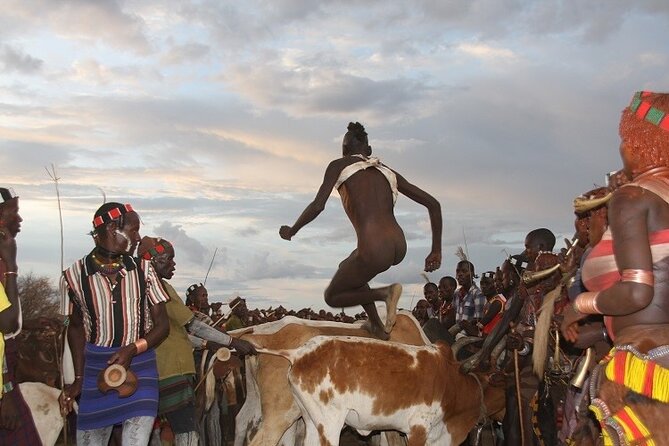
Let’s talk value first, because $700 in Ethiopia can mean very different things depending on what is wrapped into the price. Here, you get a clear structure for three days of guided cultural visits, plus an air-conditioned vehicle, accommodation with breakfast, all fees and taxes, and an English-speaking guide. Lunch and dinner are not included, so plan on budgeting for those meals yourself.
The other big value lever is time. South Omo is not a “drop in for an afternoon” destination. You are starting from Addis Ababa and then running the kind of route that usually eats up days if you try to DIY. In this tour, you also have an itinerary that includes a flight to Jinka early on Day 1, then driving onward to places like Turmi and Mago National Park. That matters, because it turns distance into an organized schedule.
The group limit of up to 6 travelers also changes the math. With a larger group, tribal visits can turn into a rush. With a smaller group, you tend to get more time to ask questions, get translation help, and handle the practical stuff like timing, water, and knowing when to be respectful and when to let conversations happen naturally.
Day 1, flying to Jinka then Turmi for Hamer life and Bana village
Day 1 is built around arrival and then a cultural landing right away. You start from Bole Addis Ababa International Airport at 9:00 am, and the program includes a flight to Jinka in the morning. Once you land, you drive toward Turmi, home to the Hamer (Hamar) people.
The Hamer stop is the core of the day. This is one of Ethiopia’s most recognizable Omo Valley cultures, known for body adornment and distinctive jewelry. You will hear how women often wear heavy polished iron neck jewelry, and you will also see the well-known role of scars that are tied to cultural ideas of devotion and relationships. This is not a costume show. It is part of a lived system of identity, family bonds, and social meaning.
Also on the way, you visit Bana village. That routing piece matters. If you only visit one community, it can feel like a single snapshot. Adding Bana on the drive helps your brain build a sense of variation in daily life as you move through the region.
What to expect on Day 1 in practical terms:
- You will likely spend a lot of time in vehicles the day begins with flight and then continues with driving.
- You will want to keep your camera ready, but also be ready to pause it when people want conversation.
- The stop is marked with admission ticket included for that block of time, which is helpful for budgeting and reduces surprises once you arrive.
Day 2, Omorate with Dassanech, Omo River dugout canoe views, and a possible Hamer marriage ceremony
Day 2 is where the route feels more alive, because you move through different environments and then add the human event factor. In the morning, the tour heads to Omorate for an excursion to visit the Dassanech ethnic group. The program notes the journey as 70 km one way, which gives you a realistic sense that this is not a near-by stop. Dassanech people are associated with a nomadic lifestyle, and you can expect attention to body decoration and scarification as part of visual culture.
One of the most distinctive parts of this day is the Omo River crossing in a dugout canoe. The practical takeaway is that you are not only visiting a community on land. You are also seeing how daily life connects to the river, and that often changes how you interpret what you are seeing. It also makes the day more than a sequence of faces and clothing.
Then you return toward Turmi territory, and here is the event-based payoff. Turmi is known for traditional events, and the itinerary specifically points to a chance to participate in a Hamer marriage ceremony, including a bull jumping ceremony. That detail is important because it tells you the tour is designed to be flexible around timing, not locked into a rigid checklist. If the bull jumping ceremony is happening, the afternoon excursion to Omorate may be canceled, because the operator considers it so worth seeing.
That flexibility is a double-edged sword:
- It makes the experience feel more real, because ceremonies cannot be scheduled like museum hours.
- It also means your exact afternoon may shift based on the community calendar and what is actively happening when you arrive.
In the schedule, Day 2 is described as admission ticket free for the Omorate visit, and you drive to Jinka for overnight stay late afternoon. So, you end Day 2 with a reset night, rather than trying to keep going until late.
Day 3, driving through Mago National Park to meet the Mursi in their village setting
On Day 3, the tour returns to Mago National Park by driving across it toward a Mursi village. The program notes this as a drive through the park and then a village visit.
The Mursi are widely recognized for lower lip plates and also for earlobe plates. In Omo Valley travel, it is easy for people to reduce body modifications to a spectacle. A good operator will frame it in cultural context and keep the focus on meaning, not only on appearance. In this tour, the emphasis is on visiting communities and observing traditions as part of an overall way of life, not treating each marker like a headline.
Day 3 is also marked with admission ticket included for the time at the Mursi village. After that, you return to Addis Ababa and end back at Bole Addis Ababa International Airport, with the tour anchored to the same meeting point.
Practical expectations for the final day:
- You will likely feel the fatigue of three days of travel and cultural visits. That is normal.
- You will want to keep your pace respectful. Some visitors get overly excited and forget that this is someone’s home and daily life.
- You will also want to keep an eye on light and timing, since the best photo moments usually happen when you are least rushed.
More history on the ground
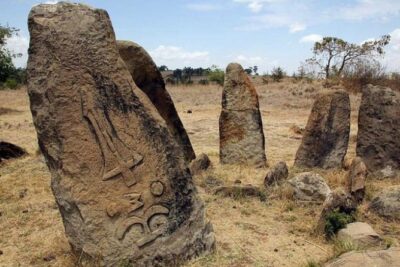
Logistics that actually matter: transport, timing, and small-group pacing
This tour is not trying to cram in everything, and that is partly because of how remote the area is. The operator provides an air-conditioned vehicle, and the group size maxes out at 6 travelers. In practice, that means fewer moving parts, less waiting, and a smoother rhythm for long drives.
Also, the tour starts and ends at the same airport in Addis Ababa, which reduces transfer stress. The start time is 9:00 am, and confirmation happens at booking, with a note that you receive booking confirmation at the time you reserve.
Two more details that influence how your trip feels:
- Pickup is offered. That can make the Addis staging smoother, especially if you are arriving the same day.
- Mobile ticket is part of the package. That sounds small, but in places where paperwork can slow you down, it helps you get moving fast.
If you dislike unpredictable schedules, this might not feel “tight” in the way some tours do. The bull jumping possibility on Day 2 is the clearest example. But if you like the idea that a cultural event calendar can change your afternoon, you will likely appreciate the flexibility.
How the tour avoids checklist tourism, and what to do to get more out of it
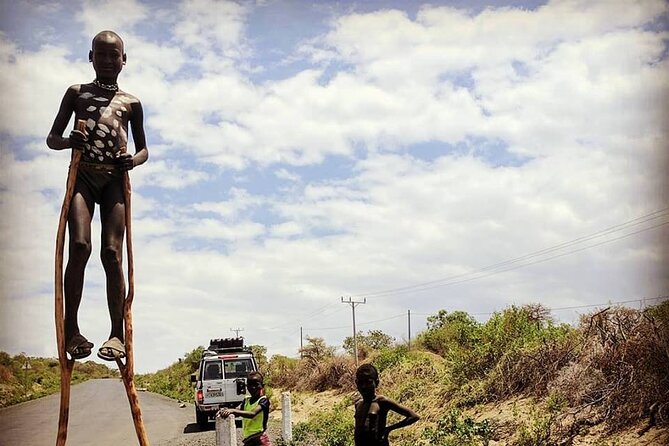
The operator markets itself as local-led and designed around remote, less-traveled routes, and the way the team is described aligns with that. In one of the standout pieces of feedback, the experience was strongly tied to the professionalism and warmth of the guide Tariku and driver Sitotaw. That kind of naming matters because it points to consistency, not anonymous “tour staff.”
So how do you get more out of this kind of trip, beyond just seeing the main markers?
Here are practical moves that fit this itinerary:
- Keep your questions open. Cultural visits go better when you ask about family life, daily work, and what things mean.
- Give the guide room to manage boundaries. Body adornment and ceremonies can be sensitive, and your best shots come when you are respectful first.
- Pace your camera use. You will feel the difference between snapping nonstop and having a real conversation for a few minutes.
- Budget your attention. You are traveling from community to community, so plan mentally for moments where you will just watch, listen, and let your brain absorb.
This is a tour where the “value” is not a single photo moment. It is the flow: arriving with context, seeing how different groups live, and learning to read culture as something lived, not performed on schedule.
Who should book this South Omo route, and who should skip it

This tour suits you if you want a structured introduction to multiple Omo Valley tribes in a short window, with guidance that helps you interpret what you see. It also fits travelers who like small groups, prefer having basic logistics handled, and value event timing, especially the possible Hamer ceremony element.
You might want a different plan if:
- You hate long drives and don’t want to spend much time in vehicles.
- You want a fully predictable itinerary minute by minute.
- You are looking for comfort-level tourism. This is cultural travel in a remote part of Ethiopia, and the day-to-day reality will be more practical than cushy.
Meals, costs, and how to plan your spending smart
Lunch and dinner are not included, so you should plan for food expenses during the three days. Since you will have breakfast at the accommodation, your best strategy is to budget for two meals per day on most days, plus any snacks or water you need on the move.
Also remember, when a tour includes park access and admission for certain days, that does not automatically mean every expense is covered. In this itinerary, admission is marked as included on Day 1 and Day 3, and marked free on the Omorate stop on Day 2. Keep that in mind when you estimate total daily spend, and ask your operator if any local costs arise at specific stops beyond what is listed.
Should you book? My take
I would book this tour if your priority is a guided, respectful introduction to South Omo cultures without trying to manage the logistics yourself. The combination of small group size, an English-speaking guide, included transport support, accommodation with breakfast, and a route that includes Hamer, Dassanech, and Mursi gives you real value for three days.
I would hesitate only if you want a perfectly fixed schedule, or if you are not comfortable with long travel days and the reality of remote visiting. If that sounds like you, then you might feel better with a slower plan or more “daytime-only” structure.
If you do book, go in with curiosity and patience. This is the kind of trip where the best moments often happen when you put the phone down and let the conversation start.
FAQ
What is the duration of the 3-Day Cultural Tour in South Omo Valley?
The tour runs for approximately 3 days.
Where does the tour start and end?
It starts at Addis Ababa Bole International Airport and ends at Addis Ababa Bole airport.
What time does the tour start?
Start time is listed as 9:00 am.
Is pickup offered?
Yes, pickup is offered.
How many people are in the group?
The tour has a maximum of 6 travelers.
What is included in the price?
The price includes an air-conditioned vehicle, all fees and taxes, accommodation with breakfast, and an English-speaking guide.
Are meals included?
Lunch and dinner are not included.
Are admission tickets included?
Admission ticket inclusion varies by stop. Day 1 is marked admission ticket included, Day 2 Omorate is marked admission ticket free, and Day 3 Mursi in Mago National Park is marked admission ticket included.
Is a mobile ticket provided?
Yes, mobile ticket is listed as a feature.
What is the cancellation policy?
Free cancellation is available up to 24 hours in advance for a full refund. If you cancel less than 24 hours before the start time, the amount paid is not refunded.
Are weather changes a concern for this tour?
Yes. The experience requires good weather, and if it is canceled due to poor weather, you will be offered a different date or a full refund.
Browsing Ethiopia More Widely
- Full Day Tour of Addis Ababa with Hotel Pickup and Drop-off
★ 5.0 · 430 reviews - Addis Ababa: Debre Libanos, Blue Nile Gorge, and Cave Tour
★ 4.5 · 256 reviews - Addis Ababa Guided City Tour With Airport & Hotel Pick Up
★ 5.0 · 237 reviews - Breathtaking Nature, Wildlife and Cave Church Tour – Free Pickups
★ 5.0 · 225 reviews - Full-Day Private City Tour of Addis Ababa
★ 5.0 · 147 reviews
The Rest of the Ethiopia List
- Full Day Tour of Addis Ababa with Hotel Pickup and Drop-off
★ 5.0 · 430 reviews - Taste of Ethiopia
★ 5.0 · 406 reviews - Day Trip From Addis Ababa See Historical Monastery,Stunning Nature,Animals,Birds
★ 5.0 · 303 reviews - Addis Ababa: Debre Libanos, Blue Nile Gorge, and Cave Tour
★ 4.5 · 256 reviews - Addis Ababa Guided City Tour With Airport & Hotel Pick Up
★ 5.0 · 237 reviews
South to the Omo Valley
- 6 Days Omo Valley Tribes Tours From Addis Ababa
★ 5.0 · 33 reviews - 3 Days Omo Valley Tour
★ 5.0 · 24 reviews - 5 Days Omo Valley Tours
★ 5.0 · 15 reviews - 6 Days Lalibela, Omo Valley and Harar
★ 5.0 · 15 reviews - Private Omo Valley Tours From Addis Ababa
★ 5.0 · 12 reviews
Other Ethiopia tours we have written up


Omo Valley Cultural Tours, compared.
 ★ 5.06 Days Omo Valley Tribes Tours From Addis AbabaFrom $1,39933 reviews
 ★ 5.0Lalibela, Axum, Danakil and Omo Valley 8 DAYSFrom $2,05129 reviews
 ★ 5.03 Days Omo Valley TourFrom $80024 reviews
 ★ 5.06 Days Lalibela, Omo Valley and HararFrom $1,53815 reviews
 ★ 5.05 Days Omo Valley ToursFrom $75015 reviews
 ★ 5.0Private Omo Valley Tours From Addis AbabaFrom $1,89012 reviews
 ★ 5.05 Day Private tour to the Omo Valley Tribes and Adventure TourFrom $1,29011 reviews
 ★ 5.09 Days Tours To Danakil Depression, Simen MNP, Lalibela With Omo Valley TribesFrom $1,80011 reviews
Browse the lists this tour appears in