
REVIEW · OMO VALLEY CULTURAL TOURS
South Omo Valley Tribes 8 Days Tour Package
Remote tribes meet Rift Valley scenery. This 8-day South Omo Valley tribes trip mixes Ethiopia’s big-picture history in Addis Ababa with remote village days in the Great Rift Valley, plus national park time and bird-filled lake stops. I like that the experience is built around real cultural practices, not just photos.
I also like the human touch built into the journey, especially if you have a guide like Haile or Danny. Clear English guidance matters here, because you will be moving long distances and hearing context for what you see, from carved funerary traditions to market routines.
Here is the main trade-off to think about: conditions are basic and the days are long, with early starts and plenty of road time. If you do better with smooth comfort and lots of downtime, this might feel like more adventure than relaxing.
In This Review
- Key things you will remember
- Addis Ababa setup: Mercato, museums, and Lucy’s Ethiopian start
- Driving south toward the Rift Valley: Tiya steles, Dorze houses, and mountain views
- Nechisar National Park HQ: Rift Valley lakes, wildlife scenery, and boat time
- Konso hilltop villages and wagas: how people shaped hard country
- Karo along the Omo River: chalk mixtures, face art, and tsetse reality
- Konso center, then Mursi and Key Afer market: lip plates and weekly rhythms
- Hawassa and Abijatta-Shalla National Park: pelicans, flamingoes, and hot springs
- Shashemene finale: Amora Gedel fishing market, Ras Tefreian village, and Wendo Genet
- Price and logistics: what $1,890.54 really buys you
- Who should book this South Omo Valley tribes tour
- Should you book it or skip it?
- FAQ
- What time does the tour start?
- How long is the South Omo Valley tribes tour?
- Is this a private tour?
- Is pickup available?
- What is included in the tour price?
- What is not included?
- Which cultural groups and places are visited?
- Is the tour physically demanding?
- Can I cancel for a full refund?
Key things you will remember
- Addis Ababa history first, with time at the Ethnological Museum and a visit to Lucy at the National Museum
- UNESCO stops in the mix, including Tiya’s stele fields and the Konso World Heritage cultural site
- Nechisar National Park plus boat time, with sweeping Rift Valley views and the Bridge of God area
- Karo cultural focus, including face and body painting practices using white chalk and colored mixes
- Mursi village visit, including the well-known custom of lower lip shaping with clay discs
- Lake Hawassa and wildlife nearby, including a daily fishing market where birds get very close to people
More Omo Valley itineraries, reviewed
- 6 Days Omo Valley Tribes Tours From Addis Ababa★ 5.0 · 33 reviews
- 3 Days Omo Valley Tour★ 5.0 · 24 reviews
- 5 Days Omo Valley Tours★ 5.0 · 15 reviews
- 6 Days Lalibela, Omo Valley and Harar★ 5.0 · 15 reviews
Addis Ababa setup: Mercato, museums, and Lucy’s Ethiopian start
Your day begins as soon as you land at Bole International Airport. You clear immigration, handle baggage and customs, then meet a FINOT Tour Ethiopia representative for the transfer to your hotel. With the tour starting around 7:00 am, you are on a schedule right from the beginning, so you will want to arrive rested enough to handle a busy first day.
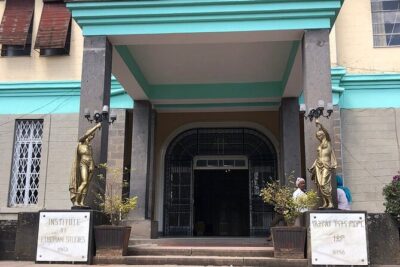
Once you get over the arrival shuffle, you head into Addis culture in a grounded way. The plan includes the Mercato Market area and a half-day guided museum visit at the Ethnological Museum, where you see artifacts and displays tied to Ethiopia’s many ethnic groups. It is a good start because it gives you a framework for the tribal visits later, without pretending the world is simple.
The museum time keeps going with the National Museum, where you visit Lucy, the famous 3.2 million-year-old female hominid discovered in Ethiopia. Even if you are not a museum person, I like this opener because it reminds you the region is a deep-time story, not just a travel photo checklist. It also helps you understand why guides take questions seriously here, because the whole trip is about place and meaning.
Driving south toward the Rift Valley: Tiya steles, Dorze houses, and mountain views
On day two, you leave Addis Ababa early and start the long scenic grind south. You travel down toward Arbaminch via Butajira and Hosaina, with a quick stop at Tiya’s UNESCO registered stele fields. That stop matters because it breaks up the drive with something historic and specific, not just scenery.
You will also have a lunch break at Wolayita Sodo before continuing onward. Then the driving climbs as you ascend into the Gughe Mountains, reaching the Dorze highland village area at around 2600 m with viewpoints over Lake Abaya and Lake Chamo along the way. Expect cool air compared to Addis, and plan for layers even if the sun is strong.
Dorze Village is a standout because it is so visually different. The Dorze are known for tall, beehive-like houses and for cotton weaving, so your time there is about seeing daily life and craftsmanship up close. This is not a quick roadside stop, it is a real village visit with the kind of pacing that helps you notice details.
One practical consideration: the higher elevation and mountain roads mean you should take it easy with motion sickness risk and keep water handy. The tour includes bottled water, but your body still needs time to adjust, especially after an early departure.
Nechisar National Park HQ: Rift Valley lakes, wildlife scenery, and boat time
After the cultural days, the trip shifts into nature mode with Nechisar National Park HQ. The park is known for being scenic, with standout wildlife scenery and fewer crowds than many big-name safari places. You get a sweeping view over the plains and volcanic hills on the eastern boundary.
What I like here is that the park experience is tied to the lakes. You are in the Rift Valley system, with Lake Abaya and Lake Chamo central to the views, and the area known as the Bridge of God between them. The plan includes a boat trip, which is the best way to slow down and really feel how the lakes shape everything around you.
This is also the day where you start to understand how “tribes and nature” is not just a marketing line. The same remoteness that protects village traditions also shapes wildlife patterns and bird life around the lakes. If you enjoy photography, you will find lots of angles, but even if you do not, it is the easiest part of the trip to simply watch and breathe.
Konso hilltop villages and wagas: how people shaped hard country
Day four turns to Konso, a World Heritage cultural site. In the morning you visit a Konso tribal village built on hilltops, designed as protection from lowland tribes. The village setting is defined by high stonewalls, separate compounds, and terraced agricultural fields that show how people adapted to harsh land.
The architecture is the hook, but the deeper value is how the village layout supports social cohesion. You get to see how built space connects to daily life, including how households and fields work together rather than as separate things. It is one of those places where you can feel the logic even if you do not speak the language.
The highlight many people remember is the funerary tradition called wagas. These are carved wooden sculptures made in honor of Konso warrior heroes, and the tradition is described as largely unchanged heritage. I like that the trip does not treat these carvings as random artifacts. Instead, they are presented as part of the community’s honor system and memory.
If you have limited mobility, this day can be demanding because hilltop villages often involve uneven ground and walking on terraces. You do not need to be an athlete, but you should move at a careful pace and plan for a warm sun depending on the season.

Karo along the Omo River: chalk mixtures, face art, and tsetse reality
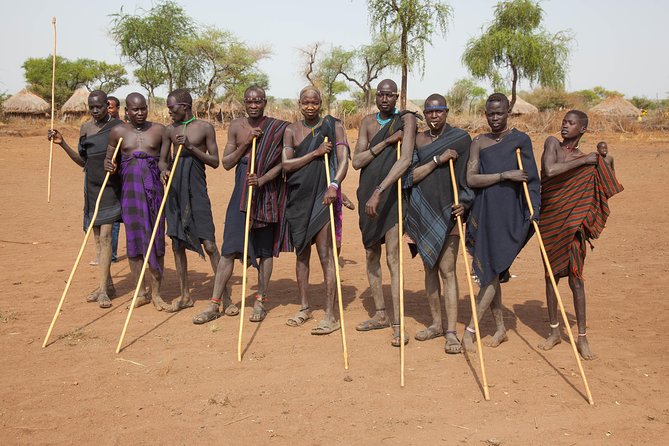
Day five moves you to Karo country, and it is one of the most visually striking cultural stops. You drive into a new tribal area and focus on the Karo, who live along the east bank of the Omo River. Their farming rhythm is described as flood retreat cultivation, with maize, sorghum, and beans as main crops.
Here is why the Karo visit is more than face paint. Unlike some other groups, they keep only a small number of cattle due to the prevalence of tsetse flies. That detail gives context for how environment shapes choices, and it makes the culture feel grounded rather than staged.
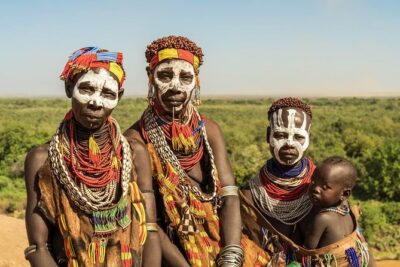
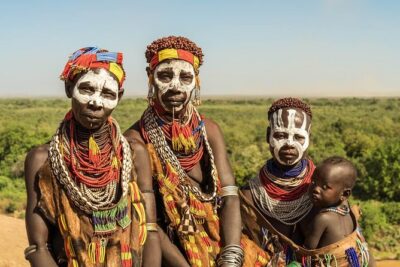
Body and face painting is a major part of ceremonies, and you learn how the colors are made. White chalk is mixed with yellow rock, red iron ore, and charcoal to create the required tones. Sometimes face masks are worn, and clay hair is also part of the look during certain moments.
One thing to consider is that this day is about ceremonies and identity markers, so timing matters. If you are hoping for a perfectly choreographed show, you might feel disappointed. But if you approach it like meeting real people and their traditions, this day is memorable for the way it explains meaning behind appearances.
Konso center, then Mursi and Key Afer market: lip plates and weekly rhythms
Day six begins with a stop at the Konso Cultural Centre, which acts like a bridge between the village visit and the next wave of tribal culture. From there you drive toward Jinka and then on to a Mursi village visit.
The Mursi custom is the headliner: when women reach maturity, their lower lips may be slit and circular clay discs inserted. It is a tradition with a specific cultural role, and the value of having an English-speaking guide here is that you can ask what questions matter to you, and get context tied to the practice rather than myths.
After the village time, you head to Key Afer Tribal Market, described as one of the best markets in the Omo Valley. Because the market happens weekly and multiple tribes attend, it is a living crossroad where you can see goods and routines in motion. Your guide helps you walk through sections such as animals, vegetables, cereals, and more.
Then you drive back for an overnight in Koso for the next leg of the trip. This is a day that can feel intense, and that is not a bad thing. It is intense because the region is intense, and you are seeing how cultures coexist on the same calendar.
Hawassa and Abijatta-Shalla National Park: pelicans, flamingoes, and hot springs
After breakfast, day seven shifts toward Hawassa. The driving puts you back into the rhythm of long distances, but the goal is clear: Rift Valley lake life. The plan includes time connected to Abijatta-Shalla National Park, which is one of Ethiopia’s national parks and sits about 200 km south of Addis Ababa.
You focus on aquatic birds, including great white pelicans and greater and lesser flamingoes. If bird watching is your thing, you will like the mix of species described, and the fact that this area is tied to endemic mammals like warthogs and grand gazelles. The stop is also described as including ostrich farming, which can be an interesting contrast to the wild parts of the park.
You also have a mention of a hot spring visit. I treat this as a “slow down” window. After days of dust, walking, and cultural intensity, a warm-water pause can be the difference between feeling worn out and feeling refreshed.
Shashemene finale: Amora Gedel fishing market, Ras Tefreian village, and Wendo Genet
Day eight is all about closing the loop with lake, community, and a little thermal relief. You leave Hawassa and drive back to Addis Ababa, but not in a rushed, skip-everything way. The first stop is Amora Gedel, the daily fishing market on the shore of Lake Hawassa, where you get very close to pelicans, storks, and other birds that are used to human company.
This part can be surprisingly fun, because it is not just a market. It is a snapshot of how people and wildlife share a space. You are also in an emotional bookend moment after seeing far-off villages and cultural traditions earlier in the trip.
Then you stop in Shashemene to visit Ras Tefreian village. Shashemene is described as a town given to Ras Tefreian, a Rasta community, by Emperor Haile Selassie I. It is a different side of Ethiopian social history, and I like that the trip does not only focus on the Omo region. It broadens the story of who Ethiopia is.
Finally, you head to Wendo Genet Spa to swim on thermal baths and relax before returning to Addis. The day ends with a traditional Ethiopian buffet dinner and local drinks, which is a nice way to turn the trip into something you can savor, not just survive.
Price and logistics: what $1,890.54 really buys you
The price is listed at $1,890.54 per person for about 8 days. On paper, that is not cheap, but the value comes from what it covers: all fees and taxes, an air-conditioned vehicle, 2 liters of bottled water per day per passenger, and the driver allowance.
You also get multiple layers of guidance. The tour includes an English-speaking guide plus local guide fees. On a route like this, that matters because the days are packed and context is what turns random visits into understanding.
Meals are also included: breakfast for 7 days, lunch for 8 days, and dinner for 8 days. When food is included, you are less likely to waste time searching for acceptable options after long drives. You also avoid the temptation to cut corners on quality in remote places.
Two things to keep in mind: flights are not included, and personal extras are not included. Alcoholic drinks, and possible video and camera fees if and where applicable, are also not part of the package. Tips and personal phone or laundry costs are your responsibility.
Because it is a private tour/activity, you are not sharing the vehicle with strangers. Only your group participates, which usually means a smoother pace and fewer compromises when you want to ask questions or take a breather.
Who should book this South Omo Valley tribes tour
Book this if you want a real road trip through Ethiopia, not a quick in-and-out culture day. You will enjoy it most if you like cultural explanation, steady pacing that mixes villages with national parks, and a willingness to accept basic conditions as part of the experience.
It also suits photographers and nature lovers, because you get boat time at Nechisar and lake bird watching around Abijatta-Shalla and Lake Hawassa. If you want clean comfort only, you may find the schedule and travel days a lot.
This is also a good fit for couples and small groups who want private guiding. If you are the type who asks questions and likes to learn the why behind customs, you will get more out of it.
Should you book it or skip it?
I think you should book this South Omo Valley tribes tour if your priority is meaning, variety, and depth across cultures and landscapes. The combination of museum framing in Addis, UNESCO sites like Tiya and Konso, and the nature add-ons at Nechisar and Abijatta-Shalla gives the trip balance instead of turning it into a single-theme sprint.
Skip it if you want mostly comfort, short days, or a slow pace with lots of free time. The route is hands-on, and the physical demands are real, even though the fitness level listed is moderate.
If you do book, start planning now for layers, steady shoes, and a patient mindset. This trip rewards people who show up curious and keep expectations grounded.
FAQ
What time does the tour start?
The start time is listed as 7:00 am.
How long is the South Omo Valley tribes tour?
It is listed as 8 days (approx.).
Is this a private tour?
Yes. It is described as a private tour/activity, and only your group will participate.
Is pickup available?
Pickup is offered.
What is included in the tour price?
The tour includes all fees and taxes, an air-conditioned vehicle, 2 liters of bottled water per day per passenger, driver allowance, English speaking guide and local guide fees. Meals are included for breakfast (7), lunch (8), and dinner (8).
What is not included?
International and domestic flights are not included, along with alcoholic drinks. Video and camera fees may apply if and where applicable. Tips, telephone calls, laundry services, and other personal expenses are also not included.
Which cultural groups and places are visited?
The tour includes visits to Dorze Village, Konso tribal areas, Karo tribal areas, and Mursi villages. It also includes Nechisar National Park, Abijatta and Shalla National Park, Lake Hawassa stops including Amora Gedel fishing market, and Shashemene including Ras Tefreian village.
Is the tour physically demanding?
The additional info says travelers should have a moderate physical fitness level.
Can I cancel for a full refund?
Yes, the tour offers free cancellation. You can cancel up to 24 hours in advance for a full refund. Cancellation less than 24 hours before the start time is not refunded.
Browsing Ethiopia More Widely
- Full Day Tour of Addis Ababa with Hotel Pickup and Drop-off
★ 5.0 · 430 reviews - Addis Ababa: Debre Libanos, Blue Nile Gorge, and Cave Tour
★ 4.5 · 256 reviews - Addis Ababa Guided City Tour With Airport & Hotel Pick Up
★ 5.0 · 237 reviews - Breathtaking Nature, Wildlife and Cave Church Tour – Free Pickups
★ 5.0 · 225 reviews - Full-Day Private City Tour of Addis Ababa
★ 5.0 · 147 reviews
The Rest of the Ethiopia List
- Full Day Tour of Addis Ababa with Hotel Pickup and Drop-off
★ 5.0 · 430 reviews - Taste of Ethiopia
★ 5.0 · 406 reviews - Day Trip From Addis Ababa See Historical Monastery,Stunning Nature,Animals,Birds
★ 5.0 · 303 reviews - Addis Ababa: Debre Libanos, Blue Nile Gorge, and Cave Tour
★ 4.5 · 256 reviews - Addis Ababa Guided City Tour With Airport & Hotel Pick Up
★ 5.0 · 237 reviews
South to the Omo Valley
- 6 Days Omo Valley Tribes Tours From Addis Ababa
★ 5.0 · 33 reviews - 3 Days Omo Valley Tour
★ 5.0 · 24 reviews - 5 Days Omo Valley Tours
★ 5.0 · 15 reviews - 6 Days Lalibela, Omo Valley and Harar
★ 5.0 · 15 reviews - Private Omo Valley Tours From Addis Ababa
★ 5.0 · 12 reviews
Other Ethiopia tours we have written up
Omo Valley Cultural Tours, compared.
 ★ 5.06 Days Omo Valley Tribes Tours From Addis AbabaFrom $1,39933 reviews
 ★ 5.0Lalibela, Axum, Danakil and Omo Valley 8 DAYSFrom $2,05129 reviews
 ★ 5.03 Days Omo Valley TourFrom $80024 reviews
 ★ 5.05 Days Omo Valley ToursFrom $75015 reviews
 ★ 5.06 Days Lalibela, Omo Valley and HararFrom $1,53815 reviews
 ★ 5.0Private Omo Valley Tours From Addis AbabaFrom $1,89012 reviews
 ★ 5.05 Day Private tour to the Omo Valley Tribes and Adventure TourFrom $1,29011 reviews
 ★ 5.09 Days Tours To Danakil Depression, Simen MNP, Lalibela With Omo Valley TribesFrom $1,80011 reviews
Browse the lists this tour appears in