
REVIEW · DANAKIL DEPRESSION & ERTA ALE
2 Days Dallol Trip
Danakil feels like another planet. I love how close you get to camel caravans and how Dallol’s mineral colors look unreal. One possible drawback is that this is remote country, with long drives and a moderate physical fitness level you should take seriously.
This 2-day run is priced at $307.70 per person, and what makes it feel worth it is the heavy lifting that’s handled for you. You get an air-conditioned vehicle, water bottles, dinner, breakfast, two lunches, camping equipment, local guides, and even scout and police service for the journey.
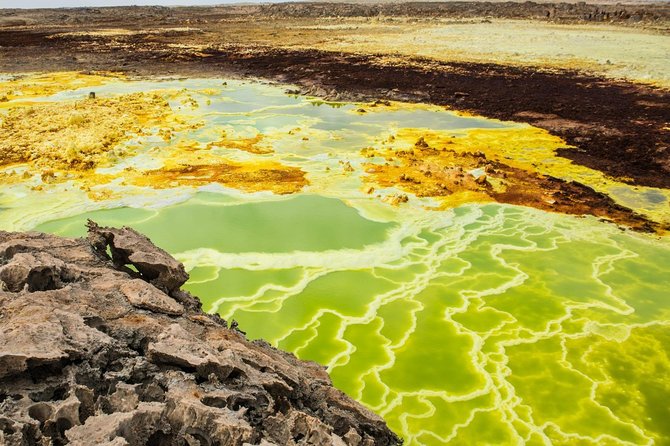
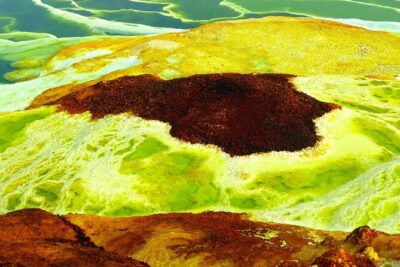
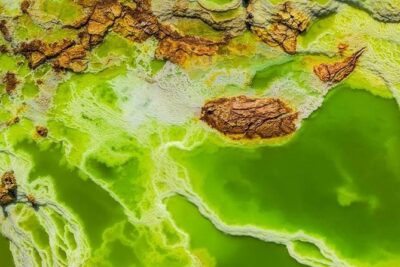
You’re also not just taking photos. Dallol is a terrestrial hydro-thermal system known for very acidic fluids discharging from its springs, and the area’s colors come from minerals that form strange patterns over volcanic ground. If you prefer soft comforts and easy walking, this is the kind of trip that pushes you a bit out of your routine.
In This Review
- Key highlights you should care about
- Why Dallol and Erta Ale feel so weird, and so worth it
- Day 1: Berhale camel caravans and the Hamad Ela camp setup
- Day 2: Ragad (Asebo) salt mining, then Dallol’s acidic colors
- Price and logistics: what $307.70 really buys you
- What you actually do each day, in plain language
- Comfort, safety, and the physical reality of the Danakil
- What’s included, and what you’ll likely want to add
- Who this 2-day Dallol trip is best for
- Should you book 2 Days Dallol Trip?
- FAQ
- What time does the 2-day trip start?
- How long is the experience?
- How much does the tour cost?
- Is pickup included?
- Are admission tickets included?
- What’s included in the price for meals and camping?
- How many people are in a group?
- What kind of physical fitness is required?
- What is the cancellation policy?
Key highlights you should care about
- Camel caravan moments that put you near salt transport, not just in front of a viewpoint
- Salt mining at Ragad (Asebo), including breaking salt from the ground and loading it on camels
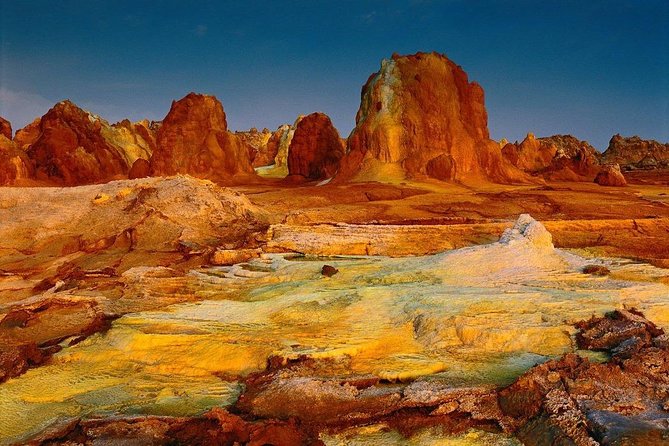
- Dallol’s extreme setting, about 116 meters below sea level, with colorful mineral formations
- Afar walking time, where you can move with local people and see how the area is worked
- An organized, well-protected itinerary, supported by local guides plus scout and police service
Other ways into the Danakil
- Danakil 3 days tour★ 5.0 · 10 reviews
- 3 days tour Danakil Depression (Dallol & Erta Ale)★ 4.0 · 5 reviews
Why Dallol and Erta Ale feel so weird, and so worth it
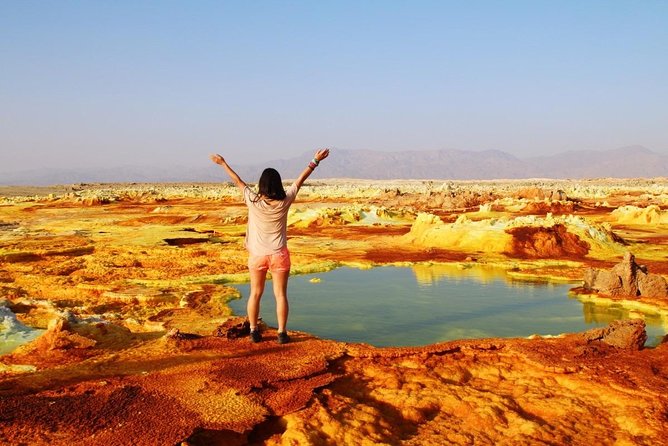
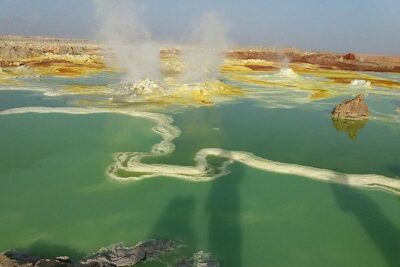
The Danakil Depression is one of those places that looks wrong from the start. The ground is harsh, the air can feel intense, and the colors are so specific they don’t seem natural. That’s not just drama. Dallol is tied to hydro-thermal activity, with mineral patterns shaped over time by hot springs and discharge, including very acidic fluids.
When you see this area in person, you start understanding why people call it unearthly. It’s not one single color or one single feature. It’s a mix of mineral deposits and sulfur-hot zones that create patterns you can’t recreate in a regular travel photo. Even if you’re not a geology nerd, you’ll feel it fast.
You also get the human layer, not just the geology. The route includes salt work, camel caravans, and time walking with the Afar people. That matters because the area is not a theme park. It’s a working landscape for people who live with the rhythms of heat, mining, and transport.
Day 1: Berhale camel caravans and the Hamad Ela camp setup
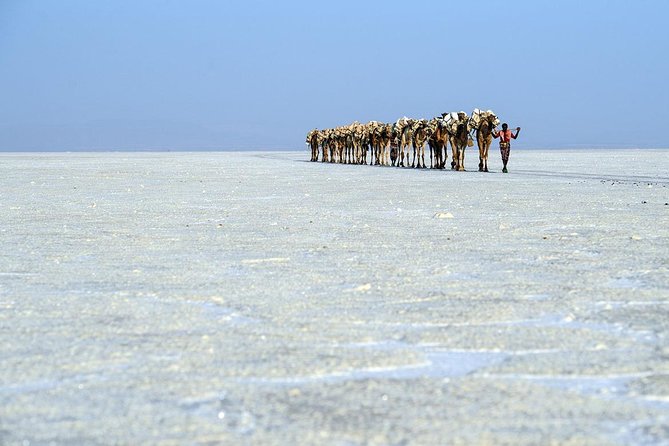
Your day starts at 9:00 am with a long, practical drive into the Danakil world. The plan takes you through the region where the Danakil Depression is often described as beginning, and you’ll pass through the small town of Berhale. This is a key moment because you’re not arriving at a still-life. You’ll see long camel caravans associated with the salt economy, including animals going toward the salt mine and others leaving with loaded camels.
After that, the drive continues toward Hamad Ela. The stop at Camp Hamedela comes after a few hours on the road, and the area is described as a better village with a small population, around 500 people. That size change is part of what makes the whole trip feel real. You’re trading busy city energy for a place where the logistics of daily life are simpler, but the environment is tougher.
Expect day 1 to be about orientation. You’re building your bearings for what comes next: the salt-mining route, the volcanic color zones, and the walk time. It’s not a “sit and stare” day either. You spend the day moving, stopping for what you pass, and getting your eyes used to the colors, sulfur activity, and the sheer sense of being far from the normal world.
In the evening, dinner is included, and based on past experiences with this trip, you might also get a relaxed camp atmosphere. One past group talked about enjoying soup at dinner, and mentioned a campfire moment at Afdera lake. You can’t bank on every extra moment, but it’s a good sign that the camp side of the trip aims to keep things friendly, not just functional.
Day 2: Ragad (Asebo) salt mining, then Dallol’s acidic colors
Day 2 starts with a morning drive to Ragad (Asebo), a place where people mine salt. This part of the experience is more hands-on than you might expect, because you’re watching the work as it happens. You’ll see salt broken from the ground, then cut into rectangular pieces, and then loaded onto camels. It’s a simple workflow, repeated constantly, and the practicality of it is what makes it fascinating.
This is the kind of stop that often changes how you see the rest of the trip. When you understand the labor behind the salt caravans, the later camel follow-up feels more purposeful. You’re not just observing a cool tradition. You’re seeing the system that keeps the region moving.
From there, you head to Dallol, which is described as about 116 meters below sea level and one of the lowest places in the world. At Dallol, the focus turns fully to hydro-thermal and volcanic features. The area is known for colorful salt and mineral formations shaped by geothermal activity, plus hydro-thermal discharge, including acidic fluids. It’s one of those places where you’ll want to stay close to your guide and follow instructions about where to stand and how to move.
The itinerary also includes Lake Assal, plus camel caravans along the way. Then comes the time to follow the camel caravans and walk with the Afar people. That’s an important change in tone. The walk time is where you get a more grounded sense of how people move through the area day to day, not just how the area looks.
This is also where you should expect uneven ground and a need to stay alert. You’ll be outdoors in a region that is not designed for casual strolling. If you take it step by step and listen closely, it’s doable, but it’s not the kind of walk where you can tune out and still feel safe.
Price and logistics: what $307.70 really buys you
At $307.70 per person for two days, the price looks reasonable only if you measure what’s included, not just the number itself. Here’s the value logic I see:
- Meals are covered: dinner, breakfast, and two lunches. That matters in remote areas where food options are limited.
- Transport is handled: an air-conditioned vehicle carries you to and between the key sites.
- You’re not left to figure out camp: camping equipment is included.
- Safety and staffing are built in: local guide service plus scout and police service are part of the plan.
- You get fees included: all fees and taxes are included, and admission tickets are included for the experience stops.
What you pay for here is not luxury. It’s coordination. This trip runs in a region that requires know-how, timing, and local support. That’s exactly what you’re buying when you book a guided package instead of trying to piece together your own route.
A small consideration: the drive time and the desert conditions mean comfort is functional, not spa-level. If you want chilled amenities at every step, you might feel a little underwhelmed. If you want the real experience of Danakil, it’s money spent in the right places.
Two-day trips on our list
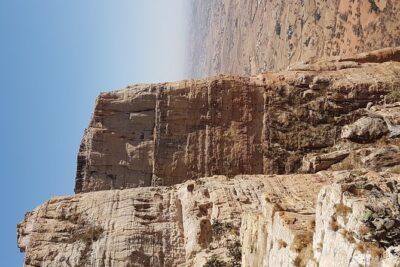
What you actually do each day, in plain language
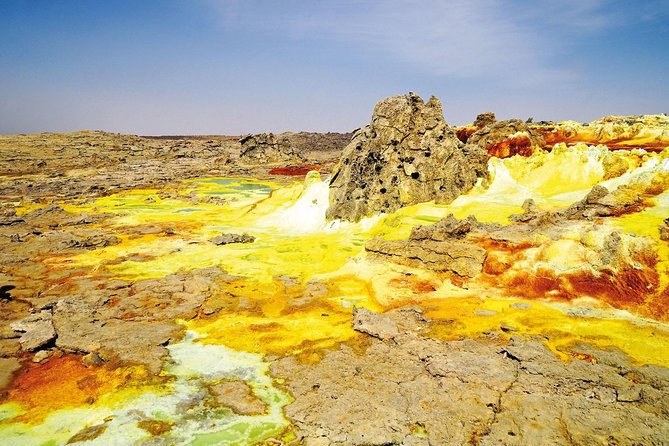
Most people remember Dallol as the main draw, but the trip is structured so you don’t go from hotel life straight into weird mineral colors with zero context.
Day 1 is mostly about getting into the Danakil Depression zone and setting up camp around Hamad Ela. Along the way, you pass through Berhale where camel caravans stop. It’s a moving window into the region’s salt economy, and it helps you understand why this place is famous.
Day 1 then includes your first big camp experience: reaching camp area, settling in, and eating dinner. Camping equipment is provided, so you’re not trying to travel with gear in a place where weather and terrain are unpredictable.
Day 2 is the “work and wonder” combo. You start with salt mining at Ragad (Asebo), then transition to Dallol and its hydro-thermal mineral world. You also include Lake Assal and camel caravan follow-up. The walk with the Afar people adds the human pace to the day, so the trip feels alive rather than purely scenic.
Finally, you drive back via Hamad Ela and continue onward toward Mekele.
Comfort, safety, and the physical reality of the Danakil
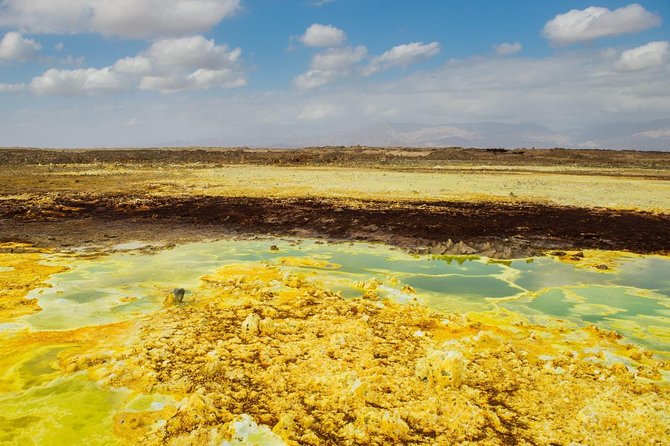
The tour calls for moderate physical fitness. Translation: you should be comfortable with outdoor heat, walking on uneven ground, and staying alert. Even with a guided structure and camping support, you are in a remote environment where you don’t get to take things slowly forever.
The good news is that the trip includes scout and police service, plus local guides. That’s not there for aesthetics. It’s part of what keeps the schedule moving and helps manage the practical risks of traveling in this kind of region.
Also, Dallol’s reputation is not just about color. The area has very acidic fluids discharging from hydro-thermal springs. You don’t need to panic, but you do need to take guidance seriously. Listen to where you can go, where you should not touch, and how you should move around active geothermal zones.
What’s included, and what you’ll likely want to add
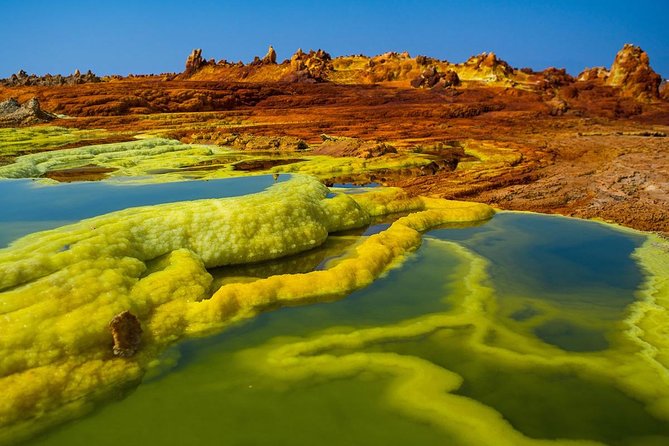
Here’s what is clearly included:
- Dinner and breakfast
- Lunch (2)
- Air-conditioned vehicle
- All fees and taxes
- Bottles of water
- Local guide service
- Camping equipment
- Scout and police service
- Admission ticket included
- Pickup offered
- Mobile ticket
What is not included:
- Alcoholic beverages
For most people, the main “add” is personal comfort items. The trip gives you water bottles, but you’ll still want to think about sun protection, layers for temperature swings, and anything you use to stay comfortable on long drives. Bring what you need, because buying options will be limited once you’re out there.
Who this 2-day Dallol trip is best for
This is best for you if you want a real, remote, working-environment experience, not a short sightseeing hit. The camel caravan focus, the salt mining at Ragad (Asebo), and the walk with Afar people make it ideal for travelers who like to see daily labor and travel rhythms combined.
It also fits well if you prefer an organized group trip with a cap of 15 travelers. A smaller group size matters here, because it keeps the experience controlled in a place where space, pacing, and safety are important.
You might skip this trip if you:
- dislike long drives and remote travel
- want a lot of downtime or lots of built-in comfort
- get uncomfortable outdoors in harsh conditions
If you fall into the first category, you’re likely to leave with that wow feeling. One past guest called Dallol like going into another planet, and tied the magic to the sulfur-hot areas, camel caravans, and the salt lake.
Should you book 2 Days Dallol Trip?
I think you should book if you want the Danakil experience in a structured, guided way, and you care about more than just photos. This trip brings together the core pieces that make the region matter: salt mining, camel caravan transport, hydro-thermal mineral worlds at Dallol, and local walking time with the Afar people.
You should also feel good about the value, because the essentials are covered: meals, camping equipment, water, admission and fees, local guides, and even scout and police service. For a remote destination, that kind of package is what keeps the day from turning into stressful logistics.
Only you can decide if you’re up for the physical side and the long day structure. If you are, the payoff is huge. The colors at Dallol are the headline, but the work, the caravans, and the human rhythm are what make it memorable.
FAQ
What time does the 2-day trip start?
The start time is 9:00 am.
How long is the experience?
It runs for 2 days, approximately.
How much does the tour cost?
The price is $307.70 per person.
Is pickup included?
Yes, pickup is offered.
Are admission tickets included?
Yes, admission ticket is included as part of the experience.
What’s included in the price for meals and camping?
Dinner, breakfast, and lunch (2) are included, along with camping equipment. Bottles of water are provided as well.
How many people are in a group?
The maximum group size is 15 travelers.
What kind of physical fitness is required?
Travelers should have a moderate physical fitness level.
What is the cancellation policy?
Free cancellation is available if you cancel up to 24 hours in advance for a full refund.
Two Days on the Road
- Two Days Tigray Churches Trip
★ 5.0 · 10 reviews - 2 days Tigray Church
★ 5.0 · 3 reviews
The Rest of the Ethiopia List
- Danakil 3 days tour
★ 5.0 · 10 reviews - Two Days Tigray Churches Trip
★ 5.0 · 10 reviews - 3 days tour Danakil Depression (Dallol & Erta Ale)
★ 4.0 · 5 reviews - 2 days Tigray Church
★ 5.0 · 3 reviews
Into the Danakil Depression
- Danakil 3 days tour
★ 5.0 · 10 reviews - 3 days tour Danakil Depression (Dallol & Erta Ale)
★ 4.0 · 5 reviews
Other Ethiopia tours we have written up
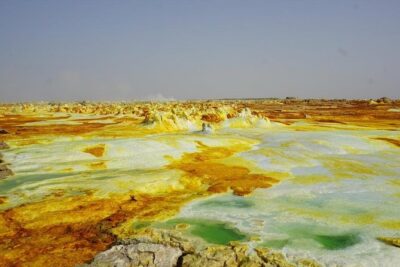
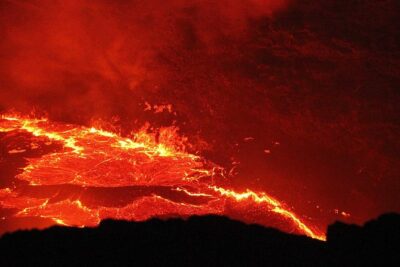
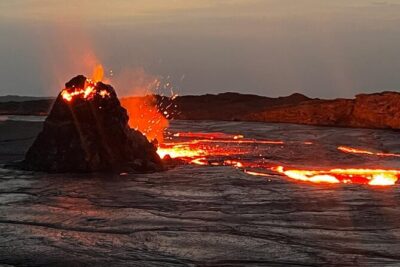
Danakil Depression & Erta Ale, compared.
 ★ 4.53 Days Danakil Depression TourFrom $450135 reviews
 ★ 5.03 Days Danakil Depression Tours Via SemeraFrom $42047 reviews
 ★ 5.012 Days SIMIEN MOUNTAIN-LALIBELA-DANAKIL-TIGRAY CHURCHESFrom $1,64145 reviews
 ★ 5.03 Day Danakil Depression Ertale and Dallol ToursFrom $40044 reviews
 ★ 5.03 Days Dankile Depression group ToursFrom $45040 reviews
 ★ 5.05 DAYS Lalibela, Axum, Tigray churches and DanakilFrom $1,02534 reviews
 ★ 5.06 Days tour Package (Simien Mountains, Lalibela, and Danakil Depression)From $1,43532 reviews
 ★ 4.82-Night 3-Day Danakil Depression Tour without FlightsFrom $30031 reviews
Browse the lists this tour appears in