
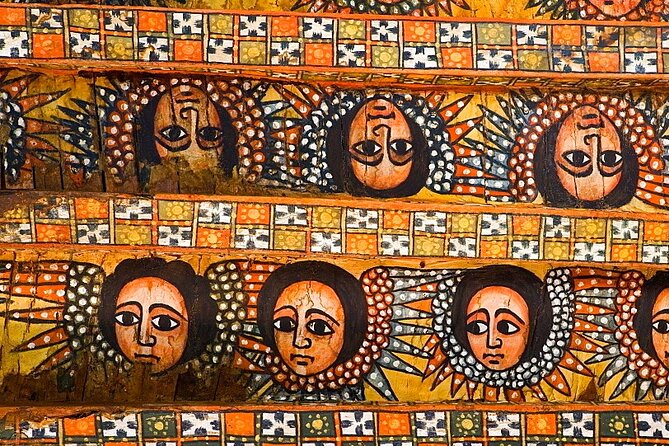
REVIEW · GONDAR TOURS
Gondar city Tour With Airport & Hotel Pick Up
Gondar feels like time travel through stone and paint. This half-day tour is built around Ethiopia’s royal-era sites, so you bounce from Fasil Ghebbi to standout churches and the famous bath complex without the hassle of arranging everything yourself.
I especially like the way the tour handles your logistics with airport and hotel pickup, plus an air-conditioned vehicle for the moves between stops. I also love the practical fact that entrance fees are included where they matter, so you spend your time looking, not hunting for tickets.
The only real drawback is that it is a packed 7.5 hours with four major stops, so you need to keep your pace steady and accept that you will not linger all day in each place.
In This Review
- Key highlights before you go
- Gondar in half a day, with pickup from the airport and your hotel
- Where you start, where you end, and how the day stays organized
- Fasil Ghebbi: the fortress-city and the royal enclosure you came for
- Dawit’s Hall and the Adababay connection: what to look for once inside
- Fasilides Baths at Ethio Wonder Tours: roots, towers, and a Timkat moment
- Debre Birhan Selassie Church: the 12 apostles towers and the Lion of Judah clue
- Wolleka (Falasha Village): crafts, memory, and a small synagogue
- The guides and why the handoff matters, from coordinator Mickey to a Blue Badge guide
- Price and value: what $90 per person buys you in real terms
- Who this tour fits best, and who may want a different style
- Should you book this Gondar City Tour with Airport and Hotel Pickup?
- FAQ
- What is the duration of the Gondar city tour?
- Where does the tour start and end?
- What time does the tour begin?
- What is included in the price?
- Is this a small group tour?
- Can I cancel for a full refund?
Key highlights before you go
- Airport and hotel pickup built in: start from the Central Hotel area, with the tour designed to connect you to the day smoothly.
- Small group size (max 10): enough structure to see the main sights, without turning the day into a bus parade.
- Fasil Ghebbi focus: a fortress-city with a 900-meter wall and imperial-era architecture details.
- Fasilides Baths atmosphere: roots, crumbling brickwork, and the bath compound tied to Timkat on January 19.
- Debre Birhan Selassie tower symbolism: 12 apostles towers plus the Lion of Judah reference.
- Wolleka (Falasha Village) visit: a craft-focused area with a small synagogue and stories behind the Ethiopian Jewish community there.
Comparing operators? These Ethiopia trips scored well when we went through them.
- 6 Days tour Package (Simien Mountains, Lalibela, and Danakil Depression)★ 5.0 · 32 reviews
- Simien Mountains – 4 Days★ 4.0 · 7 reviews
- 4 Days Trekking to Simien Mountain National Park★ 5.0 · 7 reviews
- 2 Days Simien Mountains Trekking★ 5.0 · 6 reviews
Gondar in half a day, with pickup from the airport and your hotel
If you want Gondar’s big monuments but do not want to spend your only good daylight figuring out transport, this tour is a clean solution. You are out for about 7 hours 30 minutes, starting at 9:00 am, and you end back at the meeting point in the Central Hotel area.
What makes this style of tour work is the simple flow. You go from the royal enclosure world of Fasil Ghebbi to the church centerpiece of Debre Birhan Selassie, then to the bath complex and the Wolleka/Falasha Village area. Each stop has a different feel, so the day stays interesting even though it is a lot to fit in.
Where you start, where you end, and how the day stays organized
The meeting point is Central Hotel (JF69+7RM), Gondar. The tour ends back at that same meeting spot, so you do not have to worry about getting yourself across town later.
You travel in an air-conditioned vehicle, and the tour uses a mobile ticket. There is also a Blue Badge guide, which matters because it usually means the person guiding you will be comfortable talking through what you are seeing instead of just pointing at buildings.
One practical note: with four stops and a half-day schedule, keep your phone charged, use the bathroom when you can, and plan to move quickly between viewpoints. That does not ruin the experience, it just keeps the timing from feeling stressful.
Fasil Ghebbi: the fortress-city and the royal enclosure you came for
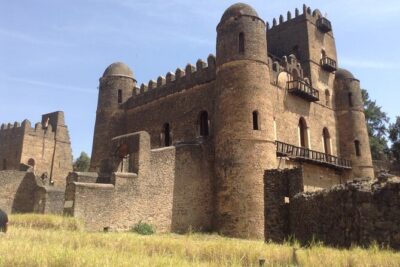
Your first major stop is Fasil Ghebbi, the fortified city-residence associated with Emperor Fasilides and later rulers. It is surrounded by a long protective wall, listed at about 900 meters. Inside, you find palaces, churches, monasteries, and buildings marked by influences that include Hindu and Arab design elements, later shaped further by Baroque style introduced via Jesuit missionaries.
This is the part of Gondar where you start seeing how layered the city is. From the outside, it looks like a medieval fortress. Up close, it starts to feel like an art project that kept changing hands and styles over time. The tour time here is about 2 hours 30 minutes, so you have space for a slower look at details rather than a full sprint.
If you like architecture, ask your guide what to focus on first when you enter. You will likely hear about the way different eras and foreign influences show up in the same overall complex. One thing to watch for is how the enclosure reads as a whole city, not just one palace.
Dawit’s Hall and the Adababay connection: what to look for once inside
Within the Fasil Ghebbi area, you may hear about areas such as Dawit’s Hall in the northern part of the enclosure. Even if you are not a specialist, the value here is that the guide can help you connect names to locations as you walk.
You may also hear about Adababay, the marketplace zone south of the enclosure, historically used for imperial proclamations and public punishments. Even if you do not spend a separate block of time there, having that context changes how you interpret the enclosure. It stops being just scenery, it becomes the political and social machine that ran Gondar.
Tip for your photo brain: take one wide shot to capture the enclosure feeling, then return to smaller architectural angles. The fortress is impressive at a distance, but the story starts when you slow down.

Fasilides Baths at Ethio Wonder Tours: roots, towers, and a Timkat moment
Next comes the Fasilides Baths area, presented through Ethio Wonder Tours. The background is part of the appeal. It is generally attributed to Emperor Fasilides or his son, Iysau I, though the exact commissioner is not firmly known.
The bath compound has a look that feels both engineered and weathered. The compound walls are described as being increasingly overtaken by thick badian tree roots tangled into the crumbling brickwork. That mix is what makes the place feel alive. It is not preserved like a museum set. It is a structure still interacting with nature.
Inside the compound, you will see the bath, a central tower, and a bridge reportedly used when the bath is full. Another standout detail is the Timkat link. Once a year, on January 19 (Epiphany), the bath is filled as part of the celebration that replicates Christ’s baptism in the River Jordan. Even if you are visiting on a random day, knowing that this spot has a real role in an annual ritual gives it extra meaning.
This stop is about 1 hour, and importantly, it is listed as admission ticket free. So you get a strong payoff without a second ticket purchase.
Debre Birhan Selassie Church: the 12 apostles towers and the Lion of Judah clue
If Gondar has a church that reads like a visual puzzle, it is Debre Birhan Selassie Church. The name points to the Trinity and Mountain of Light, and the approach is where the symbolism hits first.
On approach, twelve rounded stone towers stand as guardians representing the 12 apostles. A 13th tower, the tallest, represents the Lion of Judah. You can even look for an imprint of the Lion on the upper half of the tallest tower.
This church also comes with a real-world history of damage and rebuild. It was originally built in the 17th century by Emperor Eyasu II. The structure later needed redevelopment during the 1880s after a raid by marauding Sudanese Dervishes and a lightning strike that reduced the original building to rubble.
The tour time here is about 2 hours, with admission ticket included. That length is good because the church is a “look and then re-look” kind of place. If you rush, you miss the symbolism that makes it famous.
Wolleka (Falasha Village): crafts, memory, and a small synagogue
Your last stop is Wolleka, also referred to as Falasha Village. This is one of those places where the outside signs tell you what you are walking into: craft stalls with Stars of David and Falasha Village signage, plus the idea of a once-active community.
The background matters. Wolleka was home to Ethiopian Jews, and many were airlifted to Israel in the 1980s. Today, the information provided indicates none remain. What is left includes a few original houses with artwork on their fronts and a small synagogue.
If you want to step inside, the entry mentioned is Birr 10 to look inside the synagogue. The note that comes with that is also practical: expect an entourage of persistent sales kids. If that kind of attention gets on your nerves, plan a calm, friendly boundary. You can still enjoy the site without feeling trapped in sales talk.
Historically, the community faced land confiscation after Christianity was adopted as the state religion because they refused to convert. Many survived by becoming skilled craftspeople, and there is also research suggesting their labor may have contributed to construction and decoration work in Gondar. Even if you only get a short visit, this stop is valuable because it connects art, trade, and faith in a grounded way.
The guides and why the handoff matters, from coordinator Mickey to a Blue Badge guide
One of the most praised parts of this experience is how organized it feels, especially when you are arriving by air. The tour service uses a clear guide structure, and you also get a human point of contact, including a coordinator named Mickey who is mentioned for making airport connection smooth.
That kind of handoff is not a small deal in Ethiopia travel. Arriving tired, it is easy to lose time to confusion. When the tour makes the first connection for you, you start the day focused on sightseeing instead of logistics.
Once you are in the vehicle, the Blue Badge guide role becomes your advantage. With a guide, you are less likely to treat the buildings like props. You will hear what each site was for, and you will get better at recognizing what matters as you walk.
Price and value: what $90 per person buys you in real terms
The price is $90.00 per person, and it is often booked about 18 days in advance. With a tour like this, the value question is not just the sticker price. It is what you avoid.
Here, you get:
- Airport and hotel pickup style service
- Air-conditioned vehicle
- Blue Badge guide
- Entrance fees included for stops where tickets apply
- Government taxes
- Airport and departure tax included
- A schedule that covers the core Gondar highlights in one day
If you tried to stitch this together alone, you would likely spend time lining up transport, then pay multiple admissions across several sites. The included admissions are a real win because they remove a guessing game.
So who does this price suit best? People who want a guided day, appreciate not managing tickets, and have limited time in Gondar. If you love slow, independent exploration for multiple days, you might want a different pace. But for a single hit of Gondar’s main monuments, this is priced in a way that often makes sense.
Who this tour fits best, and who may want a different style
I think this works best for:
- First-time Gondar visitors
- People who arrive via airport and want pickup handled
- Anyone who prefers a small group structure (max 10)
- Travelers who want a guide to connect the dots between sites
It may not be the best fit if:
- You want a long, flexible day with lots of downtime
- You struggle with timing when multiple stops are planned back-to-back
- You want to spend the entire day at one single location
Should you book this Gondar City Tour with Airport and Hotel Pickup?
If you are visiting Gondar for a limited time and want to see the big-name sights without stress, I would book it. The strongest selling points are pickup, small group size, and the fact that admission fees are included at the major stops. Add in the well-regarded organization, including a coordinator named Mickey, and you get a day that starts smoother than many DIY plans.
The trade-off is the schedule. You will move. You will hit four big sites. But if you show up with that in mind, you end the day with a clear mental map of Gondar’s royal enclosure, church symbolism, the bath complex’s story, and the Wolleka craft and community legacy.
FAQ
What is the duration of the Gondar city tour?
The tour lasts about 7 hours 30 minutes.
Where does the tour start and end?
It starts at the Central Hotel in Gondar and ends back at the same meeting point.
What time does the tour begin?
Start time is 9:00 am.
What is included in the price?
Included items are an air-conditioned vehicle, airport and departure tax, a Blue Badge guide, entrance fees as per the program, and government taxes.
Is this a small group tour?
Yes. The maximum group size is 10 travelers.
Can I cancel for a full refund?
Yes, you can cancel for free up to 24 hours in advance for a full refund. If you cancel less than 24 hours before the experience starts, the amount paid will not be refunded.
Browsing Ethiopia More Widely
- 6 Days tour Package (Simien Mountains, Lalibela, and Danakil Depression)
★ 5.0 · 32 reviews
The Rest of the Ethiopia List
- 6 Days tour Package (Simien Mountains, Lalibela, and Danakil Depression)
★ 5.0 · 32 reviews - Simien Mountains – 4 Days
★ 4.0 · 7 reviews - 4 Days Trekking to Simien Mountain National Park
★ 5.0 · 7 reviews - 2 Days Simien Mountains Trekking
★ 5.0 · 6 reviews - Simien Mountains National Park – 7 Day Trek
★ 5.0 · 5 reviews
Other Ethiopia tours we have written up

Gondar Tours, compared.
 ★ 5.0Historical tours – in five days, Addis Ababa, Axum, Laliebla and GonderFrom $1,3949 reviews
 ★ 5.0Private Tour in Gondar City with PickupFrom $1205 reviews
 ★ 5.0Historical-tour Lalibela Gonder & Bahir DarFrom $1,0835 reviews
 ★ 5.05 Day Addis,Bahir Dar,Gondar,Simien Mountains and Lalibela ToursFrom $9994 reviews
Browse the lists this tour appears in