
REVIEW · DANAKIL DEPRESSION & ERTA ALE
3-Day Danakil Depression A Journey into Earth’s Fiery Heart
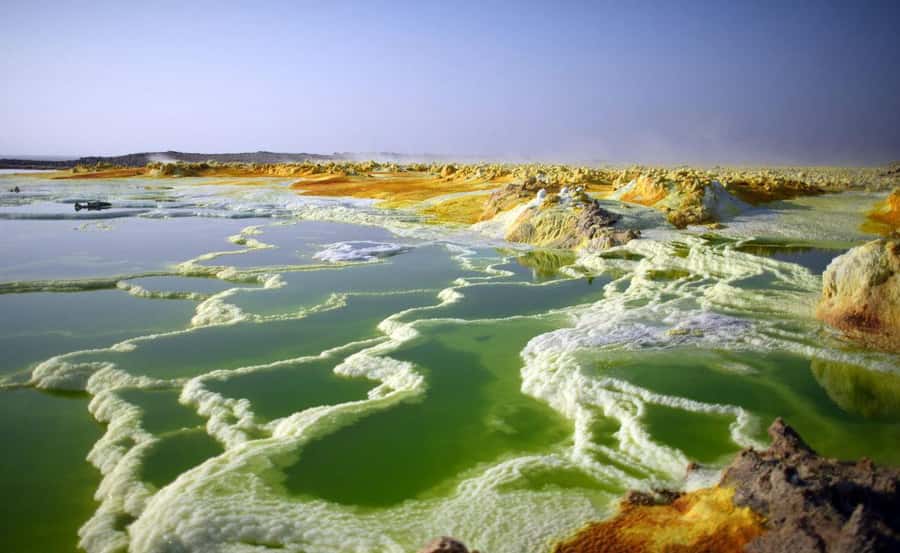
Danakil feels like a different planet. This 3-day circuit in Ethiopia takes you from Lake Afdera saltwater and a Lake Asale sunset to Dallol’s sulfur colors and a night trek to an active lava lake at Erta Ale. What I like most is how hands-on it is, with swimming, walks, and serious crater time, and how the small group setup keeps the day from feeling chaotic. The big consideration is comfort: you’re camping in extreme heat, with limited facilities and remote travel.
The route is built around 4×4 driving and short, focused hikes, so you’re never stuck in a long bus slog. The logistics are tough enough that you’ll be glad meals, drinking water, and basic camping gear are included.
If you prefer smooth schedules, indoor bathrooms, and lots of downtime, this trip may test your patience. If you’re okay with a rough-and-real adventure, you’ll likely love it.
In This Review
- Key things I’d circle before you book
- Danakil Depression in 3 days, what the experience really feels like
- Day 1 from Semera to Lake Afdera swim and Hamed Ela base
- Lake Afdera and Lake Asale, the “wow” moments that actually matter
- Day 2 Dallol mineral chaos, then Erta Ale’s lava-lake night
- Erta Ale at night and at dawn, the part you’ll remember most
- Day 3 Erta Ale dawn, then Afdera and back to Semera
- Camping and meals in the Afar, what’s included and what isn’t
- Transportation and group size, why the details change your day
- Price and value at $360, what you’re really paying for
- Heat, fitness, safety, and what to pack so it feels manageable
- Who should book this Danakil circuit, and who should skip it
- Should you book this 3-Day Danakil Depression experience?
Key things I’d circle before you book
- Lake Afdera saltwater swim in a warm natural lake, plus a lakeside lunch break.
- Lake Asale sunset over salt flats, a big visual payoff after driving days.
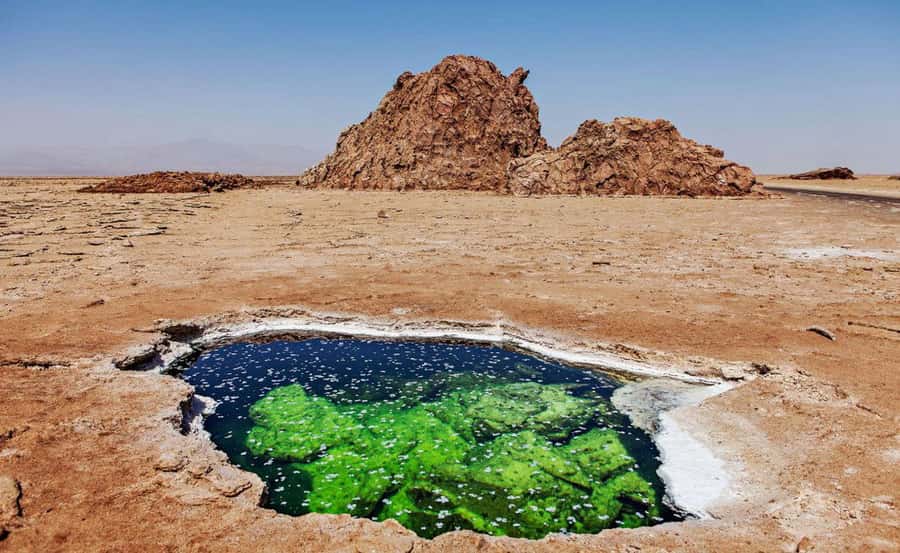
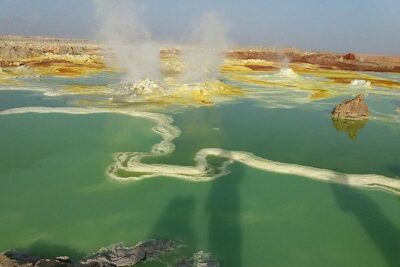
- Dallol’s sulfur springs and mineral formations, where the colors look almost painted.
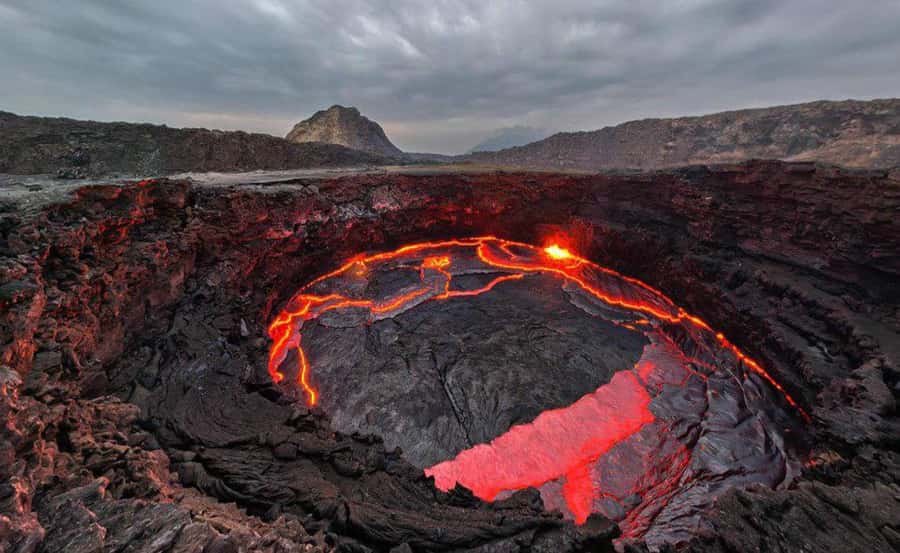
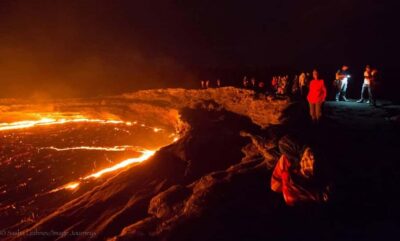
- Erta Ale night trek to the crater edge and a molten lava view under the stars.
- Camping near the volcano with included sleeping bags and mattresses, not hotel comfort.
- Unlimited bottled water and hot drinks, a lifesaver when temperatures are intense.
Other ways into the Danakil
- 12 Days SIMIEN MOUNTAIN-LALIBELA-DANAKIL-TIGRAY CHURCHES★ 5.0 · 45 reviews
- 3 Day Danakil Depression Ertale and Dallol Tours★ 5.0 · 44 reviews
- 5 DAYS Lalibela, Axum, Tigray churches and Danakil★ 5.0 · 34 reviews
- 2-Night 3-Day Danakil Depression Tour without Flights★ 4.8 · 31 reviews
Danakil Depression in 3 days, what the experience really feels like
You’re going to move fast, in the best way. The Danakil Depression is remote and hot, so the tour is designed to hit the signature sites in a tight window while still giving you time to stop, walk, and actually see what’s happening in front of you.
The other thing that matters is pacing. This is not a “sit and watch” trip. You’ll do guided exploring, trekking toward Erta Ale, and a camel ride during the salt-caravan segment. That mix is why the days feel memorable instead of rushed.
And yes, it is intense. Between desert heat, sun glare, dust, and nighttime crater time, you should expect a body that feels worked, not pampered.
Day 1 from Semera to Lake Afdera swim and Hamed Ela base
Your start is a flight into the region, landing at Semera (with pickup also possible at Samara Airport). Once you meet your English-speaking guide and driver, you head out in 4×4 vehicles through the Afar area toward Hamed Ela, the base for the Danakil explorations.
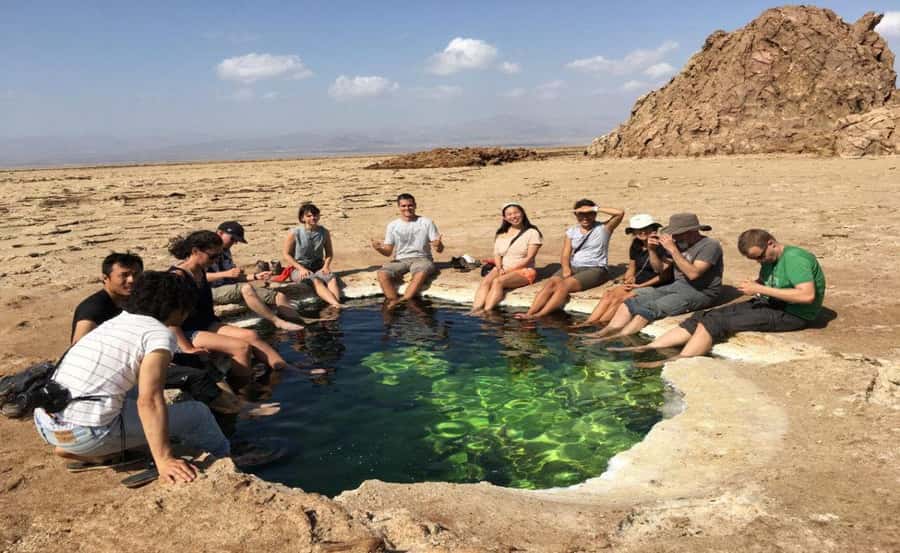
First stop is Lake Afdera, a shimmering salt lake where you can swim. This is one of the rare travel moments that’s both beautiful and practical: you get a true break from heat by getting into warm water, and you’ll likely come out feeling more human for the rest of the drive.
Lunch follows in the middle of the scenery, not in a tidy restaurant bubble. Then you continue to Hamed Ela, which is where you settle in for the evening.
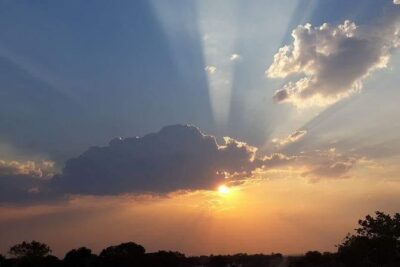
After that, the day pivots to Lake Asale sunset over the salt flats. Salt flats change with the light, and sunset here is about that shifting glow on crystalline ground. You’ll likely want camera batteries ready and a sun hat that still survives wind.
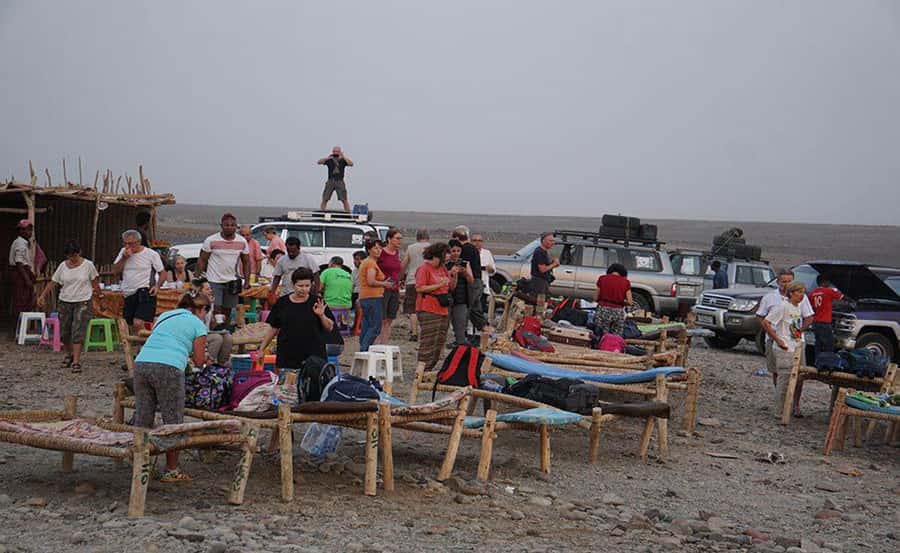
Overnight is open-air camping at Hamed Ela, with camping equipment included. Expect basic setup, limited facilities, and the kind of quiet that only happens far from roads.
Practical note: keep your water planning simple on Day 1. The tour includes unlimited bottled water and hot drinks, so you can focus on using it consistently, not rationing.
Lake Afdera and Lake Asale, the “wow” moments that actually matter
It’s easy to market “salt lakes” and move on. What makes these two stops stand out is how different they are.
At Lake Afdera, the point is your body contact with the environment. Swimming turns the salt lake from scenery into an experience. It also gives you a mental reset, which helps later when you switch from water-time to heat-time.
At Lake Asale, you’re not swimming. You’re absorbing scale. Salt flats can look almost flat from a distance, but the sunset angle and reflections make it feel endless. This is a great moment to slow down, sip something hot, and let your brain catch up after hours on rougher terrain.
If you’re the type who loves photographs, this is also where tripod-free creativity helps. Wind can show up at night and near open flats, so brace your stance and get comfortable framing quickly.
Day 2 Dallol mineral chaos, then Erta Ale’s lava-lake night
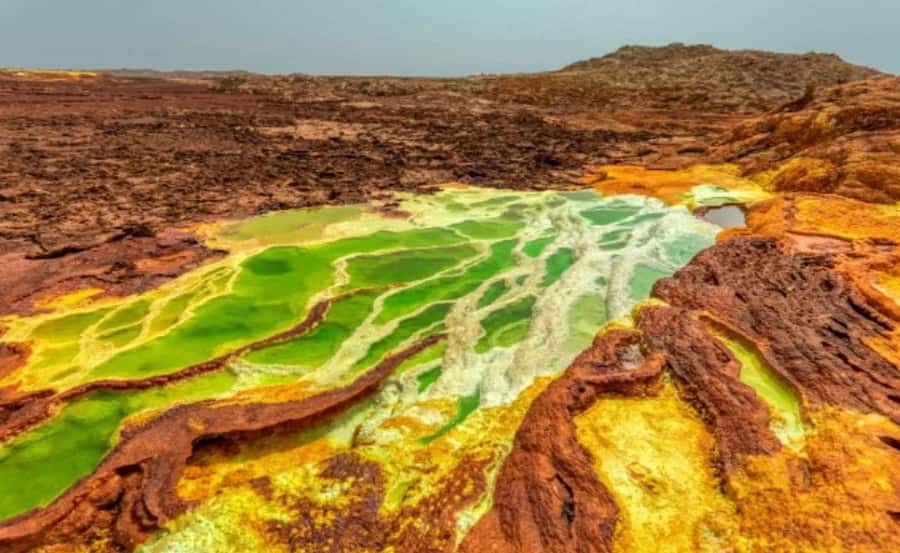
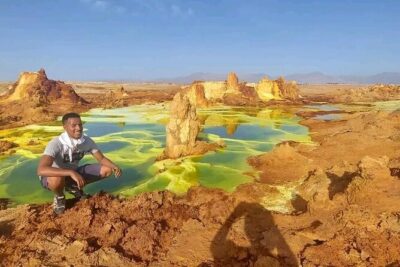
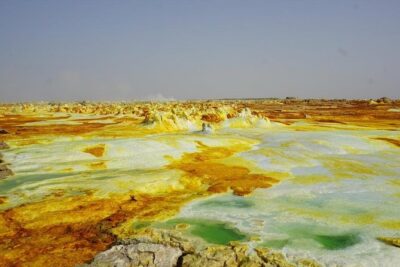
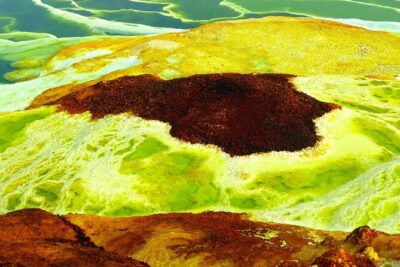
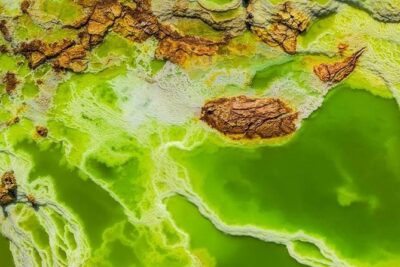
Day 2 begins with Dallol, one of the hottest and lowest spots on Earth. You’ll explore sulfur springs, colorful mineral deposits, and hydrothermal areas where the ground looks chemically active instead of “land” in the usual sense.
This is not just scenery. Dallol is all about visual clues. The colors often look artificial, but your guide’s job is to help you connect what you see to how the earth behaves there. Even if you’re not a science person, you’ll feel the logic of it as you walk from one formation to the next.
After Dallol, you head toward nearby salt areas, including Lake Assal. You’ll also see salt caravans, including camels carrying salt as part of an older Afar tradition. There is also a camel ride included in the overall experience, so this stop isn’t only observation.
Then comes the long drive across lava fields and desert terrain to the base of Erta Ale. This is one of those “transition days” where the road time builds anticipation. You’ll be moving into the volcano zone, and the temperature change is part of the mood shift.
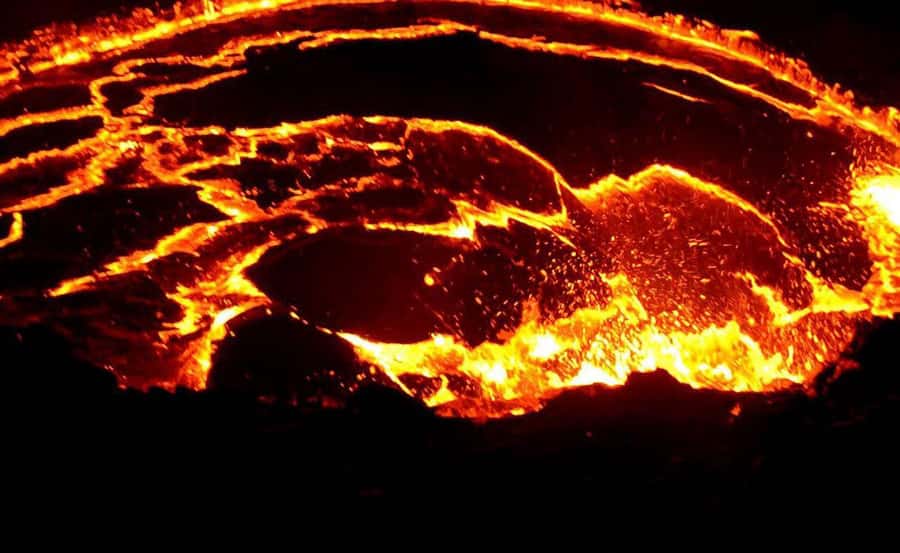
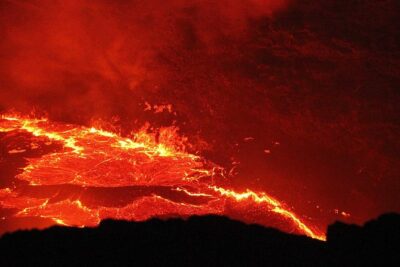
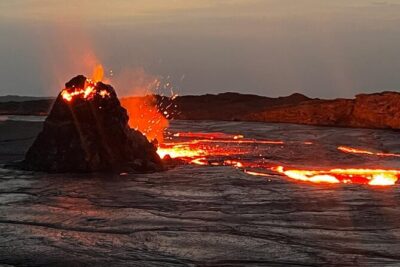
At the campsite, you eat early dinner, then start a one-hour trek under the stars to reach the summit area. From the crater’s edge, you witness molten lava glowing at night. It’s raw, loud on the inside, and strangely calming once you look long enough.
Overnight is camping near Erta Ale. That means you’ll likely want to protect your sleep from heat, wind, and dust. If you get even a little cold during crater-time walking, a lightweight layer can make a big difference.
What three days can actually cover
Erta Ale at night and at dawn, the part you’ll remember most
The Erta Ale segment is the main event for a reason. Few places let you stand at the edge of an active lava lake, under a sky full of stars.
At night, your eyes adapt to dark and the lava becomes the brightest object in your view. The air can feel thin with heat, and the contrast between glowing molten rock and the black crater rim can hit hard. This is where the trip becomes more than “sightseeing.”
On the following morning, you get a second chance at the crater. Early light gives you different textures and a clearer sense of scale. If you care about photos, dawn is often where details pop. If you care about the feeling, dawn can make the whole thing feel more real because the terrain becomes visible.
For most people, this is where you stop thinking about comfort and start thinking about awe. It helps that the trek is not described as a multi-hour climb. It’s focused, about getting you to the viewpoint.
Day 3 Erta Ale dawn, then Afdera and back to Semera
Day 3 starts early, with a final look at Erta Ale as the horizon lightens. You’re not starting from scratch. You’re returning to the same volcanic drama with new visibility and a calmer pace.
After breakfast at the campsite, you begin heading out. You’ll drive back toward Afdera, then continue along a paved road to Semera Airport for your return flight to Addis Ababa.
The farewell dinner is part of this finish, a nice way to wrap the trip before travel days eat your energy. By the time you reach the airport, you’ll likely feel the after-effect: your body is tired, your head is full of visuals, and you’ll want a shower more than a souvenir.
Camping and meals in the Afar, what’s included and what isn’t
This tour includes all meals: breakfast, lunch, and dinner, plus bottled water and hot drinks. It also provides camping equipment such as mattresses and sleeping bags, so you’re not traveling light with unknown gear.
That matters for two reasons. First, you can pack more strategically around sun protection and clothing layers instead of trying to find sleeping gear at the last minute. Second, in remote areas, equipment reliability directly affects your comfort and safety.
You should also know what “basic open-air camping” means. There are limited facilities, and there are no hotels in the region. In practice, plan for outdoor living, including simple wash arrangements and the absence of modern bathroom comfort along the way.
If you’re sensitive to that, bring what you can to stay clean and comfortable. The tour does recommend personal hygiene items, and that advice is not filler.
Transportation and group size, why the details change your day
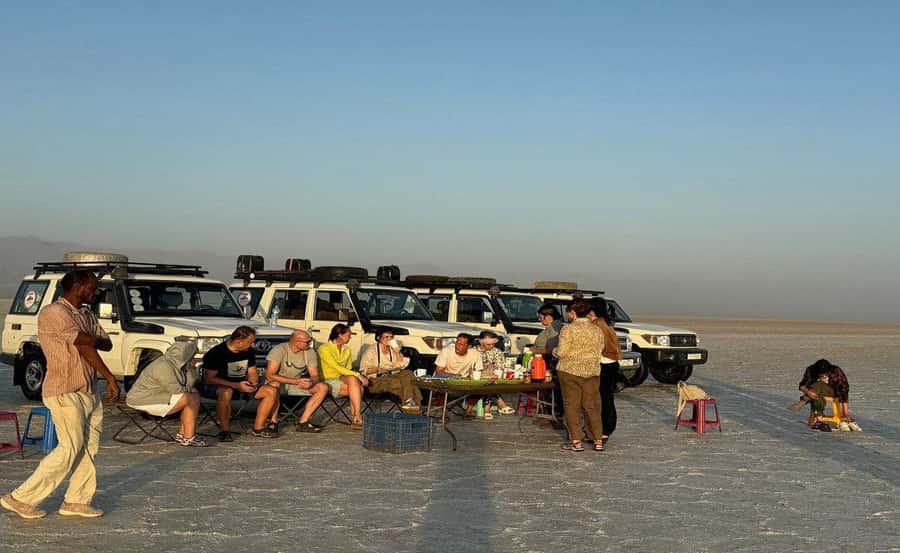
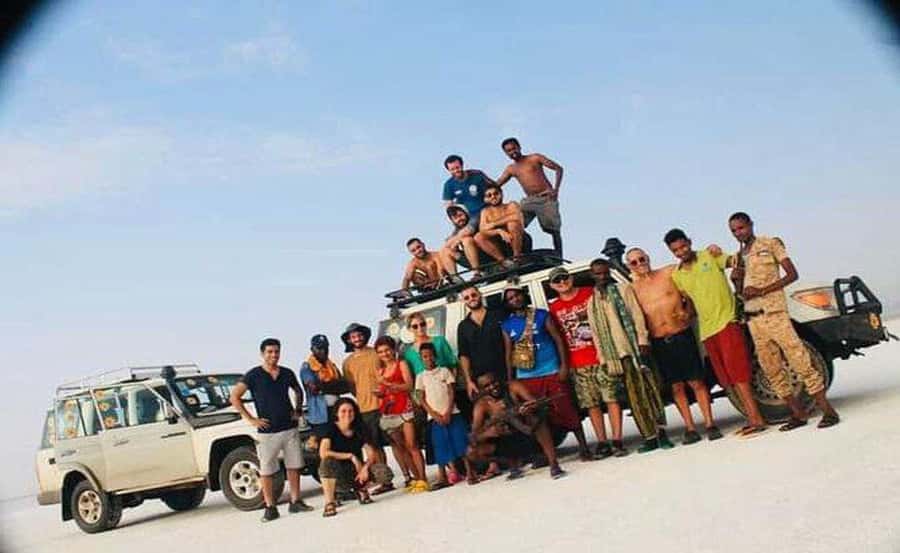
The trip uses 4×4 vehicles and includes a local guide and scout. Group size is limited to 12 participants, which is a meaningful sweet spot for this kind of trip.
Smaller groups tend to move better in rugged terrain. You’re less likely to get separated during quick stops, and you can hear your guide when they point out what you’re seeing. You also get a more personal vibe around the campfire, especially after shared night trekking.
English is the working language, which helps you get explanations on Dallol and the volcanic area, and it makes the camel ride and salt-caravan stop easier to understand in context.
One balance point: with remote logistics, things can occasionally go wrong. One past booking reported early issues with guide and vehicle, plus a feeling of being left alone briefly. That’s not the norm from the overall feedback, but it’s a reminder to stay calm, keep your phone charged if you have signal, and confirm pickup timing when you can.
Price and value at $360, what you’re really paying for
At $360 per person for 3 days, this trip is not about luxury. It’s about access, time, and survival-grade planning.
You’re paying for:
- 4×4 transportation across remote terrain
- included meals and water
- entrance fees and permits
- camping gear (mattresses and sleeping bags)
- an experienced local guide and scout
- the Erta Ale night trek logistics and crater viewing time
- active support for a small group size
So the value is tied to “hard stuff,” not just the number of sights. If you tried to do this on your own, costs rise quickly once you add permits, reliable vehicles, guides, and camping logistics. Also, safety and coordination become your responsibility, and Danakil does not reward improvisation.
If you’re comparing against other Ethiopia itineraries, don’t judge this by “how many comfortable hotels you get.” Judge it by how much remote access and guided physical time you buy for your money.
Heat, fitness, safety, and what to pack so it feels manageable
This is one of the hottest places on Earth. You need moderate physical fitness for the trek to Erta Ale and for handling high desert temperatures. That doesn’t mean you need to be athletic, but you should be comfortable walking for sustained periods and dealing with sun and dry air.
Health and safety guidance is straightforward: remote travel means limited access to medical services. If you have respiratory or heart conditions, you should consult a doctor before going.
Your packing list should be built around sun and stamina:
- comfortable shoes with solid grip
- sun hat
- sunscreen
- camera
- water (you will have lots from the tour, but it still helps to keep your routine)
- a flashlight or headlamp, especially for night trekking
- lightweight, modest clothing that respects local culture
Personal tip for real-world comfort: if you get sweaty easily, plan on your clothes being dust-magnet material. Bring a small packable bag so you can separate clean-ish items from dusty ones after camp.
Smoking is not allowed, and that’s worth respecting, especially in remote areas with wind and dry air.
Who should book this Danakil circuit, and who should skip it
This tour is best for people who want a true adventure, not a showroom itinerary. You’ll likely enjoy it if you love geology-style scenery, can handle camping and outdoor nights, and get satisfaction from hard-won views.
It also suits photographers, because sunrise and sunset light are built into the route, especially around the salt flats and the volcano timing.
Skip it if you want a polished comfort level. It’s not suitable for wheelchair users, and the combination of heat, limited facilities, and trekking makes it a poor match for anyone expecting easy accessibility.
If you prefer very structured comfort and frequent modern bathroom access, you might find this too rustic.
Should you book this 3-Day Danakil Depression experience?
Book it if you want the rare combo of Dallol color terrain plus an Erta Ale lava-lake trek that happens at night and at dawn. The included food, water, and camping gear make it possible to focus on the experience instead of logistics.
Hold off if camping and extreme heat are dealbreakers for you. Also, if you’re the type who needs constant communication and zero hiccups, keep expectations realistic for a remote region.
If you do book, the smart move is simple: pack for sun, protect your feet, and keep your mindset flexible. This trip rewards calm toughness.
Three Days, Addis and Beyond
- 3 Day Danakil Depression Ertale and Dallol Tours
★ 5.0 · 44 reviews - 3 Days Dankile Depression group Tours
★ 5.0 · 40 reviews - 2-Night 3-Day Danakil Depression Tour without Flights
★ 4.8 · 31 reviews - 3 Days Omo Valley Tour
★ 5.0 · 24 reviews - 3 Days Bale Mountains Trekking
★ 5.0 · 19 reviews
The Rest of the Ethiopia List
- Full Day Tour of Addis Ababa with Hotel Pickup and Drop-off
★ 5.0 · 430 reviews - Taste of Ethiopia
★ 5.0 · 406 reviews - Day Trip From Addis Ababa See Historical Monastery,Stunning Nature,Animals,Birds
★ 5.0 · 303 reviews - Addis Ababa: Debre Libanos, Blue Nile Gorge, and Cave Tour
★ 4.5 · 256 reviews - Addis Ababa Guided City Tour With Airport & Hotel Pick Up
★ 5.0 · 237 reviews
Into the Danakil Depression
- 12 Days SIMIEN MOUNTAIN-LALIBELA-DANAKIL-TIGRAY CHURCHES
★ 5.0 · 45 reviews - 3 Day Danakil Depression Ertale and Dallol Tours
★ 5.0 · 44 reviews - 3 Days Dankile Depression group Tours
★ 5.0 · 40 reviews - 5 DAYS Lalibela, Axum, Tigray churches and Danakil
★ 5.0 · 34 reviews - 2-Night 3-Day Danakil Depression Tour without Flights
★ 4.8 · 31 reviews
Other Ethiopia tours we have written up
Danakil Depression & Erta Ale, compared.
 ★ 4.53 Days Danakil Depression TourFrom $450135 reviews
 ★ 5.03 Days Danakil Depression Tours Via SemeraFrom $42047 reviews
 ★ 5.012 Days SIMIEN MOUNTAIN-LALIBELA-DANAKIL-TIGRAY CHURCHESFrom $1,64145 reviews
 ★ 5.03 Day Danakil Depression Ertale and Dallol ToursFrom $40044 reviews
 ★ 5.03 Days Dankile Depression group ToursFrom $45040 reviews
 ★ 5.05 DAYS Lalibela, Axum, Tigray churches and DanakilFrom $1,02534 reviews
 ★ 5.06 Days tour Package (Simien Mountains, Lalibela, and Danakil Depression)From $1,43532 reviews
 ★ 4.82-Night 3-Day Danakil Depression Tour without FlightsFrom $30031 reviews
Browse the lists this tour appears in