

REVIEW · ADDIS ABABA CITY TOURS
Addis Ababa Authentic Private City Tour
Addis in one intense day. This private city tour strings together imperial landmarks, Ethiopia’s coffee story, huge market energy, and high-altitude views from Entoto Natural Park. You also get the payoff most people want in Ethiopia, real context for what you’re seeing, not just photos.
I love how the plan hits both the big museum moments and the everyday Addis stops. The National Museum’s Lucy section lands hard, and Mercato lets you understand why Addis feels like a living city, not a postcard. I also like the comfort of a private driver and guide pacing the day around entrances, photo breaks, and questions.
One thing to consider is the day runs long, and you will do walking in cathedral interiors and markets. If you hate crowds or need lots of quiet time, you may want to set expectations with your guide before you start.
In This Review
- Key things to know before you go
- Why This Addis Ababa Route Feels Like More Than Sightseeing
- Price and Value: What $75 Actually Buys You
- How the Day Runs: A Realistic 8:30 Start
- Holy Trinity Cathedral: Imperial Tombs and the Meaning Behind the Stone
- Tomoca Coffee Stop: A Short Break with Real Background
- Mercato Market: The Largest Open-Air Test of Your Pace
- Lunch at Taitu Hotel: A Historic Setting, Lunch Is On You
- National Museum of Ethiopia: Lucy and the Layers of Time
- Ethnological Museum: Former Royal Space, Everyday Culture Objects
- Entoto Natural Park at 2600 Meters: Views, Eucalyptus, and a Name You’ll Remember
- Shiro Meda Market: Textiles, Wedding Dresses, and Practical Souvenir Shopping
- The Private Guide Advantage: How People Like Alex and Mulu Can Change the Day
- Making the Day Comfortable: Timing, Walking, and What to Bring
- Who Should Book This Tour (and Who Might Want a Different Style)
- Should You Book This Addis Ababa Private City Tour?
- FAQ
- How long is the Addis Ababa Authentic Private City Tour?
- What time does the tour start?
- Is this tour private?
- What’s included in the tour price?
- Is lunch included?
- Are entrance fees included for the main stops?
- Is the Tomoca coffee stop included?
- Are group discounts available?
- What if the weather is poor, or I need to cancel?
Key things to know before you go
- Private guide and driver for a full-day route, with pickup and drop-off from your hotel or airport
- Entrance fees are covered for major stops, including Holy Trinity Cathedral and the museums
- Lucy at the National Museum plus other Ethiopian periods and art, in a tight, efficient visit window
- Mercato Market gives you the scale of Addis commerce, with organized zones to explore
- Entoto Natural Park at 2600 meters for panoramic views and eucalyptus forest air
- Coffee time at Tomoca at the Piazza area, with a short, focused stop
Other ways to take on the capital in a day
- Full Day Tour of Addis Ababa with Hotel Pickup and Drop-off★ 5.0 · 430 reviews
- Full-Day Private City Tour of Addis Ababa★ 5.0 · 147 reviews
- Addis Ababa Authentic Private City Tour★ 5.0 · 134 reviews
- Authentic Addis Ababa City Tour with a Local Guide★ 4.9 · 109 reviews
Why This Addis Ababa Route Feels Like More Than Sightseeing

Addis Ababa can be overwhelming at first. Roads, neighborhoods, languages, and traffic all move fast. What I like about this tour is that it gives you structure without turning the day into a checklist. You start with the story of Ethiopia and the Imperial era, move into coffee culture, step into Mercato to see daily commerce, then shift into science and culture at museums. The last phase goes upward to Entoto, so the day ends with airier scenery and a strong sense of place.
The tour also makes practical sense. You are not spending your energy figuring out timing or logistics between scattered sites. Instead, you spend that energy on what matters, asking questions, taking photos at the right moments, and learning how Addis pieces connect.
Price and Value: What $75 Actually Buys You
At $75 per person for about 6 to 8 hours, the value comes from the combination: private transport, a guide, and multiple paid entrances. Lunch is the main thing not included, but most of the other costs that usually add up are handled. You get bottled water, coffee and/or tea, private transportation, and entrance fees, plus fuel surcharge. Pickup and drop-off from your hotel or airport are included too.
Here’s how that translates into value for you:
- If you try to do this on your own, you’d still pay for transport, pay admission at museums and the cathedral, and spend time arranging all the segments.
- With a guide, you get historical and cultural interpretation as you go, especially at the National Museum and Holy Trinity Cathedral.
- With private transport, you can keep the day moving without losing half your time to transit and searching for places.
If you’re traveling as a couple, friend group, or family, you may be able to get a group discount. That makes the per-person cost drop further, which is where private touring starts to feel like a bargain.
How the Day Runs: A Realistic 8:30 Start
The tour starts at 8:30 am, which is smart in Addis. Morning light helps for photos, and you tend to face fewer fatigue problems later when you hit markets and higher-altitude walking.
This is a private tour, meaning only your group participates. That matters because it affects pacing. If you want extra time at a museum floor, your guide can usually shift minutes. If you get tired, you can ask to shorten a stop. In recent experiences shared for this tour, guides such as Alex, Mulu, or Acham have been praised for staying on time and explaining history clearly while keeping the day comfortable.
Expect a mix of:
- Museum-style indoor time with planned entry
- Market navigation where you control how deep you go
- Cathedral and palace-grounds visiting, which are more about atmosphere and meaning than shopping
Holy Trinity Cathedral: Imperial Tombs and the Meaning Behind the Stone
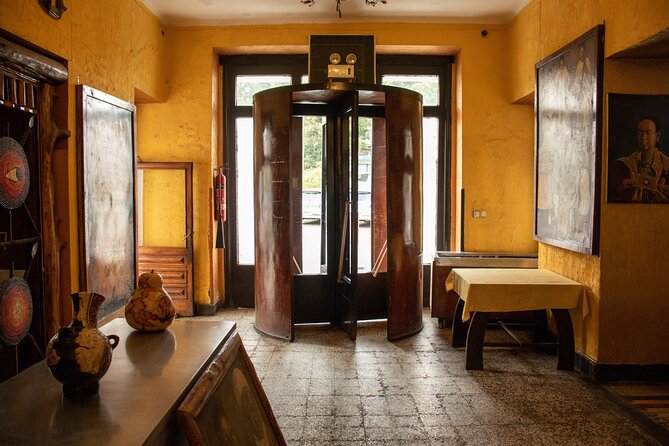
Holy Trinity Cathedral, also called Kidist Selassie, is the kind of place where you feel you’ve stepped into national memory. It was built in 1942 to commemorate Ethiopia’s victory over Italian occupation. That date matters because the cathedral is not just an architecture stop. It’s a monument tied to a turning point.
The big reason to prioritize this stop is what’s inside. You can find the tombs of Emperor Haile Selassie and Empress Menen Asfaw, along with other members of the Imperial Family. You’ll spend about 1 hour, and admission is included.
What to watch for:
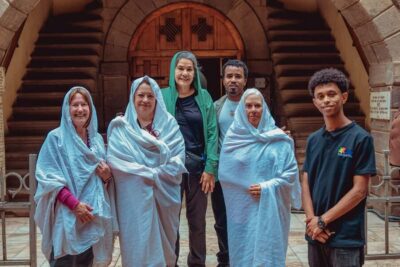
- Dress and behavior matter in Ethiopian Orthodox churches. If you show respect, the experience feels easier and more meaningful.
- Because it’s a high-ranking cathedral, the space can feel serious and crowded at times. Keep your pace slow, and let your guide translate what you’re seeing.
A possible drawback: if you are sensitive to religious settings or you dislike solemn indoor spaces, this may feel more intense than you planned. Still, it’s one of the strongest anchors for understanding Ethiopia’s modern identity.
City walks and drives elsewhere in Ethiopia
Tomoca Coffee Stop: A Short Break with Real Background
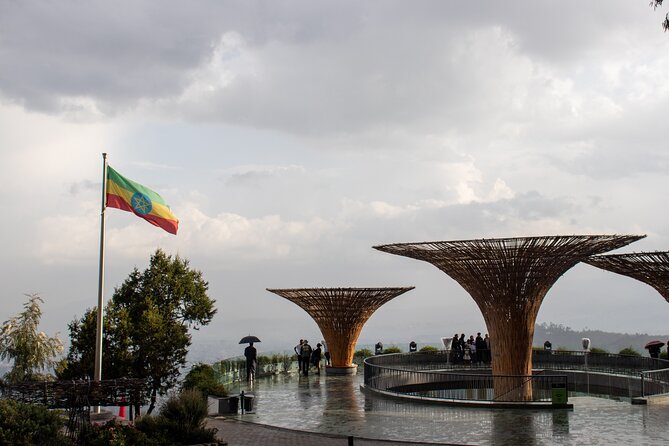
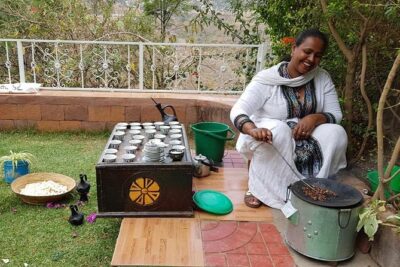
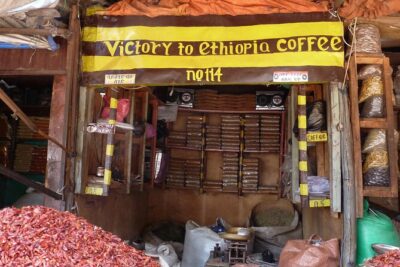
Coffee is everywhere in Ethiopia, but Tomoca offers a specific historical thread. This shop in the Piazza area is described as Ethiopia’s oldest coffee shop, operating since 1953. The stop is brief, about 15 minutes, and admission is included.
This is not a long café hang. It’s a “reset and connect” moment. You’ll likely get coffee or tea as part of what the tour provides, and your guide can put the coffee culture in context. That helps later when you see how markets, trade, and daily life braid together.
My practical advice: treat this as a pause, not a second meal. Use it to hydrate, ask one or two questions, then be ready to shift gears into Mercato.
Mercato Market: The Largest Open-Air Test of Your Pace
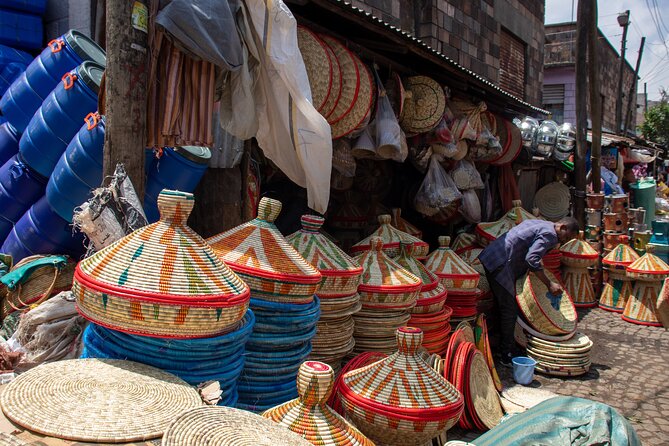
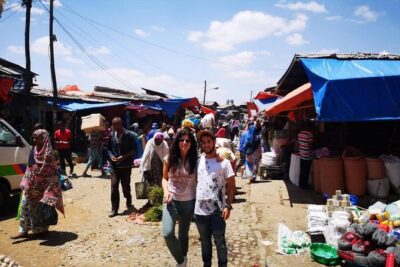
Mercato is famous, and this tour gives you the right way to approach it. You’re told it’s the largest open-air market in Africa, spreading across several square miles and employing an estimated 13,000 people through thousands of businesses arranged in zones. You’ll get about 1 hour there, with admission free.
That time limit is important. Markets like this are not meant to be conquered. Your goal is orientation, a sense of scale, and a few targeted looks.
How I’d play it:
- Let your guide point out the organized zones so you understand what you’re seeing instead of getting lost.
- Spend your energy on one category you care about, like spices, textiles, or metal goods.
- If you want photos, ask first where it’s appropriate. Some areas can feel more sensitive than others.
Possible drawback: Mercato is busy and can feel intense. If you hate crowds or you get overstimulated easily, Mercato may be the most demanding part of the day. The upside is that it’s also where Addis feels most alive.
Lunch at Taitu Hotel: A Historic Setting, Lunch Is On You
Lunch happens at Taitu Hotel in the Piazza area. The Taitu Hotel is described as the oldest hotel in Addis, built in 1905 (or 1898 in the Ethiopian calendar). It was commissioned by Taitu Betul, Empress and wife of Menelik II, to provide foreign guests a place to rest and dine.
You’ll have about 45 minutes there, with admission free. Lunch itself is not included in the tour price, but the tour notes that alternative lunch options can be arranged.
Why this stop works even if you’re watching your budget:
- You’re eating in a building with a story attached to Ethiopia’s modern contact with the wider world.
- Your guide can explain why this location mattered and how the Piazza area shaped early hospitality.
Practical drawback: since lunch is not included, you may feel budget pressure. If you want to control costs, decide early whether you’ll eat a full meal or a lighter option. Also, if you plan to buy snacks later, keep an eye on how much food and water you already carried through the morning.
National Museum of Ethiopia: Lucy and the Layers of Time

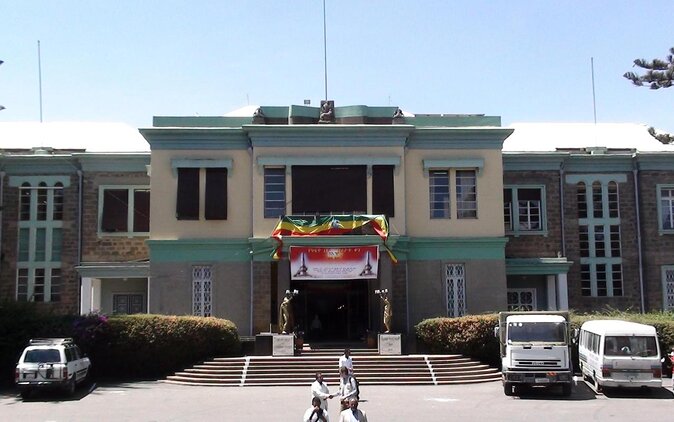
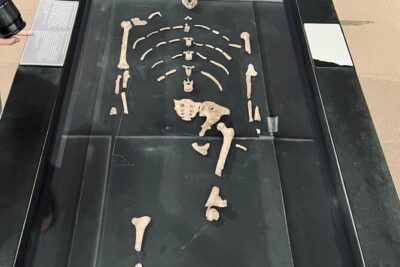
The National Museum of Ethiopia is where your day becomes intellectually satisfying, not just scenic. The museum’s exhibitions are grouped into three sections. The basement is the paleontological collection. This is where you find Lucy, one of the world’s most famous hominid fossils. The tour notes that local archaeological finds in this section are among the most important in sub-Saharan Africa.
In the ground floor galleries, you’ll see artifacts from several key Ethiopian periods, including Aksumite, pre-Aksumite, Solomonic, and Gondorian. Upstairs, the first floor focuses on Ethiopian art spanning from early 14th-century parchment to 20th-century canvas oil painting.
You’ll have about 40 minutes, and admission is included.
How to make the most of limited time:
- If Lucy is your priority, go there first. The basement is the center of gravity for most visitors.
- Then shift to the artifacts that match your interests, especially if you like ancient history, religion, or art.
- Don’t try to read every label. Use your guide to pick the highlights that connect the timeline.
Possible drawback: 40 minutes can feel quick if you enjoy museums slowly. If you’re a museum marathoner, ask your guide if they can shorten something else later to give you more time here.
Ethnological Museum: Former Royal Space, Everyday Culture Objects
After the National Museum, the Ethnological Museum shifts the tone from deep time to human culture. It’s set within Haile Selassie’s former palace, and the grounds include gardens and fountains at the university main campus.
Inside, the museum houses objects tied to ethnology and culture, including anthropological, musicological, and other cultural items. You’ll spend about 40 minutes, with admission included.
Why this stop is valuable:
- It helps you understand that Ethiopian culture is not one story. It’s many communities, crafts, instruments, and traditions that shaped daily life.
- Being in a former palace adds atmosphere. You’re seeing cultural material inside a historically meaningful structure.
Possible drawback: if you only want archaeological history, you might find parts of this museum less urgent than the Lucy section. Still, it’s a good counterbalance and helps your brain connect artifacts to people.
Entoto Natural Park at 2600 Meters: Views, Eucalyptus, and a Name You’ll Remember
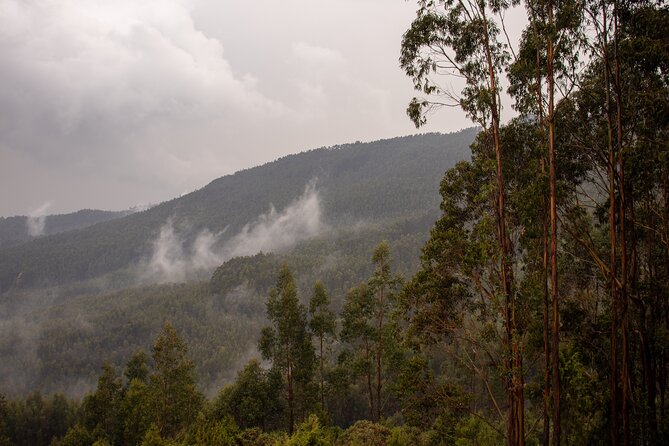
Entoto Natural Park takes you up to 2600 meters. That altitude change matters. It can feel cooler than the city, and the air can feel lighter when you reach the eucalyptus-covered hills.
This stop is described as the location of Emperor Minilik II’s permanent camp and palace. From the top, you get a panoramic view of Addis Ababa and the surrounding countryside.
The eucalyptus story is a neat detail. The tour notes that eucalyptus trees were imported from Australia during Menelik II’s reign and were mostly planted during Haile Selassie’s era. That’s why Entoto is sometimes called the lung of Addis Ababa.
You’ll spend about 40 minutes, and admission is free.
Practical advice:
- Bring a light layer. Even when the city is warm, higher altitude can feel chilly.
- Wear shoes with grip. Paths can be uneven even if the hike is short.
Possible drawback: if you expect a long hike, this is more of a viewpoint-style nature break. If you want heavy trekking, plan a separate outdoor day.
Shiro Meda Market: Textiles, Wedding Dresses, and Practical Souvenir Shopping
To end on something tactile, the tour finishes with Shiro Meda Market (also spelled Chiromeda). This market sells Ethiopian textiles in many forms, including wedding dresses, clothing, linens, and fabrics.
You’ll have about 40 minutes, with admission free.
Why this is a smart final stop:
- By this point in the day, you’ve already seen the large-scale market world at Mercato.
- Shiro Meda is more targeted for buyers who want fabrics and items tied to Ethiopian design.
Shopping advice that keeps you stress-free:
- Set a small budget before you start. Market shopping can pull you in fast.
- If you want to buy fabric, ask how it can be packed or wrapped for travel.
- Keep your guide close if you want translation or help comparing quality.
The Private Guide Advantage: How People Like Alex and Mulu Can Change the Day
A private guide is not just a person holding a map. It’s how you avoid the common problem of walking through important sites with no clue what you’re looking at.
In the experiences people shared for this tour, guides such as Alex and Mulu have been praised for being on time, staying communicative, and sharing history in a way that keeps you engaged. That kind of energy matters at stops like Holy Trinity Cathedral and the museum galleries, where you can easily miss the meaning if you only rely on signs.
You can also use the guide to manage your day:
- Tell them what you care about most, Imperial history, Lucy and science, markets and crafts, or viewpoints.
- Ask for a photo moment at each main stop so you do not waste time searching for a good angle.
- If you get tired, you can ask to adjust pacing so the day stays enjoyable.
Making the Day Comfortable: Timing, Walking, and What to Bring
This is not an all-couch tour. You will walk through cathedral areas, spend time in museum rooms, and navigate markets. That means comfort is not a luxury, it’s part of enjoying the day.
Here’s what helps:
- Carry water, even though bottled water is provided. Markets can make you thirsty faster than you expect.
- Use light layers. Addis weather and Entoto altitude can shift how you feel.
- Keep a small cash amount for lunch, since lunch is not included.
- Bring a charged phone or camera, because you will want photos at Cathedral interiors, museum displays, and the Entoto viewpoint.
If you hate shopping or bargaining, that’s fine. You can still enjoy Shiro Meda for the designs and fabrics without buying. Just let your guide know you prefer browsing only.
Who Should Book This Tour (and Who Might Want a Different Style)
This tour fits best if you want:
- A full-day overview of Addis Ababa that covers religion, Imperial history, science, culture, and modern daily life
- Private pacing with pickup and drop-off included
- Entrance fees handled, so you don’t build your own budget math on the fly
It’s also a good match for first-timers who want to get their bearings quickly. After a day like this, you can walk around Addis with a clearer sense of what you’re seeing.
You might consider a different setup if:
- You want lots of free time to wander independently
- You dislike crowds, since Mercato can feel intense
- You prefer a shorter, slower tour with fewer stops
Should You Book This Addis Ababa Private City Tour?
Yes, I’d book it if you want a well-built day with minimal friction and strong stops that actually teach you something. The value is real because $75 includes private transport, a guide, and entrance fees at major sites like Holy Trinity Cathedral and both museums. You also end with Entoto’s high-altitude views, which gives the day a memorable finale, not just museum fatigue.
Book it especially if you’re the type who likes connections, where one stop explains another. Holy Trinity Cathedral frames the Imperial era. The National Museum anchors that era into a broader timeline with Lucy and Ethiopian art. The Ethnological Museum adds the culture layer. And Mercato plus Shiro Meda keeps you grounded in daily life and craft.
If your ideal day is slow, quiet, and shop-free, plan something else. But if you want Addis in one focused push, this is a strong bet.
FAQ
How long is the Addis Ababa Authentic Private City Tour?
It runs about 6 to 8 hours.
What time does the tour start?
The start time is 8:30 am.
Is this tour private?
Yes. It is a private tour, so only your group participates.
What’s included in the tour price?
Included are bottled water, coffee and/or tea, private transportation, entrance fees, fuel surcharge, the driver and guide, and airport or hotel pickup and drop-off.
Is lunch included?
No. Lunch is not included in the tour price, even though the tour includes time at Taitu Hotel | Piazza for lunch.
Are entrance fees included for the main stops?
Yes. Entrance fees are included for the stops that charge admission, while some markets and the natural park are noted as free.
Is the Tomoca coffee stop included?
Yes. Tomoca Coffee is included as a stop, with a 15-minute visit and admission ticket included.
Are group discounts available?
Discounts can be offered for group or family tours.
What if the weather is poor, or I need to cancel?
The experience requires good weather. If it is canceled due to poor weather, you will be offered a different date or a full refund. You can cancel for a full refund up to 24 hours in advance.
Browsing Ethiopia More Widely
- Full Day Tour of Addis Ababa with Hotel Pickup and Drop-off
★ 5.0 · 430 reviews - Addis Ababa: Debre Libanos, Blue Nile Gorge, and Cave Tour
★ 4.5 · 256 reviews - Addis Ababa Guided City Tour With Airport & Hotel Pick Up
★ 5.0 · 237 reviews - Breathtaking Nature, Wildlife and Cave Church Tour – Free Pickups
★ 5.0 · 225 reviews - Full-Day Private City Tour of Addis Ababa
★ 5.0 · 147 reviews
The Rest of the Ethiopia List
- Full Day Tour of Addis Ababa with Hotel Pickup and Drop-off
★ 5.0 · 430 reviews - Taste of Ethiopia
★ 5.0 · 406 reviews - Day Trip From Addis Ababa See Historical Monastery,Stunning Nature,Animals,Birds
★ 5.0 · 303 reviews - Addis Ababa: Debre Libanos, Blue Nile Gorge, and Cave Tour
★ 4.5 · 256 reviews - Addis Ababa Guided City Tour With Airport & Hotel Pick Up
★ 5.0 · 237 reviews
Addis Ababa, More Ways Round It
- Full Day Tour of Addis Ababa with Hotel Pickup and Drop-off
★ 5.0 · 430 reviews - Addis Ababa Guided City Tour With Airport & Hotel Pick Up
★ 5.0 · 237 reviews - Full-Day Private City Tour of Addis Ababa
★ 5.0 · 147 reviews - Authentic Addis Ababa City Tour with a Local Guide
★ 4.9 · 109 reviews - Addis Ababa highlight city tour
★ 4.8 · 107 reviews
Other Ethiopia tours we have written up


Addis Ababa City Tours, compared.
 ★ 5.0Full Day Tour of Addis Ababa with Hotel Pickup and Drop-offFrom $69430 reviews
 ★ 5.0Addis Ababa Guided City Tour With Airport & Hotel Pick UpFrom $55237 reviews
 ★ 5.0Full-Day Private City Tour of Addis AbabaFrom $160147 reviews
 ★ 4.9Authentic Addis Ababa City Tour with a Local GuideFrom $67109 reviews
 ★ 5.0Prepare for the Best Day Tour in Addis AbabaFrom $90104 reviews
 ★ 5.0Hidden Treasures of Addis Ababa – Food, Culture and History TourFrom $7557 reviews
 ★ 5.0Addis Ababa Guided City ToursFrom $10057 reviews
 ★ 5.0The Best way to Discover Addis AbabaFrom $8555 reviews
Browse the lists this tour appears in