
REVIEW · SIMIEN MOUNTAINS TREKKING
3 Day Simien Mountains Tours
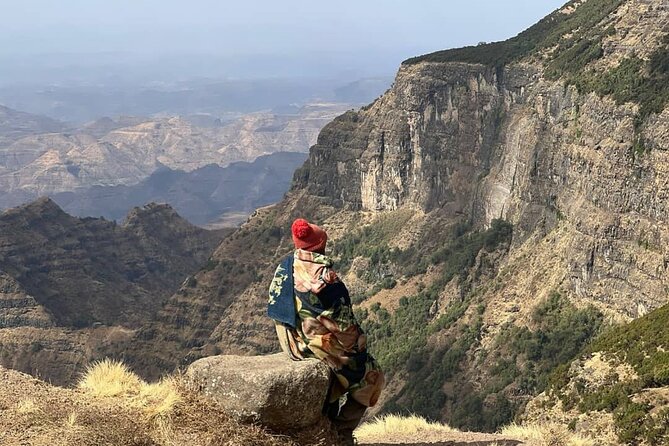
High cliffs, real wildlife, and big altitude views. This 3-day trek through Simien Mountains National Park pairs UNESCO-protected scenery with guided hiking, camping, and the kind of payoff you only get when you are actually up in the mountains. You ride from the Gondar area toward Debark, then spend your days moving along ridges and escarpments, with Ras Dashen (4543 m) as the backdrop for why this region is so famous.
I love the way the route supports altitude acclimatization on day 1, with a 3-4 hour ridge walk that lets you start steady before reaching Sankaber. I also love the wildlife and village rhythm, especially the gelada baboons foraging in big groups and the moment you pause at Jinbar Falls, then end the day with coffee culture in Gich.
One consideration: you hike several long, steep sections at high elevation, so if you are not comfortable with 5-6 hour days and thin air, this will feel like a workout, not a stroll.
In This Review
- Key highlights worth planning around
- Simien Mountains National Park is about altitude, wildlife, and sheer scale
- Price and logistics: what the $350 really buys you
- Day 1: Debark, ridge acclimatization, and reaching Sankaber camp
- Day 2: 12 km, gelada baboons, and Jinbar Falls
- Day 3: Imet Gogo at 3925 m, giant lobelia, and big-sky birds
- Wildlife spotting: what you can expect to see, and what to keep flexible
- Camping comfort and what to pack for three high nights
- How demanding is it, really, and who should choose this trek?
- Should you book 3 Day Simien Mountains Tours with Danakil Depression Tours?
- FAQ
- Where does this tour start, and what time?
- How do transfers work for day 1?
- What do you hike on each day?
- What wildlife can you expect to see?
- Are park entrance fees and guides included?
- Is camping gear provided?
- What meals are included during the trek?
- What is the cancellation policy?
Key highlights worth planning around
- UNESCO-protected Simien Mountains views from ridge lines and escarpments, all tied to the highest terrain of Ethiopia
- Day 1 acclimatization hike (3-4 hours) before reaching the Sankaber camp
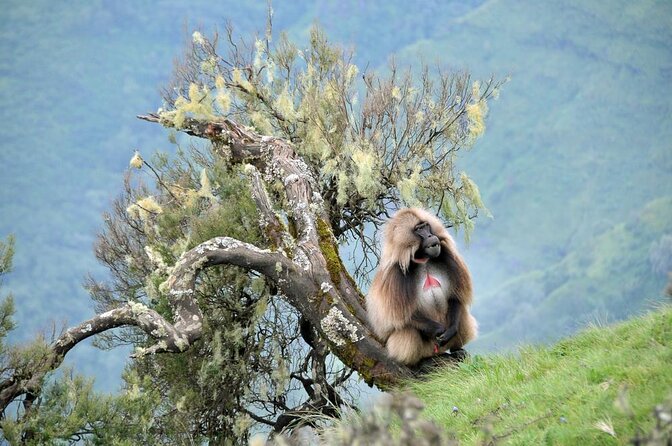
- Gelada baboons in real habitat plus big bird potential in open sky conditions
- Jinbar Falls viewpoint reached after a bit of rock scrambling, with a dramatic drop
- Gich coffee ceremony stop that adds culture to the hiking days
- Small group size (listed caps vary, so confirm the exact number for your departure)
Other Simien treks, compared
- 12 Days SIMIEN MOUNTAIN-LALIBELA-DANAKIL-TIGRAY CHURCHES★ 5.0 · 45 reviews
- 9 Days Tours To Danakil Depression, Simen MNP, Lalibela With Omo Valley Tribes★ 5.0 · 11 reviews
- Simien Mountains Trekking Adventure★ 5.0 · 8 reviews
- 3 Days Trekking Simien Mountains Tours★ 5.0 · 6 reviews
Simien Mountains National Park is about altitude, wildlife, and sheer scale
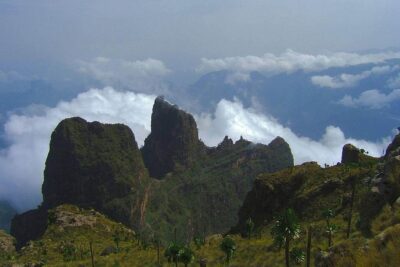
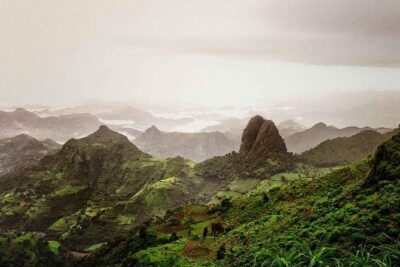
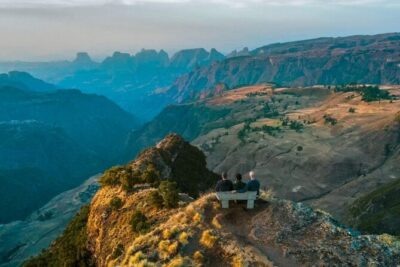
This trek takes place in Simien Mountains National Park, a UNESCO-protected area that earns its reputation fast. The big draw is height. You are consistently in the kind of elevation zone where the world looks sharper, with deep valleys below and jagged peaks climbing away from you.
The park is also a wildlife and bird magnet. You are in a region that supports over 20 large mammal species and more than 130 bird species. In practical terms, that means you do not just hike for scenery. You hike with your eyes open, because the terrain and the food chain up here actually support impressive animals.
The famous name in the background is Ras Dashen, Ethiopia’s highest point at 4543 m. Your route does not promise that summit experience in the day-by-day plan, but it does put you in the same high-alpine world where that kind of altitude makes everything feel close to the edge of the sky.
If you care about endangered species, this is also where the stakes feel real. The park is home to the Ethiopian wolf and the Walia ibex, a wild goat found nowhere else in the world. Add in the potential for carcal (a large cat) and the lammergeier, a bearded vulture with a wingspan that can reach around 3 meters, and you start to see why bird people love this place.
Price and logistics: what the $350 really buys you
At $350 per person for three days, the key value is not just transport. It is the fact that most of your complicated logistics are handled for you. The tour includes road transport by a private minibus and uses camping support that takes weight off your shoulders.
Here is what is covered, in plain language:
- Park entrance fees
- Local guides and scouts
- Camping equipment including tents, mattresses, and sleeping bags (you are still recommended to bring your own sleeping bag for comfort)
- Mule support, plus a mule handler, to move camping gear and cooking materials
- Meals: breakfast (2), lunch (3), dinner (2)
- Government taxes
- Pickup and transport (including air-conditioned vehicle use for the transport parts)
Not included is also important for budgeting: photo and video fees, plus personal expenses, souvenirs, and tips.
So does it feel like a good deal? If you were to try organizing this on your own, you would quickly spend time and money on permits, local guide time, camping gear, and mule logistics. Paying for those parts upfront is what lets you focus on walking, watching, and staying warm instead of managing the paperwork.
Day 1: Debark, ridge acclimatization, and reaching Sankaber camp
Day 1 is set up to help your body adjust. You get picked up from your hotel or the airport in Gondar around 9:00 am and drive about 2 hours to Debark. The road is paved until Debark, which makes the transfer less punishing than you might expect.
After Debark, you sign in at park headquarters, then meet your guide and scout. From there, the plan shifts into mountain mode. Even though a road continues toward the first camp at Sankaber, you are dropped off along the way so you can do a leisurely 3-4 hour acclimatization hike.
This is the part that matters most. Walking a ridge at altitude is one thing, but doing it as an intentional start gives you time to feel your breathing and pacing. Views hit as soon as you step out of the vehicle, which is a nice way to keep motivation up while your body works harder than at sea level.
Lunch is picnic-style on the trail, then you climb to Sankaber. The climb is described as short but demanding for altitude, so expect that your legs will feel it even if the distance is not huge. During the trek, you also get a tray setup for fresh coffee, tea, and snacks, which is a small detail that makes a big emotional difference when you are tired.
You finish day 1 with an overnight camping stay at Sankaber.
Practical note: start slow on day 1. If you go too fast, the mountain will collect the debt later, usually on the later climbs.
Day 2: 12 km, gelada baboons, and Jinbar Falls
Day 2 is where the trek feels more like a full mountain day. You hike about 12 km, taking roughly 5-6 hours. The route threads through highland grasslands, heather forests, and cultivated fields, then follows an escarpment for dramatic views.
That combination matters. Grassland and forest edges are exactly where animals move and where birds are easier to spot. Escarpments also give you that wide, open sight line where you can scan for movement and silhouettes.
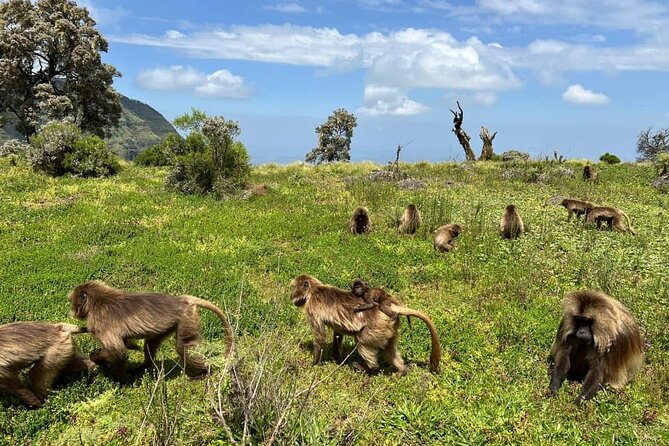
The headline animal on day 2 is the gelada baboon. You are expected to encounter them foraging in big groups. This is not just a distant wildlife tick box. When baboons are feeding nearby, you get a real sense of how daily life works in this altitude zone.
Later, you reach a viewpoint at Jinbar Falls after clambering over a few rocks. The waterfall drops several hundred meters into an abyss. That kind of vertical scale does something to your sense of distance. It is hard to photograph properly because you want the whole scene, but your eyes are doing the work faster than a camera can.
In the afternoon route, you pass through Gich village. This is a cultural reset. People prepare a coffee ceremony, and the tour emphasizes how social it is in Ethiopian culture. Even if you do not know the steps, the point is clear: this stop turns the day from just walking into a real interaction with mountain life.
Overnight camping is not far from the village.
Practical note: Jinbar Falls approach includes rock scrambling. Wear shoes with grip and bring trekking poles if you like them. Your confidence on uneven stone keeps the day enjoyable.
What three days can actually cover
Day 3: Imet Gogo at 3925 m, giant lobelia, and big-sky birds
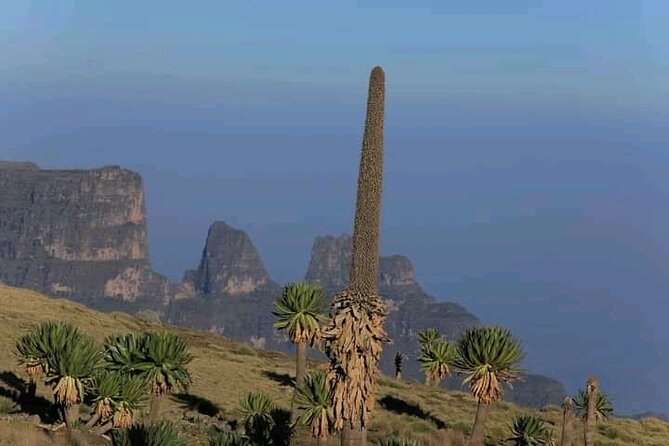
Day 3 is described as the most spectacular stage, and the structure supports that. You hike 5-6 hours with a short detour to Imet Gogo (3925 m), a summit point that gives you the kind of views that make you stop talking for a minute.
On the way, the Gich plateau is where you can find giant lobelia. This is the kind of plant detail that helps you understand the environment, not just admire it. You are not only seeing cliffs and fog. You are seeing high-altitude life that only exists in the right conditions.
Wildlife potential is also front and center. The lammergeier might soar in front of you, and the thick-billed raven is expected to be present. Those are not guaranteed sightings, but the tour is clearly timed and designed around the habitat where birds use the open sky.
After lunch, you move toward Inatye and then head back by drive. The plan includes driving back to Gondar in the afternoon, with a meet-up near a village called Ambaras before you continue on the road.
This last day is a balancing act. You still hike enough to feel like you earned the views, but you also get a clear exit back toward civilization.
Practical note: even though day 3 sounds exciting, treat it as a full hiking day. The view payoff is real, but you still need steady energy.
Wildlife spotting: what you can expect to see, and what to keep flexible
Let’s be honest about wildlife on a mountain trek. You can increase your odds, but you cannot control the animals. The good news here is that the tour includes species that are tied to the habitat you walk through.
Geladas: expected on day 2 in the grasslands. If you keep your eyes moving and pause when your guide points, you have a strong chance of seeing them clearly in action.
Birds: lammergeier and thick-billed raven are part of the plan on day 3. Birds like these rely on updrafts and visibility, so calmer, clearer moments can help. Still, clouds and wind are part of high-altitude weather, so stay flexible.
Endangered mammals like the Ethiopian wolf and the Walia ibex are mentioned as present in the park. Because they are rarer, consider them bonuses rather than schedule items.
Carcal is also listed as a possible large cat species. That is exciting, but if you do not see it, the day still has enough to make you feel you got your money’s worth.
My best advice: treat wildlife like a slow conversation. Move quietly, pause often, and scan instead of sprinting to the next viewpoint. The mountains reward patience.
Camping comfort and what to pack for three high nights
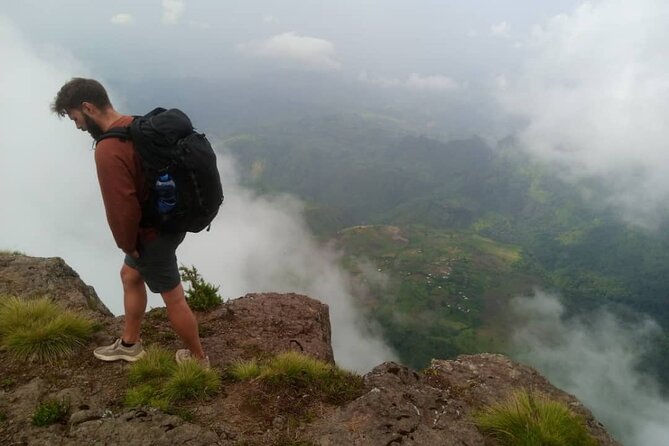
Your comfort level depends on what you bring, but the tour does a lot of heavy lifting. Camping support includes tents, mattresses, and sleeping bags. You are still recommended to bring your own sleeping bag, which tells you the temperature can swing enough to matter.
Because your elevation is high, pack for cold nights and variable weather. In practical terms, plan on layers you can adjust quickly and a rain layer even if skies look fine when you start the day. Gloves and a warm hat can make the difference between tolerable and miserable around camp.
Other gear that usually pays off on treks like this:
- Sturdy daypack for water and layers
- Water bottle and small snacks for breaks
- Headlamp for camp life
- Trekking poles if your knees get grumpy
- Sunscreen and sunglasses (high altitude sun is real)
Also, take advantage of the mule support. The mules and handler transport camping gear and cooking materials, so you are not carrying the whole kitchen on your back. That is a big reason this tour feels approachable for moderate fitness travelers.
How demanding is it, really, and who should choose this trek?
The tour is aimed at travelers with moderate physical fitness. That is a fair level, but do not let the word moderate trick you into thinking it is easy.
The hiking time across the three days is substantial:
- Day 1: 3-4 hour acclimatization hike plus an additional climb to Sankaber
- Day 2: about 12 km, 5-6 hours
- Day 3: 5-6 hours plus a detour to a high point at 3925 m
Add in altitude, and you get a day-by-day rhythm where your breathing and pacing matter more than raw speed.
If you enjoy guided hikes, want wildlife, and prefer spending nights in a camp instead of a hotel, this is a good match. Small group size also helps. The data lists caps at 10 and 15, so your departure may be anywhere in that range. Either way, it is not the kind of massive group trek where you lose your guide in the crowd.
If you have severe knee problems, or you know you struggle badly with altitude, you should be cautious and consider a gentler route.
Should you book 3 Day Simien Mountains Tours with Danakil Depression Tours?
If you are craving real mountain time with guided support and clear value for your money, I would seriously consider this. The parts that get the strongest praise are the stunning views, the feeling that everything is well coordinated, and the fact that your guide can make the experience more human, including having real conversations when the group is small.
This tour also has a strong practical backbone. You get transport support, park fees, local guides and scouts, camping gear, mule logistics, and most meals included. That is a lot of stress taken off your plate, especially when you are dealing with remote trail logistics.
The main reason to pause is altitude and effort. You are hiking most days for several hours at high elevation. If you are the type who wants sightseeing from a bus window, this is not that.
Before you commit, do two quick checks: confirm the effective group size for your date, and clarify how the Addis Ababa meeting point connects to the Gondar pickup for day 1, since the plan references both locations.
FAQ
Where does this tour start, and what time?
The meeting point is Cameroon Street (Cameroon St), Addis Ababa, Ethiopia, and the start time is 9:00 am.
How do transfers work for day 1?
On day 1, you are picked up from your hotel or the airport in Gondar around 9:00 am, then drive about 2 hours to Debark.
What do you hike on each day?
Day 1 includes a 3-4 hour acclimatization hike before reaching Sankaber. Day 2 is about 12 km and 5-6 hours. Day 3 is 5-6 hours, including a detour to Imet Gogo (3925 m).
What wildlife can you expect to see?
You can encounter gelada baboons on the trek, and there is potential to see birds like the lammergeier and thick-billed raven. The park is also home to Ethiopian wolf and Walia ibex, though sightings are not guaranteed in the plan.
Are park entrance fees and guides included?
Yes. Park entrance fees, local guides, and scouts are included.
Is camping gear provided?
Yes. Camping equipment includes tents, mattresses, and sleeping bags, and you are recommended to bring your own sleeping bag.
What meals are included during the trek?
Meals included are breakfast (2), lunch (3), and dinner (2).
What is the cancellation policy?
You can cancel for a full refund if you cancel at least 24 hours before the experience start time. If you cancel less than 24 hours before, the amount paid is not refunded.
Browsing Ethiopia More Widely
- Full Day Tour of Addis Ababa with Hotel Pickup and Drop-off
★ 5.0 · 430 reviews - Addis Ababa: Debre Libanos, Blue Nile Gorge, and Cave Tour
★ 4.5 · 256 reviews - Addis Ababa Guided City Tour With Airport & Hotel Pick Up
★ 5.0 · 237 reviews - Breathtaking Nature, Wildlife and Cave Church Tour – Free Pickups
★ 5.0 · 225 reviews - Full-Day Private City Tour of Addis Ababa
★ 5.0 · 147 reviews
The Rest of the Ethiopia List
- Full Day Tour of Addis Ababa with Hotel Pickup and Drop-off
★ 5.0 · 430 reviews - Taste of Ethiopia
★ 5.0 · 406 reviews - Day Trip From Addis Ababa See Historical Monastery,Stunning Nature,Animals,Birds
★ 5.0 · 303 reviews - Addis Ababa: Debre Libanos, Blue Nile Gorge, and Cave Tour
★ 4.5 · 256 reviews - Addis Ababa Guided City Tour With Airport & Hotel Pick Up
★ 5.0 · 237 reviews
Up Into the Simien Mountains
- 12 Days SIMIEN MOUNTAIN-LALIBELA-DANAKIL-TIGRAY CHURCHES
★ 5.0 · 45 reviews - 9 Days Tours To Danakil Depression, Simen MNP, Lalibela With Omo Valley Tribes
★ 5.0 · 11 reviews - Simien Mountains Trekking Adventure
★ 5.0 · 8 reviews - 3 Days Trekking Simien Mountains Tours
★ 5.0 · 6 reviews - Northern Ethiopia & Trekking Simien Mountains , 10 Days
★ 4.5 · 5 reviews
Other Ethiopia tours we have written up
Simien Mountains Trekking, compared.
 ★ 5.012 Days SIMIEN MOUNTAIN-LALIBELA-DANAKIL-TIGRAY CHURCHESFrom $1,64145 reviews
 ★ 5.06 Days tour Package (Simien Mountains, Lalibela, and Danakil Depression)From $1,43532 reviews
 ★ 5.09 Days Tours To Danakil Depression, Simen MNP, Lalibela With Omo Valley TribesFrom $1,80011 reviews
 ★ 5.05-Day Northern Ethiopia Tour : 3D Simien Mountains Trek & Axum.From $4719 reviews
 ★ 5.0Simien Mountains Trekking AdventureFrom $3388 reviews
 ★ 5.04 Days Trekking to Simien Mountain National ParkFrom $2757 reviews
 ★ 4.0Simien Mountains – 4 DaysFrom $5007 reviews
 ★ 5.03 Days Trekking Simien Mountains ToursFrom $2506 reviews
Browse the lists this tour appears in