

REVIEW · ADDIS ABABA CITY TOURS
Full Day Addis Ababa City Tour with Hotel Pick Up And Drop Off
Addis Ababa packs a lot into one day. This full-day tour links Ethiopia’s big national stories with street-level life, from Lucy’s fossils to the giant Mercato market. I like the way it’s built for first-timers, with pickup and a guided route that keeps the day moving.
My favorite part is the mix of places you cannot easily stitch together on your own: the National Museum and Ethiopia’s major churches, plus time for market energy and a high-altitude nature stop. The one thing to think about is the length, since the tour runs about 6 to 10 hours, so it can feel like a full-day workout, especially if you’re sensitive to long sitting in a vehicle and time on your feet.
In This Review
- Key highlights to know before you go
- Addis Ababa in One Route: How the Day Flows
- National Museum of Ethiopia and Lucy’s Basement Fossils
- Ethnological Museum: Ethiopia Explained Through the Life Cycle
- Mercato Market: A Full Sensory Hit (with a Practical Focus)
- Holy Trinity Cathedral: Stained Glass, Stone Art, and National Memory
- Entoto Natural Park: A High Break Above Addis (Weather Matters)
- St. George’s Cathedral: Adwa Commemoration and Afewerk Tekle Artwork
- What $60 Buys You: Value, Inclusions, and the Hidden Costs It Covers
- Lunch Break: When Food Is Part of the Sightseeing
- Timing, Transport, and Why the Schedule Works
- Should You Book This Addis Ababa City Tour?
- FAQ
- How much does the full day Addis Ababa city tour cost?
- How long is the tour?
- Is hotel pickup and drop-off included?
- What is included in the tour price?
- Which places do you visit during the day?
- Are admission tickets included for the stops?
- How large is the group?
- What happens if the weather is poor or I need to cancel?
Key highlights to know before you go
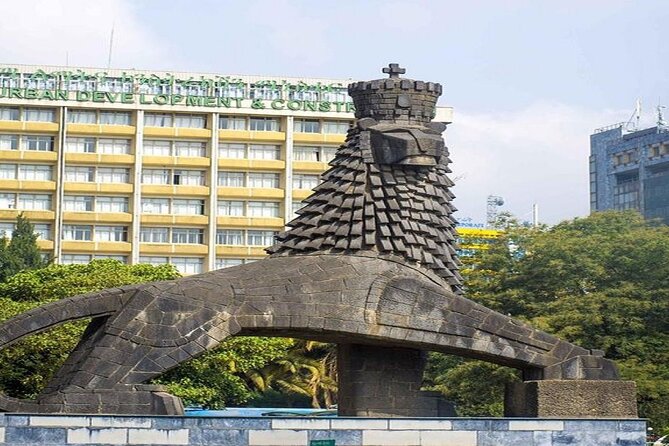
- Lucy at the National Museum, plus other standout fossil displays in the basement
- Birth-to-Death focus at the Ethnological Museum, organized by life cycle and culture
- Mercato market energy, including spice, handmade baskets, and second-hand stalls
- Holy Trinity Cathedral, built in 1942, tied to national figures and notable art
- Entoto Natural Park, a cooler break above the city with springs and waterfalls (weather permitting)
- St. George’s Cathedral, tied to the Battle of Adwa and famous artwork including Afewerk Tekle mosaics
Other ways to take on the capital in a day
- Full Day Tour of Addis Ababa with Hotel Pickup and Drop-off★ 5.0 · 430 reviews
- Full-Day Private City Tour of Addis Ababa★ 5.0 · 147 reviews
- Addis Ababa Authentic Private City Tour★ 5.0 · 134 reviews
- Authentic Addis Ababa City Tour with a Local Guide★ 4.9 · 109 reviews
Addis Ababa in One Route: How the Day Flows

This tour is designed like a story that moves from deep time, to human culture, to public life, and then to national symbolism. You start with the most mind-bending stop, the National Museum. Then you pivot to culture and everyday Ethiopian life at the Ethnological Museum. After that comes the market, where you can see how the city buys, sells, and talks. Two major churches follow, giving you the political and spiritual backbone of modern Addis. The day ends with a nature stop high above the capital at Entoto Natural Park.
The practical win is that hotel pickup and drop-off take the pressure off. You do not have to figure out transport between neighborhoods. You also get a guided tour, which matters in Addis because a short explanation can turn a building or exhibit from background noise into something you remember.
Group size is capped at up to 35 people, so you’re not in a private car the whole time. Still, most of the value comes from staying on schedule and not losing time hunting for entrances and ticket desks.
National Museum of Ethiopia and Lucy’s Basement Fossils
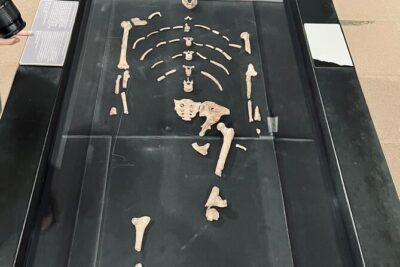
If you only have time for one big museum in Addis, start here. The National Museum of Ethiopia is widely treated as a top stop in sub-Saharan Africa, and the paleontological collection in the basement is the headline. The center of gravity is Lucy, discovered in 1974 in Ethiopia’s Afar region, and the display helps explain why that find changed how people think about human origins.
What I like about this stop is that it is not only about one famous fossil. You can also see fossilized evidence of extinct animals such as Homotherium, described as a massive sabre-toothed feline, and Notochoerus, a gargantuan savannah pig. That makes the museum feel like a full “Ethiopia, long before humans” lesson, not a one-item photo stop.
Plan for museum time that feels fast. The schedule gives you about 1 hour, which is enough to see the fossils and get oriented in the ground-floor history areas without turning it into a marathon.
On the ground floor, you also get artifacts connected to multiple historical periods, including pre-Aksumite, Aksumite, Solomonic, and Gondorian eras. That range helps you understand that Ethiopia’s story did not begin with one kingdom, and it did not end with one empire.
Ethnological Museum: Ethiopia Explained Through the Life Cycle
Right after the museum of fossils, the Ethnological Museum shifts the focus to people. This one is built as a cultural and ethnographic walkthrough that helps you grasp Ethiopia’s many cultural groups through themes that include religion, food culture, history, and natural facts. The big organizing idea is the life cycle, described as moving from birth to death.
What’s useful for you here is the pacing. After spending time looking at “ancient remains,” you switch to human traditions and daily-world context. That contrast makes the day feel more complete.
You get about 1 hour here, with admission included. In that time, you can usually pick up the main themes and not just skim. If you’re the type who likes labels and explanations, this stop rewards you. If you prefer visuals, you still get plenty to look at, because the museum is organized around how people live and mark key moments across the life cycle.
Mercato Market: A Full Sensory Hit (with a Practical Focus)
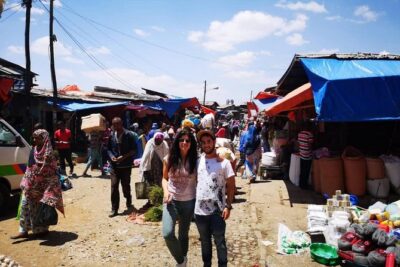
Then comes Mercato, and yes, it is big. Mercato is described as the biggest outdoor market not just in Addis Ababa or Ethiopia, but in the whole of Africa. It is the kind of place where you can either wander aimlessly and get tired, or you can go with a simple target and actually enjoy yourself.
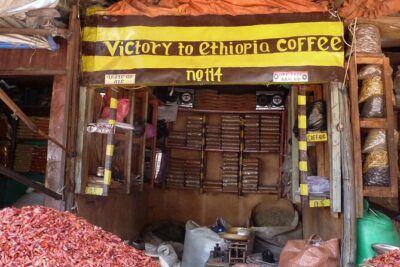
This tour keeps you oriented by focusing on must-see areas such as the Spice Market, a market for handmade baskets, and a section for second-hand items. That structure is helpful because Mercato can feel like a city inside the city.
You get about 1 hour. That is a good amount if you want to see how the market works without turning the day into shopping fatigue. Also, since the tour includes a guided approach, you get help navigating what’s where. You also get the chance to notice how the market connects everyday life to broader culture.
One consideration: markets can be crowded and noisy. If you are easily overwhelmed in busy environments, mentally prepare for sensory input and take a few slow breaths before you push deeper into the stalls.
City walks and drives elsewhere in Ethiopia
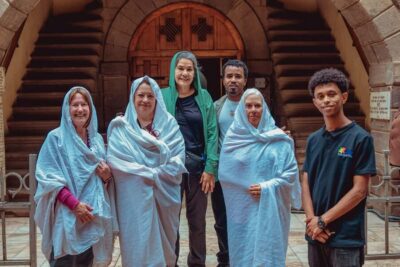
Holy Trinity Cathedral: Stained Glass, Stone Art, and National Memory
After Mercato, the tone turns quiet and reflective. Holy Trinity Cathedral, built in 1942, is known for beautiful window glass work and unique stone art visible on the walls. It also serves as a cemetery for important figures, including the grave of Emperor Haile Selassie I.
This stop is not just about architecture. It’s also about how Ethiopia remembers itself through sacred space. If you’re trying to connect political history with religious identity, this cathedral gives you that link in a physical form.
You’re given about 1 hour, with admission included. That time usually works well because you can see the stained glass and wall art, then spend a few minutes understanding how the cathedral’s role as a burial site shapes the visitor experience.
Entoto Natural Park: A High Break Above Addis (Weather Matters)
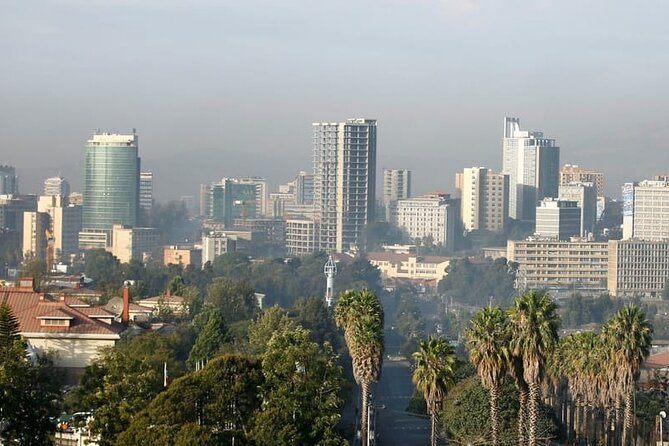
Entoto Natural Park is a breather above the city. It towers high over Addis Ababa and is described as a historical sanctuary tied to ancient mountain nature. The tour frames it around clear springs, streams, and waterfalls, which tells you the focus is on water and outdoor scenery.
You get about 1 hour here, and admission is included. Since this is an outdoor park stop, weather matters. The tour notes it requires good weather, and if poor conditions cancel the tour, you would be offered a different date or a full refund.
For you, the practical takeaway is simple: treat Entoto like a weather-dependent bonus. If the day is clear, you’ll likely feel the contrast between city intensity and mountain calm. If conditions are less cooperative, you still get the stop, but the “wow” factor can shift.
St. George’s Cathedral: Adwa Commemoration and Afewerk Tekle Artwork

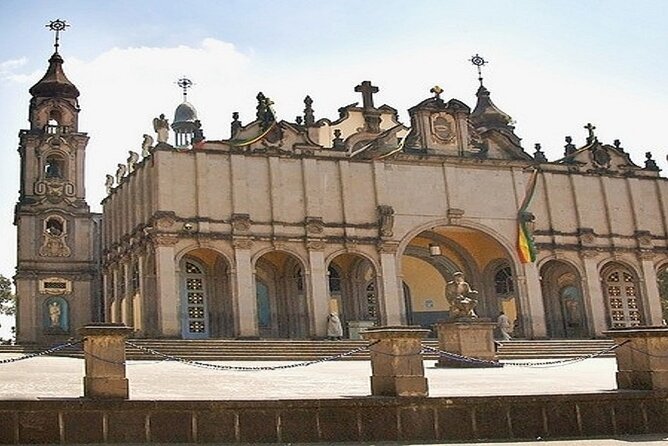
Your last major cultural anchor is St. George’s Cathedral, one of Addis’s most beautiful churches. The cathedral was commissioned by Emperor Menelik II to commemorate his 1896 defeat of the Italians in Adwa. It is dedicated to St George, and the story includes Ethiopia’s patron saint’s icon carried into the battle.
The building itself is described as having a grey stone exterior, but the interior is where the colors come in. The ceiling glow is noted as sky-blue, with gilded stars. The innermost shrine’s outer walls are covered in paintings and mosaics by Afewerk Tekle, a name you’ll hear attached to Ethiopian art and religious decoration.
This is the stop where you really start seeing the layers of Ethiopian identity, art, and political memory in one place. It’s also described as having a traditional octagonal form with severe neoclassical style. Construction was completed in 1911 with help from Greek, Armenian, and Indian artists. Later, Empress Zewditu was crowned here in 1916, and Emperor Haile Selassie was crowned here in 1930.
You get about 1 hour. That feels about right, because once you’ve seen the main interior features, you can spend time taking it in rather than racing.
What $60 Buys You: Value, Inclusions, and the Hidden Costs It Covers
At $60 per person, this tour can feel like a bargain once you look at what’s included. You get all fees and taxes, bottled water, coffee and/or tea, and lunch. You also get an air-conditioned vehicle plus a guided tour. Importantly, admission is included for the listed stops.
That matters because museums, cathedrals, and major attractions can add up fast once you start paying individually. Here, the structure is set so you spend your money where you’re actually going and not on a pile of separate small ticket items throughout the day.
There is also a real comfort factor. The vehicle is air-conditioned, which is not a small thing in Addis. The day includes sitting time in transit, and AC can help you arrive at museums and churches with less fatigue.
One more value angle: the tour is capped at 35 people. That’s not tiny, but it’s small enough that the experience still feels like a group outing with guidance, not a mass event where you spend your time lost.
Lunch Break: When Food Is Part of the Sightseeing
Lunch is included, and the way it’s described in the experience is not just a quick snack between stops. The standout detail is that the lunch can be served in a mountain setting in a traditional house. That turns a basic meal into a scene, and it helps the day feel less like a checklist.
If you’re planning around layovers or short stays, this kind of included lunch is a big help. It saves you from hunting for a good place, dealing with menus you may not be able to read quickly, and then losing time you cannot get back.
Timing, Transport, and Why the Schedule Works
The tour runs about 6 to 10 hours. That range is normal for Addis, where traffic, stop timing, and weather can affect real-world hours. The schedule gives you six main stops, each with about 1 hour, which keeps you from spending too long in any one place.
For your day, that matters because you get variety instead of repetition. You will see fossils, cultural displays, a market, major churches, and a natural park. If you packed all of those into independent plans, it would be harder to make the timing work, and you might spend more time coordinating transport.
You also get a mobile ticket, and pickup is offered. That combination usually makes check-in easier, which helps if you arrive in Addis with jet lag or limited time.
Should You Book This Addis Ababa City Tour?
Book it if you want a first-timer-friendly overview that hits the big national anchors and daily urban life in one go. It’s also a smart choice if you like guided context, because the day’s value comes from connecting the dots: Lucy’s discovery, cultural life cycles, market routines, and the stories embedded in cathedrals.
Skip it or think twice if you dislike long days or you’re sensitive to crowds and outdoor walking. Mercato and Entoto both bring more outdoor energy than a purely museum-based route. Also, since Entoto depends on good weather, your day can shift a bit if conditions are not ideal.
If your goal is to get your bearings fast and leave with clear memories of what Addis is, this is a strong option.
FAQ
How much does the full day Addis Ababa city tour cost?
It costs $60.00 per person.
How long is the tour?
The tour lasts approximately 6 to 10 hours.
Is hotel pickup and drop-off included?
Yes, pickup and drop-off are included.
What is included in the tour price?
The price includes all fees and taxes, bottled water, coffee and/or tea, lunch, an air-conditioned vehicle, and a guided tour.
Which places do you visit during the day?
The tour includes the National Museum of Ethiopia, the Ethnological Museum, Mercato Market, Holy Trinity Cathedral, Entoto Natural Park, and St. George’s Cathedral.
Are admission tickets included for the stops?
Yes. Admission tickets are included for each of the listed stops.
How large is the group?
The tour has a maximum of 35 travelers.
What happens if the weather is poor or I need to cancel?
The experience requires good weather. If it is canceled due to poor weather, you will be offered a different date or a full refund. Free cancellation is available up to 24 hours in advance for a full refund. If you cancel less than 24 hours before the experience’s start time, the amount paid is not refunded.
Browsing Ethiopia More Widely
- Full Day Tour of Addis Ababa with Hotel Pickup and Drop-off
★ 5.0 · 430 reviews - Addis Ababa: Debre Libanos, Blue Nile Gorge, and Cave Tour
★ 4.5 · 256 reviews - Addis Ababa Guided City Tour With Airport & Hotel Pick Up
★ 5.0 · 237 reviews - Breathtaking Nature, Wildlife and Cave Church Tour – Free Pickups
★ 5.0 · 225 reviews - Full-Day Private City Tour of Addis Ababa
★ 5.0 · 147 reviews
The Rest of the Ethiopia List
- Full Day Tour of Addis Ababa with Hotel Pickup and Drop-off
★ 5.0 · 430 reviews - Taste of Ethiopia
★ 5.0 · 406 reviews - Day Trip From Addis Ababa See Historical Monastery,Stunning Nature,Animals,Birds
★ 5.0 · 303 reviews - Addis Ababa: Debre Libanos, Blue Nile Gorge, and Cave Tour
★ 4.5 · 256 reviews - Addis Ababa Guided City Tour With Airport & Hotel Pick Up
★ 5.0 · 237 reviews
Addis Ababa, More Ways Round It
- Full Day Tour of Addis Ababa with Hotel Pickup and Drop-off
★ 5.0 · 430 reviews - Addis Ababa Guided City Tour With Airport & Hotel Pick Up
★ 5.0 · 237 reviews - Full-Day Private City Tour of Addis Ababa
★ 5.0 · 147 reviews - Addis Ababa Authentic Private City Tour
★ 5.0 · 134 reviews - Authentic Addis Ababa City Tour with a Local Guide
★ 4.9 · 109 reviews
Other Ethiopia tours we have written up


Addis Ababa City Tours, compared.
 ★ 5.0Full Day Tour of Addis Ababa with Hotel Pickup and Drop-offFrom $69430 reviews
 ★ 5.0Addis Ababa Guided City Tour With Airport & Hotel Pick UpFrom $55237 reviews
 ★ 5.0Full-Day Private City Tour of Addis AbabaFrom $160147 reviews
 ★ 5.0Addis Ababa Authentic Private City TourFrom $75134 reviews
 ★ 4.9Authentic Addis Ababa City Tour with a Local GuideFrom $67109 reviews
 ★ 5.0Prepare for the Best Day Tour in Addis AbabaFrom $90104 reviews
 ★ 5.0Addis Ababa Guided City ToursFrom $10057 reviews
 ★ 5.0Hidden Treasures of Addis Ababa – Food, Culture and History TourFrom $7557 reviews
Browse the lists this tour appears in