
REVIEW · ADDIS ABABA CITY TOURS
Addis Ababa City Tours
One day in Addis, packed with real stories. You hit Lucy at the National Museum and get the trade-floor buzz of Merkato in one go. The one drawback is timing: it is a long, sometimes intense day, with the Red Terror museum included.
I like that this runs like a guided plan, not a scavenger hunt. With hotel pickup, an air-conditioned minivan, and all the main entrances handled, you can spend your energy on the city itself. Just remember food and drinks are not included, so you will want cash and a few snack plans.
In This Review
- Key things I’d look forward to first
- Price and what you’re really paying for
- How the day runs: pickup, timing, and small-group pacing
- Stop 1: National Museum of Ethiopia and the Lucy plus Selam combo
- Stop 2: Ethnological Museum for culture, not just fossils
- Stop 3: Shiro Meda Market for handwoven cotton and confident bargaining
- Stop 4: Merkato, the big market story, and how it feels in person
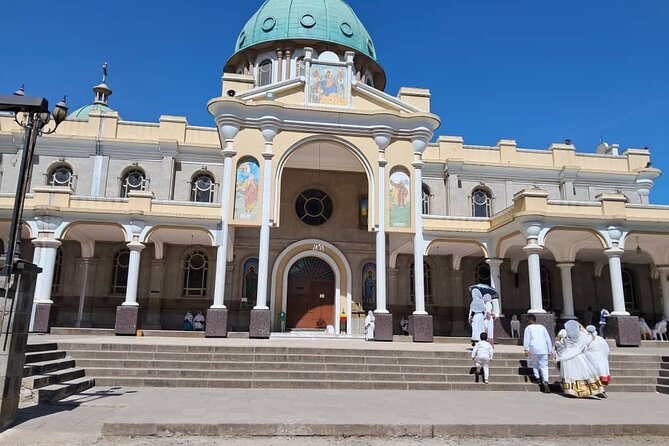
- Stop 5: St George’s Cathedral for Ottoman-shape vibes and an imperial museum
- Stop 6: Red Terror Martyrs Memorial Museum, heavy but important
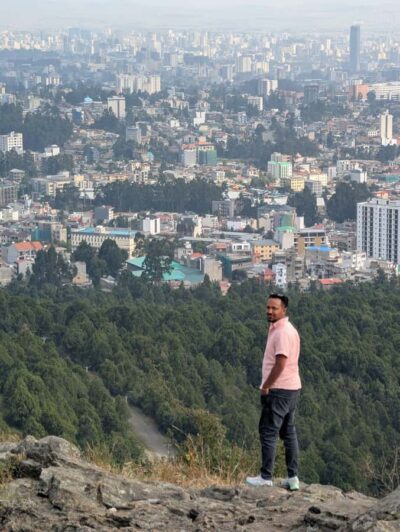
- Stop 7: Mount Entoto for monastery stops and the eucalyptus “lung of Addis”
- Food, coffee, and how to plan your breaks
- Guides and the “small details” that make it feel smooth
- Who should book this Addis Ababa full-day tour
- Should you book Addis Ababa City Tours?
- FAQ
- How long is the Addis Ababa city tour?
- What is the price per person?
- Is hotel pickup and drop-off included?
- Are entrance fees included?
- Is food and drink included?
- How many people are in the group?
- Where does the tour start and end?
- What is the cancellation policy?
Key things I’d look forward to first
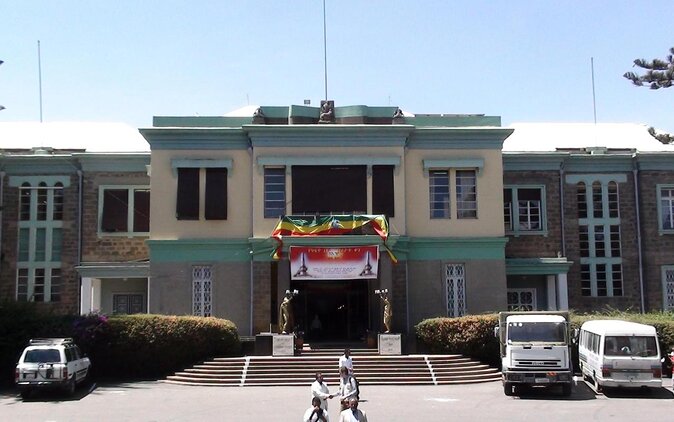
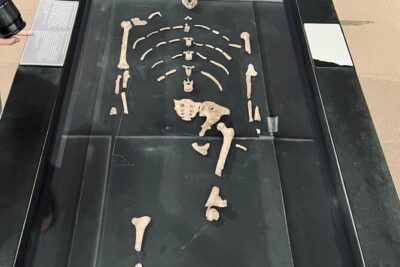
- Lucy and Selam fossils at the National Museum of Ethiopia for a quick crash course in human origins, from famous to newly displayed.
- Up-close market time at Shiro Meda and Merkato, where bargaining and local shopping culture are part of the point.
- St George’s Cathedral with an on-site museum tied to major Ethiopian history and the story of its construction and restoration.
- The Red Terror Martyrs Memorial Museum if you can handle heavy, direct history presented with no soft edges.
- Mount Entoto for panoramic views and monastery stops, plus eucalyptus trees that give the mountain its nickname.
Other ways to take on the capital in a day
- Full Day Tour of Addis Ababa with Hotel Pickup and Drop-off★ 5.0 · 430 reviews
- Full-Day Private City Tour of Addis Ababa★ 5.0 · 147 reviews
- Addis Ababa Authentic Private City Tour★ 5.0 · 134 reviews
- Authentic Addis Ababa City Tour with a Local Guide★ 4.9 · 109 reviews
Price and what you’re really paying for
At $600 per person for a full day (about 7 to 8 hours), this is not a budget hop-on, hop-off. You are paying for a lot of moving parts that can be hard to line up alone in Addis Ababa: hotel pickup and drop-off, an air-conditioned minivan, a driver/guide plus a Blue Badge guide, and entrance fees for every major stop.
That matters because this itinerary is built on several ticketed venues and a few tight time windows. If you try to assemble it yourself, the cost often shifts from ticket prices to transport time, guide time, and the risk of arriving to closed or delayed sites.
On the flip side, the money only feels fair if you will actually use the whole day. If you only care about one or two sights, you might want a shorter option.
How the day runs: pickup, timing, and small-group pacing
This tour is designed for convenience. You get hotel pickup and hotel drop-off, plus an end back at the meeting point near Edna Mall on Cameroon Street (the tour start and end location is listed the same way). You also have mobile tickets, which can make the day smoother once you are on the move.
The group size is capped at 10 travelers, which is a big deal in a city where traffic and navigation can easily eat your energy. Smaller groups mean you can keep your stops efficient and still ask questions instead of waiting for everyone to regroup.
One practical consideration: Addis Ababa traffic and museum pacing can vary. The itinerary is packed, and the only “buffer” you really get is your guide’s ability to keep things moving between stops.
Stop 1: National Museum of Ethiopia and the Lucy plus Selam combo
This is the anchor stop. The National Museum of Ethiopia gives you about 2 hours, and the ticket is included. You come for Lucy, one of the world’s best-known fossil finds, and you stay for the broader museum context around Ethiopian culture and archaeology.
The standout detail here is the range: archaeological and paleoanthropological discoveries, objects from ancient and medieval periods, regalia and memorabilia tied to former rulers, plus art and crafts that help explain how many different Ethiopian peoples and traditions connect.
You also get a specific newer addition mentioned for the collection: Selam, estimated at 3.3 million years old, described as the earliest child. For me, that turns the museum from a one-photo stop into something more thoughtful. You see that the story is not just Lucy, it is a whole chain of evidence and interpretation.
A smart tip: wear shoes you can stand in for. Museums here can mean lots of time on your feet, and the best view angles do not always match where you want to pause for photos.
Stop 2: Ethnological Museum for culture, not just fossils
After Lucy time, the Ethnological Museum brings you to a different kind of learning. You get about 1 hour, and entry is included.
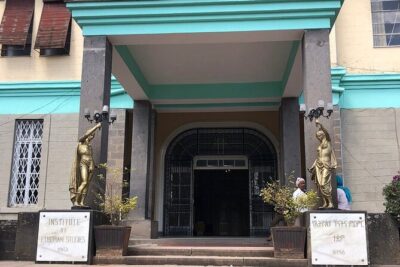
This is a public museum dedicated to ethnology and culture, with collections that include anthropological and musicological objects. It is also described as the first university museum in Ethiopia, located on the main campus of Addis Ababa University, tied to the Institute of Ethiopian Studies.
Why this is a good pairing with the National Museum: it helps you shift from deep-time human origins to human expression, how communities preserve traditions, and how culture gets studied and displayed. Even if you are museumed out by hour two, this stop gives your brain a different track.
City walks and drives elsewhere in Ethiopia
Stop 3: Shiro Meda Market for handwoven cotton and confident bargaining
The tour drops you at Shiro Meda Market for about 30 minutes. Entry is included, but this stop is mostly about how you shop and what you choose to buy.
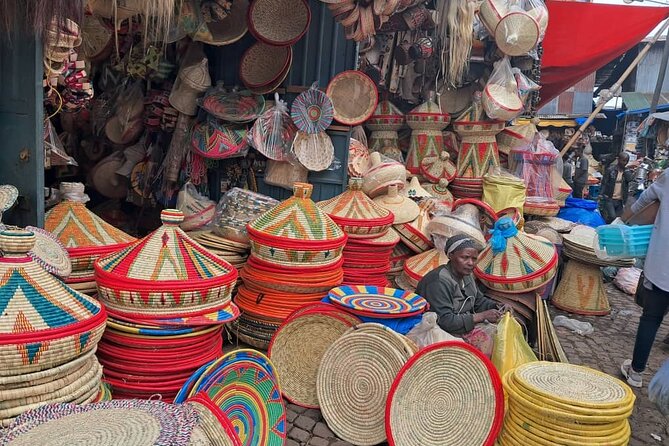
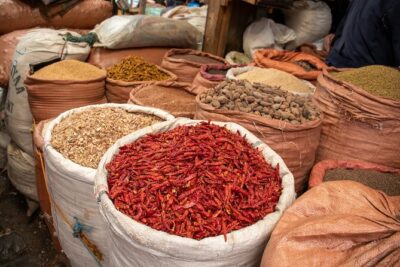
This market is known for handwoven cotton clothes, especially for women. The focus here is practical shopping: colorful scarves, dresses, and small gift items like shirts, necklaces, and earrings. The best part is that bargaining is part of the experience, not something you dodge.
If you want value, go in with a plan. Pick what you actually want, set a rough spending ceiling, and be ready for the first price to be higher than reality. A short market stop can feel rushed if you try to browse everything. Use the time to find a style you like, then negotiate.
Also, keep your purchases organized. Markets can be chaotic in the best way, and you do not want to lose a garment after you get a good deal.
Stop 4: Merkato, the big market story, and how it feels in person
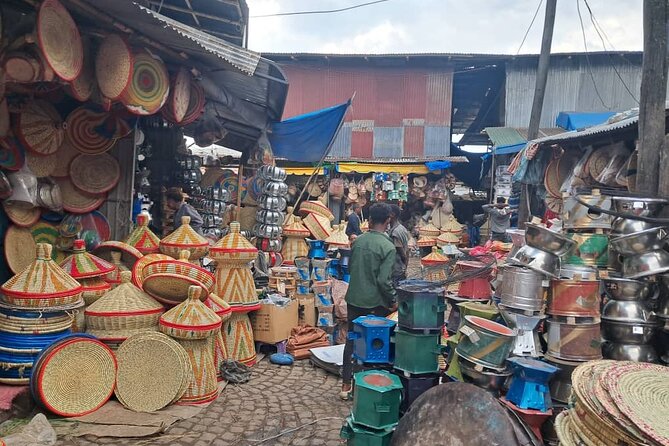
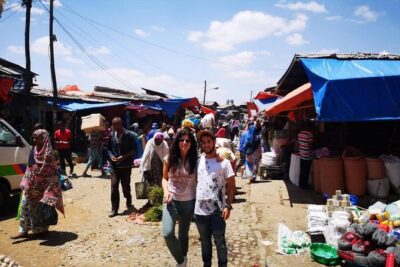
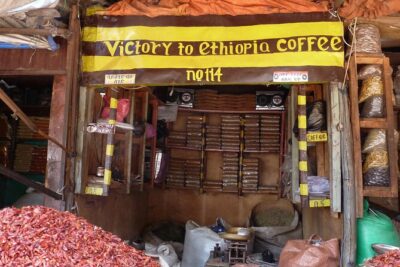
You get about 2 hours at Mercato Market, and entrance is listed as free for the tour. This is not a small stop. Merkato is known as the largest open-air market in Africa, and you will feel that scale immediately.
There is also an important historical framing: before the current Merkato, there was an open marketplace near St. George Church where today you find City Hall. During the Italian occupation in the 1930s, the market was moved west, and it became tied to European restrictions. The text notes that Italians restricted the historic St. George area to Europeans and renamed it Piazza, with display-style shops. The present market area developed out of those forced changes.
That history matters because it helps explain why Merkato has so many layers. It is not just commerce. It is also a city imprint of power, segregation, and adaptation.
What to expect day-to-day: a lot of people, lots of movement, and shopfronts that blend into each other. If you get overwhelmed, fall back on one simple goal: buy one thing, or just walk with purpose for 30 to 45 minutes, then regroup for the rest.
Stop 5: St George’s Cathedral for Ottoman-shape vibes and an imperial museum
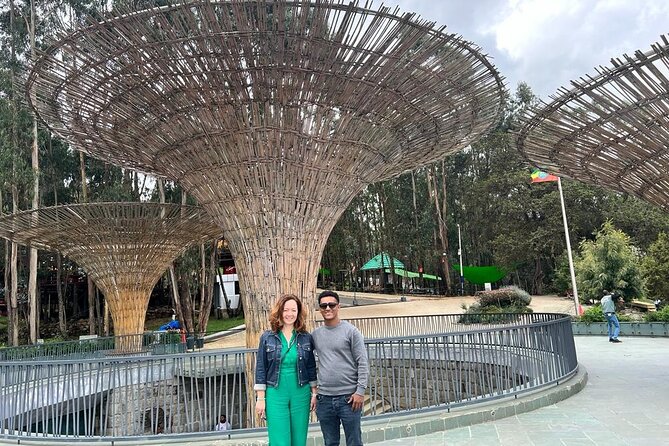
Next up, St George’s Cathedral for about 1 hour, with admission included.
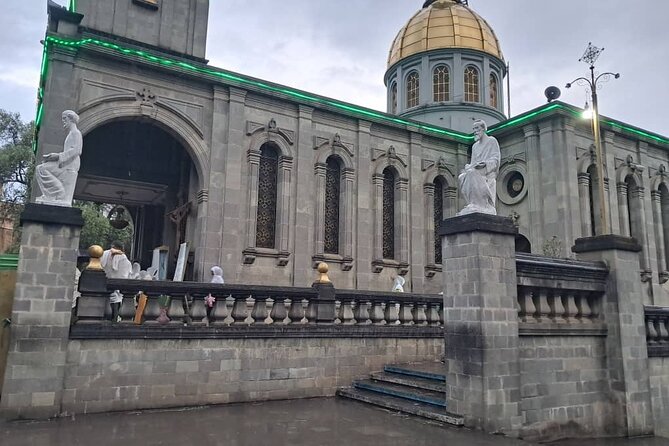
This church is noted for its distinctive octagonal form. It was designed by Sebastiano Castagna and built by Italian prisoners of war defeated at Adwa in 1896. The story continues with a darker chapter: the Italian Fascist authorities set the building on fire in 1937, and it was later restored by the Emperor after liberation in 1941.
If you like history that you can see in the architecture, this is worth it. The shape and the survival through conflict give the place a strong presence.
There is also a museum at the cathedral showing an Imperial throne and weaponry used against Italians, including curved swords and tridents, plus giant helmets made from the manes of lions. That last detail is vivid, and it gives you a direct connection between the church and Ethiopia’s wars and imperial symbols.
Stop 6: Red Terror Martyrs Memorial Museum, heavy but important
The Red Terror Martyrs Memorial Museum is only 30 minutes, but it is not a light stop. Admission is included.
Established in 2010, it memorializes those who died during the Red Terror under the Derg government. The museum is described as displaying torture instruments, skulls and bones, coffins, bloody clothes, and photographs of victims. It is the kind of place where you should slow down and not treat it like a quick photo opportunity.
The notes also say that guides lead free tours explaining the history leading up to the Red Terror, including starting from Haile Selassie’s 80th birthday celebration, then what happened to people who opposed the Derg, how prisoners were treated, and how they communicated secretly.
My practical advice: if this theme hits a raw spot for you, give yourself permission to spend more time outside the room and fewer minutes staring at the most graphic displays. You are not required to “finish” the museum with a hard stare.
Stop 7: Mount Entoto for monastery stops and the eucalyptus “lung of Addis”
To close the day, you head to Mount Entoto for about 1 hour, with admission included.
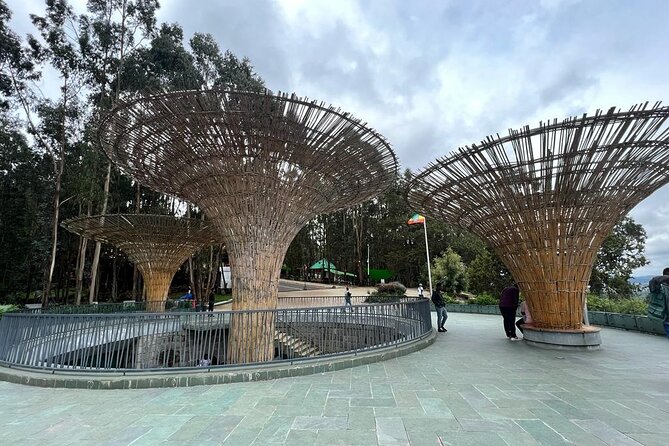
Mount Entoto is described as a historical place where Emperor Menelik II resided and built his palace when he came from Ankober and helped found Addis Ababa. It is treated as sacred, with multiple monasteries and churches, including Saint Raguel and Saint Mary.
This stop also gives you nature on a human scale. The mountain is densely covered by eucalyptus trees that were imported from Australia during Menelik II’s reign and mostly planted during Emperor Haile Selassie’s reign. That is why it is sometimes called the lung of Addis Ababa. The text also notes the forest has served as a source of firewood and building material.
For me, the best part of ending here is the change of pace. After museums and markets, you get open views and a calmer feel. It also helps you physically reset before the ride back.
Food, coffee, and how to plan your breaks
The itinerary talks about Ethiopian coffee and cuisine, but the tour data is clear that food and drinks are not included (and alcohol is also not included).
So what should you do? Plan on buying lunch or snacks during the day. Since you are going to several stops in one stretch, it is smart to bring a small amount of cash for quick purchases and water. If you get energy swings, you will be glad you did.
One more practical note: Merkato and markets can tempt you into spending time bargaining for snacks as well as souvenirs. Build in the idea that you may need to choose one priority, either shopping or eating, in that short window.
Guides and the “small details” that make it feel smooth
What really shows up in the feedback is that the human side matters here. Names like Mickey, Miki, Mulate, Getachew, Yosef, Alex, Haile, and Eshetu appear tied to strong praise for making the day run well.
Common threads in those comments are things like arriving early, being friendly, and keeping the day safe while covering a lot. One person even mentioned a wedding photo situation, which is the kind of Addis surprise a well-coordinated guide can help you handle without stress.
So when you book, look for a guide who can explain history clearly, not just escort you from door to door. In a day like this, the explanation is half the value.
Who should book this Addis Ababa full-day tour
This tour fits you if:
- You want a first-timer orientation to Addis Ababa in one long, well-paced day
- You care about both archaeology and living culture, not just one theme
- You like market time but do not want to figure out logistics alone
- You are okay with a more serious history stop at the Red Terror Museum
It may not be the best fit if:
- You hate long days with back-to-back indoor stops
- You prefer leisure browsing over structured sightseeing
- You want food included, because meals are on you
Should you book Addis Ababa City Tours?
Book it if you want the classic Addis mix, Lucy fossils plus church history plus markets plus Entoto views, all with transport and entrance fees handled. The $600 price can feel steep until you add up what you are getting: an air-conditioned ride, small-group pacing (up to 10), a guide team, and tickets for the major sites.
Hold off if you only want one or two items, or if the Red Terror museum theme feels too heavy for your trip style. But if you can handle direct history and you want to see a lot of Addis without spending your day planning, this one is a strong match.
FAQ
How long is the Addis Ababa city tour?
The tour is about 7 to 8 hours.
What is the price per person?
The price is $600.00 per person.
Is hotel pickup and drop-off included?
Yes. Hotel pickup and hotel drop-off are included, and the tour also notes pickup from the airport.
Are entrance fees included?
Yes. Entrance fees are included for the National Museum of Ethiopia, Ethnological Museum, Shiro Meda, St. George’s Cathedral, Red Terror Martyrs Memorial Museum, Mount Entoto, and Mercato is listed as admission free.
Is food and drink included?
No. Food and drinks are not included, and alcoholic drinks are also not included.
How many people are in the group?
The tour lists a maximum of 10 travelers.
Where does the tour start and end?
The start is listed at Edna Mall on Cameroon Street in Addis Ababa, and it ends back at the meeting point.
What is the cancellation policy?
Free cancellation is available up to 24 hours in advance for a full refund. If you cancel less than 24 hours before the start time, the amount paid is not refunded.
Browsing Ethiopia More Widely
- Full Day Tour of Addis Ababa with Hotel Pickup and Drop-off
★ 5.0 · 430 reviews - Addis Ababa: Debre Libanos, Blue Nile Gorge, and Cave Tour
★ 4.5 · 256 reviews - Addis Ababa Guided City Tour With Airport & Hotel Pick Up
★ 5.0 · 237 reviews - Breathtaking Nature, Wildlife and Cave Church Tour – Free Pickups
★ 5.0 · 225 reviews - Full-Day Private City Tour of Addis Ababa
★ 5.0 · 147 reviews
The Rest of the Ethiopia List
- Full Day Tour of Addis Ababa with Hotel Pickup and Drop-off
★ 5.0 · 430 reviews - Taste of Ethiopia
★ 5.0 · 406 reviews - Day Trip From Addis Ababa See Historical Monastery,Stunning Nature,Animals,Birds
★ 5.0 · 303 reviews - Addis Ababa: Debre Libanos, Blue Nile Gorge, and Cave Tour
★ 4.5 · 256 reviews - Addis Ababa Guided City Tour With Airport & Hotel Pick Up
★ 5.0 · 237 reviews
Addis Ababa, More Ways Round It
- Full Day Tour of Addis Ababa with Hotel Pickup and Drop-off
★ 5.0 · 430 reviews - Addis Ababa Guided City Tour With Airport & Hotel Pick Up
★ 5.0 · 237 reviews - Full-Day Private City Tour of Addis Ababa
★ 5.0 · 147 reviews - Addis Ababa Authentic Private City Tour
★ 5.0 · 134 reviews - Authentic Addis Ababa City Tour with a Local Guide
★ 4.9 · 109 reviews
Other Ethiopia tours we have written up


Addis Ababa City Tours, compared.
 ★ 5.0Full Day Tour of Addis Ababa with Hotel Pickup and Drop-offFrom $69430 reviews
 ★ 5.0Addis Ababa Guided City Tour With Airport & Hotel Pick UpFrom $55237 reviews
 ★ 5.0Full-Day Private City Tour of Addis AbabaFrom $160147 reviews
 ★ 5.0Addis Ababa Authentic Private City TourFrom $75134 reviews
 ★ 4.9Authentic Addis Ababa City Tour with a Local GuideFrom $67109 reviews
 ★ 5.0Prepare for the Best Day Tour in Addis AbabaFrom $90104 reviews
 ★ 5.0Hidden Treasures of Addis Ababa – Food, Culture and History TourFrom $7557 reviews
 ★ 5.0Addis Ababa Guided City ToursFrom $10057 reviews
Browse the lists this tour appears in