
REVIEW · ADDIS ABABA CITY TOURS
Addis Ababa City Tour
Addis Ababa can feel like a puzzle, but this tour gives you the picture fast. I like the smart mix of big-city landmarks and Ethiopia stories you can actually connect with, and I also like the local guide style that turns museums and monuments into real context. One thing to plan for: it is a lot packed into a day, and you will want to be ready for short stops, plus there is no restroom on board.
The practical side is good, too. You start right at Bole Addis Ababa International Airport, and the day loops back to the same meeting point, which is a lifesaver if you have a layover or limited time. Expect a private setup, air-conditioned driving, and all fees and taxes handled, with coffee and bottled water included.
This is also a history-first route, with a certified guide who brings formal training in Ethiopian history and indigenous knowledge. In the reviews, guides like Fitsum come up again and again for knowing how to pace the day, add coffee and meal breaks at the right moments, and keep things easy for solo travelers.
In This Review
- Key highlights worth planning for
- Entoto Viewpoint: Eucalyptus air and city panoramas
- Ethnological Museum and National Museum: Lucy to Ethiopian identity
- St. George Church: mosaics, Adwa symbolism, and a coronation story
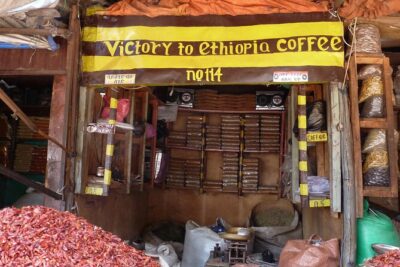
- Mercato and Piassa: shopping energy, recycling, and coffee that actually means something
- Imperial Palace area monuments: Lion of Judah, Yekatit 12, Victory Monument, Menelik II
- Price and logistics: what $70 buys you, and what to watch for
- Should you book this Addis Ababa city tour?
- FAQ
- Where does the tour start and end?
- How long is the Addis Ababa City Tour?
- Is pickup included?
- What is included in the price?
- Are museum and market entrance fees included?
- Is lunch or a restroom on board included?
Key highlights worth planning for
- Entoto Viewpoint gives you a fast sense of Addis scale, with cool mountain air above the city
- Ethiopia’s museum arc connects tribes, archaeology, and modern identity in a logical order
- St. George Church pairs circular architecture with major national symbolism, including Adwa references
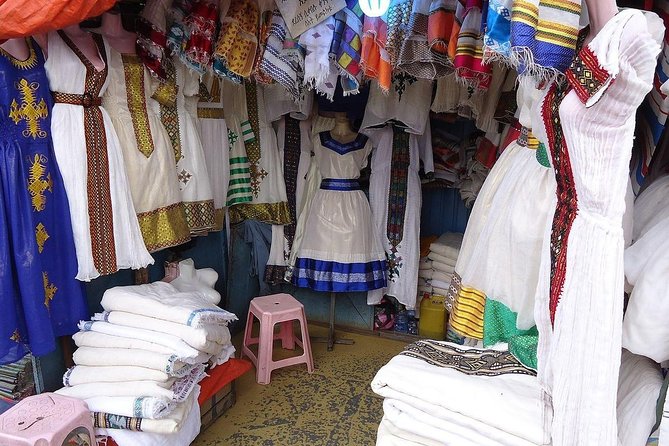
- Merkato is more than shopping, you get a feel for how goods are organized and reused
- Piassa coffee stop is built in, with a chance to try classic dishes like doro wat and kitfo
- Independence monuments (Victory and Menelik II) sit in the route, so history is never far away
Other ways to take on the capital in a day
- Full Day Tour of Addis Ababa with Hotel Pickup and Drop-off★ 5.0 · 430 reviews
- Full-Day Private City Tour of Addis Ababa★ 5.0 · 147 reviews
- Addis Ababa Authentic Private City Tour★ 5.0 · 134 reviews
- Authentic Addis Ababa City Tour with a Local Guide★ 4.9 · 109 reviews
Entoto Viewpoint: Eucalyptus air and city panoramas
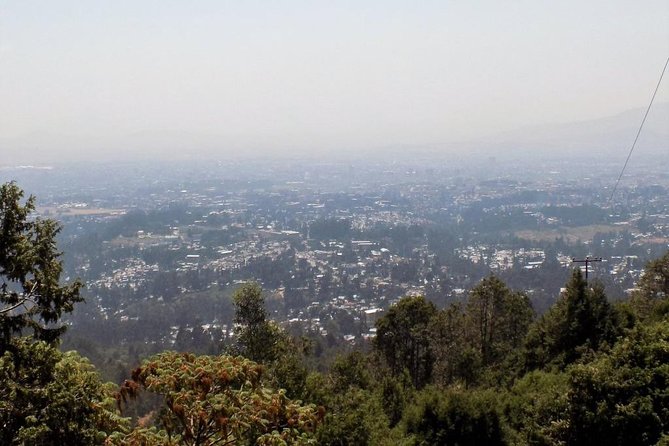
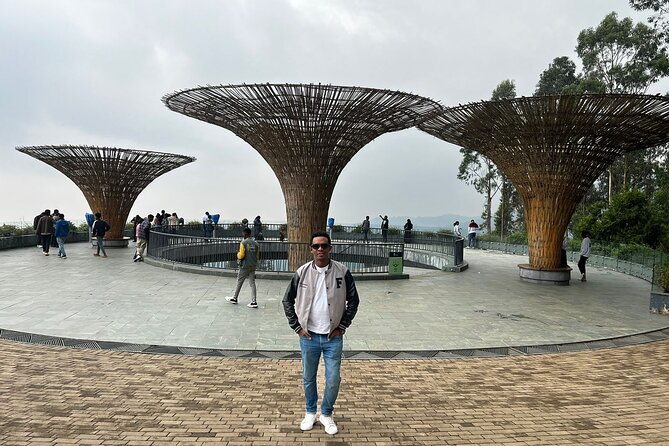
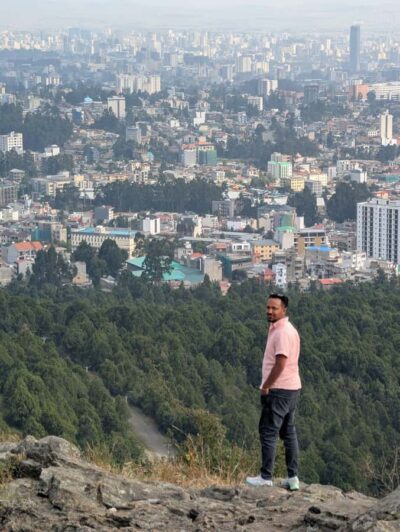
Entoto is where Addis starts to make sense. You go up onto the Entoto Mountains, and then the city opens below you, with rolling hills and forested slopes stretching out. The viewpoint is also famous for those eucalyptus trees that line the hills, and even when you do not catch them in perfect form, you still get the cool, fresh air that makes the climb feel worth it.
There is one small reality check. One review notes that some of the iconic eucalyptus trees have been cut down because they take a lot of water from the soil. So, yes, plan for the viewpoint and the views, but do not count on every hillside looking like the classic postcard line.
This stop works especially well for two types of travelers. First, if you have never been to Addis, it gives you orientation fast. Second, if you are short on time, it is a high-impact stop where you get big payoff in just a short window.
Ethnological Museum and National Museum: Lucy to Ethiopian identity
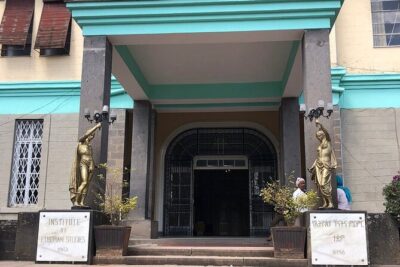
After Entoto, the tour moves from the city’s physical scale to its human story. You first hit the Ethnological Museum, located in the former palace of Emperor Haile Selassie, and that setting matters. Museums in former palaces tend to feel like they have a voice of their own, and here you get artifacts that represent Ethiopia’s diversity, including traditional clothing, tools, and crafts tied to different peoples.
What I like about this museum stop is the way it links culture to bigger historical themes. There are sections on the Battle of Adwa and on Pan-Africanism, which helps you see Ethiopia not as an isolated story, but as part of a wider struggle for independence across Africa.
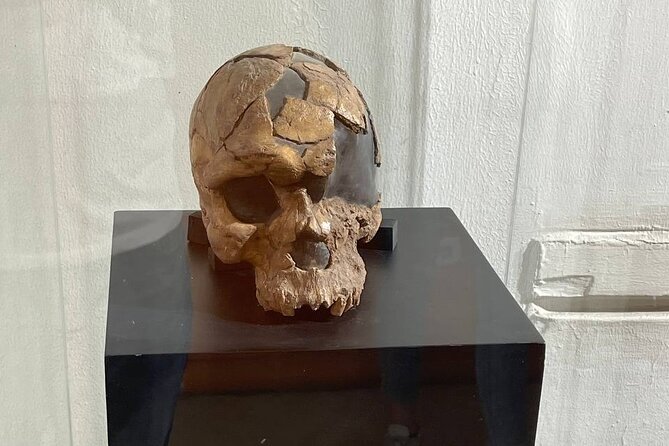
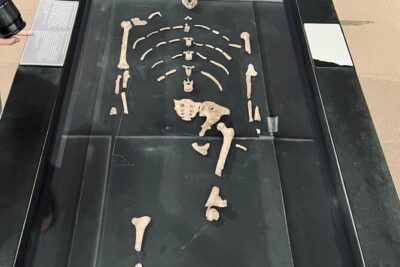
Then you move to the National Museum of Ethiopia for the headliner. The reason people plan this stop is that it houses the remains of Lucy, an Australopithecus afarensis skeleton dated to about 3.2 million years old. If that sounds distant, the museum does a good job of bringing it closer through exhibits that run from prehistoric material into later religious and royal artifacts, plus displays on Ethiopian art and culture.
Practical note: both museum stops are listed at about 1 hour 30 minutes each, and admission tickets are included for these sites. That is enough time to see the main exhibits without turning your brain into museum paste.
St. George Church: mosaics, Adwa symbolism, and a coronation story
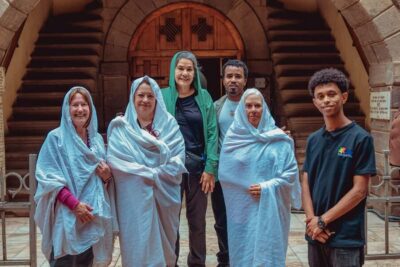
St. George’s Church is a major spiritual and national landmark in Addis, and it is also a visual one. Expect circular architecture, vibrant mosaics, and intricate paintings, including scenes tied to Ethiopia’s national identity. One of the most famous images is the depiction of St. George slaying the dragon, which connects spiritual symbolism to a wider theme of strength.
The historical overlap is what makes this stop more than a pretty building. You get references to the Battle of Adwa, including how victory over Italy in 1896 became a symbol of Ethiopian resilience. And the church also connects to the royal era, since it was the site of Emperor Haile Selassie’s coronation in 1930.
Time here is shorter, about 30 minutes, but it is a stop where you can slow down without needing long hours. If you want one highlight photo, this is often where people aim their camera.
Mercato and Piassa: shopping energy, recycling, and coffee that actually means something

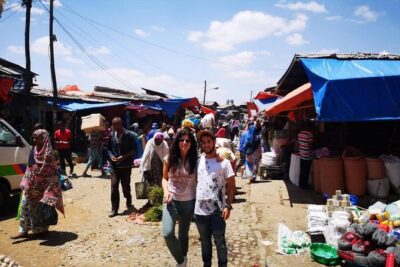
No Addis tour feels complete without Mercato. This is the largest open-air market in Africa, and the scale hits you fast. You walk through narrow alleys where different sections handle different goods, from food and clothing to electronics, household items, spices, and local crafts.
What surprised me in the description is the attention to recycling practices. Mercato is known for repurposing materials, including recycled materials used in construction and households. That gives the market more depth than a typical tourist shopping stop, because you see how people respond to resources and needs in real time.
This is also where pacing matters. The market stop is listed at about 1 hour, and admission ticket time is included. If you hate crowds, bring your patience. If you love atmosphere, this is one of the best places to feel daily life without needing a lecture.
After Mercato, the route includes a restaurant stop in Piassa for food and coffee culture. Even if you do not plan a full lunch, the structure is good because classic Ethiopian dishes are part of the experience: injera, doro wat, and kitfo show up as the usual stars. Many places also host a coffee ceremony, which involves roasting, grinding, and brewing beans while you smell the process and watch it happen.
One thing to keep straight: lunch is not included in the package. Coffee and/or tea is included, and you will see bottled water included too, but if you want a full restaurant meal, you will likely pay separately.
City walks and drives elsewhere in Ethiopia
Imperial Palace area monuments: Lion of Judah, Yekatit 12, Victory Monument, Menelik II

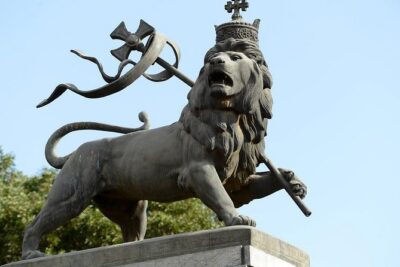
The second half of the day shifts from everyday Addis to the monuments that explain why the city thinks the way it does. You start near the Imperial Palace entrance for the Lion of Judah statue. It is a powerful emblem tied to Ethiopia’s royal heritage, with connections to the biblical King Solomon and the Queen of Sheba in Ethiopian tradition.
Then the tour moves to Yekatit 12 Martyrs Square, which is one of those places that stays with you. On February 19, 1937, a massacre occurred in retaliation for an assassination attempt on the Italian viceroy. The square holds a memorial honoring the victims, and it is a serious stop in both tone and meaning.
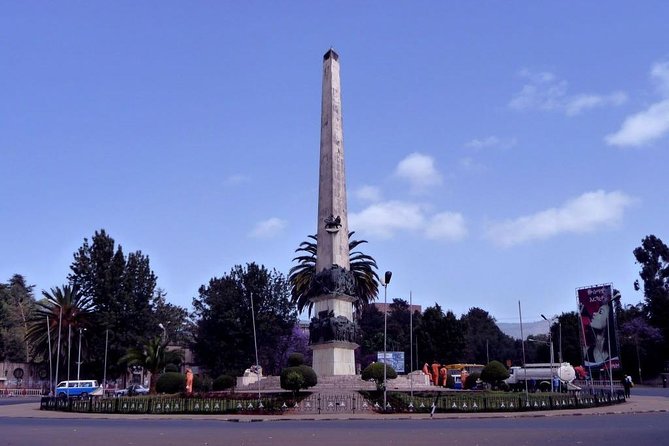
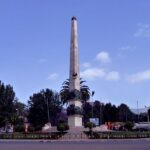
Next up is the Victory Monument, built to commemorate Ethiopia’s triumph over the Italian invasion, particularly the Battle of Adwa in 1896. It has an obelisk design and carvings meant to represent resilience and unity. In a single glance, you get why Ethiopia is remembered in Africa’s fight against colonial rule.
Finally, you see the Menelik II Equestrian Statue, another Adwa-linked landmark. It depicts Emperor Menelik II on horseback, highlighting leadership and military prowess tied to that decisive victory.
These monument stops are the kind where a guide makes a big difference. You can read a plaque, or you can connect the story to what you saw earlier in museums and churches. The tour is designed to keep that storyline flowing.
Price and logistics: what $70 buys you, and what to watch for
At $70 per person, this is positioned as an efficient way to cover a lot of major Addis sights with guidance and transport. The included items are practical: air-conditioned vehicle, bottled water, coffee and/or tea, and all fees and taxes. You also get a guide, which is key because Ethiopia’s history is layered, and monuments without context can turn into “nice pictures” instead of “I understand what I’m looking at.”
Admission tickets are explicitly included for the Ethnological Museum, National Museum, St. George Church, and Mercato. That matters because it removes a common hassle, surprise lineups, or last-minute ticket buying. The one thing to know clearly: lunch is not included, and there is no restroom on board the vehicle.
Duration is listed as about 1 to 6 hours, which is a wide range. For layovers, you can treat this like a high-value sampler. For full days, you get more room for museum time and for slowing down at the places that need it.
Another helpful detail: the tour is private, meaning it is only your group. That usually makes it easier to manage pacing, photo stops, and questions, especially if you have mobility limits or you want to focus on history rather than just ticking boxes.
Should you book this Addis Ababa city tour?
Book it if you want a fast, guided orientation to Addis that ties together museums, churches, markets, and independence landmarks in one flow. I especially think it suits first-time visitors who have a short window, because the route includes orientation (Entoto), major “must see” institutions (National and Ethnological Museums), and the monuments that explain Ethiopia’s modern identity.
Skip it or choose a shorter version if you dislike structured days and prefer long free time in one neighborhood. Also, if you are expecting a slow, leisurely market browse with tons of shopping time, the Mercato stop is limited to about an hour, so you might have to pick your priorities.
If you do book, I recommend going in with a simple mindset: treat the day like a guided story, not like a checklist. You will feel the connections between Lucy, Adwa symbolism, and the independence monuments much more than if each stop is just another photo.
FAQ
Where does the tour start and end?
The tour starts at Bole Addis Ababa International Airport and ends back at the same meeting point.
How long is the Addis Ababa City Tour?
The duration is listed as 1 to 6 hours (approx.), depending on how your day is paced.
Is pickup included?
Yes. Pickup is offered, and the meeting point is at Bole Addis Ababa International Airport.
What is included in the price?
The tour includes coffee and/or tea, bottled water, an air-conditioned vehicle, all fees and taxes, and a guide.
Are museum and market entrance fees included?
Admission tickets are included for the Ethnological Museum, the National Museum of Ethiopia, St. George Church, and Mercato.
Is lunch or a restroom on board included?
Lunch is not included, and there is no restroom on board the vehicle. Alcoholic beverages are also not included.
Browsing Ethiopia More Widely
- Full Day Tour of Addis Ababa with Hotel Pickup and Drop-off
★ 5.0 · 430 reviews - Addis Ababa: Debre Libanos, Blue Nile Gorge, and Cave Tour
★ 4.5 · 256 reviews - Addis Ababa Guided City Tour With Airport & Hotel Pick Up
★ 5.0 · 237 reviews - Breathtaking Nature, Wildlife and Cave Church Tour – Free Pickups
★ 5.0 · 225 reviews - Full-Day Private City Tour of Addis Ababa
★ 5.0 · 147 reviews
The Rest of the Ethiopia List
- Full Day Tour of Addis Ababa with Hotel Pickup and Drop-off
★ 5.0 · 430 reviews - Taste of Ethiopia
★ 5.0 · 406 reviews - Day Trip From Addis Ababa See Historical Monastery,Stunning Nature,Animals,Birds
★ 5.0 · 303 reviews - Addis Ababa: Debre Libanos, Blue Nile Gorge, and Cave Tour
★ 4.5 · 256 reviews - Addis Ababa Guided City Tour With Airport & Hotel Pick Up
★ 5.0 · 237 reviews
Addis Ababa, More Ways Round It
- Full Day Tour of Addis Ababa with Hotel Pickup and Drop-off
★ 5.0 · 430 reviews - Addis Ababa Guided City Tour With Airport & Hotel Pick Up
★ 5.0 · 237 reviews - Full-Day Private City Tour of Addis Ababa
★ 5.0 · 147 reviews - Addis Ababa Authentic Private City Tour
★ 5.0 · 134 reviews - Authentic Addis Ababa City Tour with a Local Guide
★ 4.9 · 109 reviews
Other Ethiopia tours we have written up


Addis Ababa City Tours, compared.
 ★ 5.0Full Day Tour of Addis Ababa with Hotel Pickup and Drop-offFrom $69430 reviews
 ★ 5.0Addis Ababa Guided City Tour With Airport & Hotel Pick UpFrom $55237 reviews
 ★ 5.0Full-Day Private City Tour of Addis AbabaFrom $160147 reviews
 ★ 5.0Addis Ababa Authentic Private City TourFrom $75134 reviews
 ★ 4.9Authentic Addis Ababa City Tour with a Local GuideFrom $67109 reviews
 ★ 5.0Prepare for the Best Day Tour in Addis AbabaFrom $90104 reviews
 ★ 5.0Addis Ababa Guided City ToursFrom $10057 reviews
 ★ 5.0Hidden Treasures of Addis Ababa – Food, Culture and History TourFrom $7557 reviews
Browse the lists this tour appears in