
REVIEW · MARKETS
Go wheretheLocalsgo, Eatwhat thelocalseat!open Market&More Tours
Addis Ababa tastes better with a guide. This private tour strings together the city’s big must-see sights with a serious focus on Ethiopian food and market shopping, plus a museum visit at the start. You get to slow down and go at your own pace, with pickup and a small group.
Two things I like most: the food tasting is built in, so you’re not guessing what to order, and it works for both vegetarians and carnivores. I also like that the tour covers coffee culture, including a traditional coffee ceremony, not just a quick caffeine stop.
One possible drawback to know up front: the main market stop changes based on the day. Merkato is closed on Sundays, and the tour shifts to Shiro Meda, and the National Museum isn’t open on Mondays.
In This Review
- Key highlights you’ll feel fast
- Addis Ababa food and markets, with the museum you’ll remember
- National Museum of Ethiopia: Lucy, plus Aksumite Empire context
- Mercato Market: shopping with a map, not just a wishlist
- Shiro Meda Market on Sundays: textiles and gift buys near the US Embassy
- Yobez Traditional Restaurant: injera-style comfort, fasting-season flavors, and options
- Tomoca Coffee in Piazza: classic black coffee and buying roasted beans
- Lion of Judah: a quick stop with big meaning
- How the included meals and coffee tasting really work
- Timing, pickup, and the value of a small private group
- Price check: what $71.25 buys and what you may still spend
- Who should book this tour, and who should skip it
- Should you book this food and market tour?
- FAQ
- How long is the Addis Ababa food and market tour?
- What is included in the price?
- Is pickup offered?
- What happens if I’m in Addis Ababa on a Sunday?
- Is the National Museum open every day?
- Are there options for vegetarians?
- Is the tour limited in group size?
- What is the cancellation policy?
Key highlights you’ll feel fast
- National Museum of Ethiopia first, with Lucy and Ethiopian history context
- Mercato Market for local products like coffee, jewelry, and leather (walk and shop)
- Shiro Meda Market on Sundays for handwoven textiles and easy gift shopping
- Yobez Traditional Restaurant with Ethiopian specialties that fit fasting season flavors
- Tomoca Coffee in the Piazza area, including classic Ethiopian coffee styles
- Small-group pace (up to 8), with pickup and WiFi on board
Other shopping runs in Addis
- Ethiopian Culinary Tour – Market, Food, Coffee Ceremony & more★ 5.0 · 65 reviews
- Addis Ababa +Mount Entoto View Point,Museums Palace Market Tours★ 5.0 · 42 reviews
- Market Tour and Cooking Class with a Coffee Ceremony at a Home in Addis Ababa★ 5.0 · 32 reviews
- Addis Mercato Market★ 5.0 · 22 reviews
Addis Ababa food and markets, with the museum you’ll remember
If you only have a half day to wrap your head around Addis Ababa, this is a strong format. You start with an education stop, then switch gears into food, coffee, and shopping. It’s a smart way to get texture fast, without feeling like you’re sprinting through the city.
The tour is private, which matters more than you might think. You can ask questions as you go, and you’re not stuck doing the same “quick photo, move on” rhythm. With up to 8 travelers, you still feel like you’re part of a group, but it doesn’t turn into a cattle line.
At a price of $71.25 per person for a 4 to 7 hour experience, you’re paying for planning. You’re also paying for time saved, since a local guide handles arrangements, admissions where listed, and the stops are already linked together logically.
National Museum of Ethiopia: Lucy, plus Aksumite Empire context

The day starts at the National Museum of Ethiopia, and it’s not just a fossil stop. You’ll see the famous Lucy fossil (a 3.2 million-year-old Australopithecus afarensis), then follow the museum’s historical and cultural sections. If evolution and early human history are on your list, this is the place to see it in one concentrated stop.
What makes this museum stop useful on a food tour day is the way it frames Ethiopia beyond menus. You’ll also get museum time that covers the rise and fall of the Aksumite Empire, plus how the Ethiopian Orthodox Church shaped culture over centuries. Then there are art galleries on the first floor, including ancient paintings and sculptures through modern works.
Second floor displays add a practical kind of context too, with traditional clothing, tools, and household items from different regions. It’s the kind of background that helps you make sense of what you’ll later see in markets and restaurants.
A small timing note: museum access isn’t available on Mondays. If you’re booking close to your trip dates, check your day-of-week and plan accordingly.
Mercato Market: shopping with a map, not just a wishlist
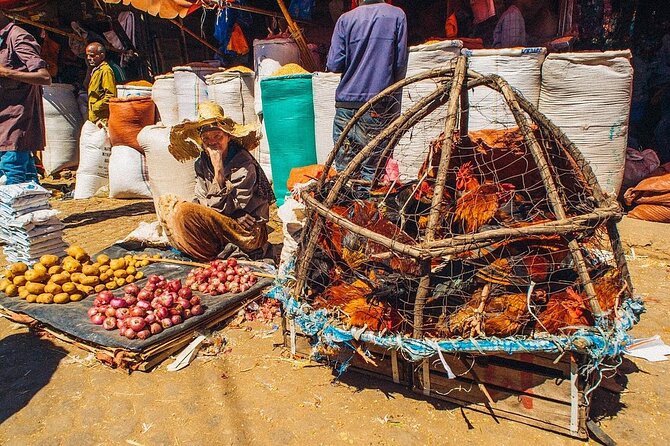
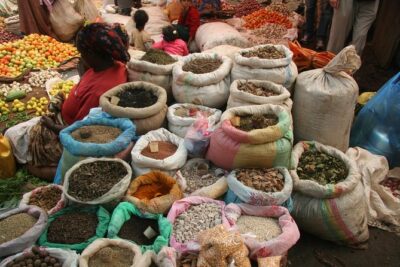
After the museum, the tour shifts into the heart of everyday Addis Ababa life at Merkato Market. The market stop is designed as a guided walk, with time to shop for real local products like coffee, jewelry, and leather. This is the kind of place where a guide helps you move efficiently and avoid wandering without purpose.
A few practical spots are mentioned as part of the experience. The tour includes stops in the Piazza area and references classic local coffee hangouts and related shops, plus other notable market areas such as Zebra Gallery and a Stadium area. You’ll also hear about the leather shops along the way.
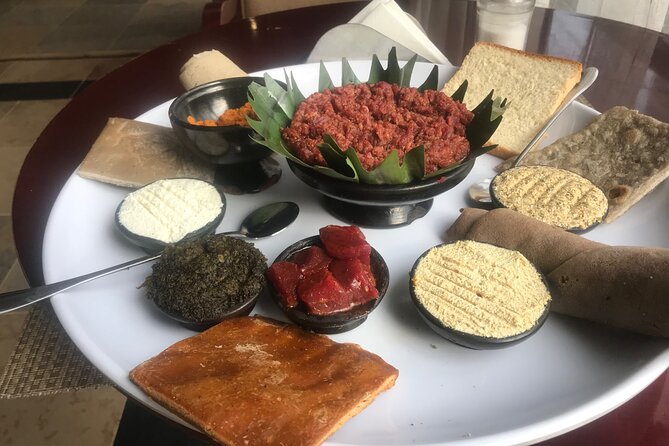
Then comes the part most people care about: a proper lunch. The tour includes lunch at an older local restaurant described as the first and oldest restaurant in East Africa. Food and coffee are handled as part of the program, so you don’t need to guess what’s good or what’s likely to be tourist-friendly.
One consideration: Merkato is closed on Sundays. If your day lands on Sunday, the tour swaps the market portion to Shiro Meda instead.
Shiro Meda Market on Sundays: textiles and gift buys near the US Embassy
When Merkato shuts down for Sunday, the tour makes a smart switch. You’ll head to Shiro Meda, a local open market that sells Ethiopian textiles in many forms, from wedding dresses to everyday clothing. It’s also highlighted as a good place to find smaller gift items like bed covers, table clothes, scarves, T-shirts, necklaces, and earrings.
Shiro Meda is described as being located near the US Embassy in Addis Ababa. That detail matters because it can make the area feel easier to navigate if you want to continue exploring on your own later.
A big value here is that this market is especially strong for handwoven cotton pieces, with a focus on women’s apparel. Even if you’re not a big shopper, it’s a great place to understand the look and materials behind Ethiopian clothing traditions.
The tour time for this stop is shorter than the main market walk, so it’s more focused. Think of it as a concentrated textiles and gifts segment that still gives you time to browse.
More mornings in the Ethiopian markets
Yobez Traditional Restaurant: injera-style comfort, fasting-season flavors, and options
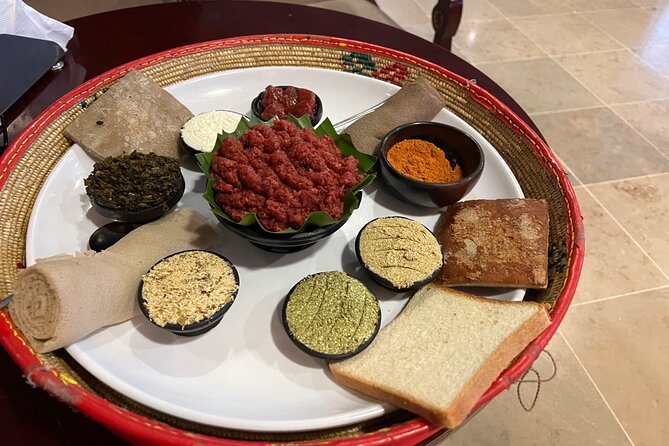
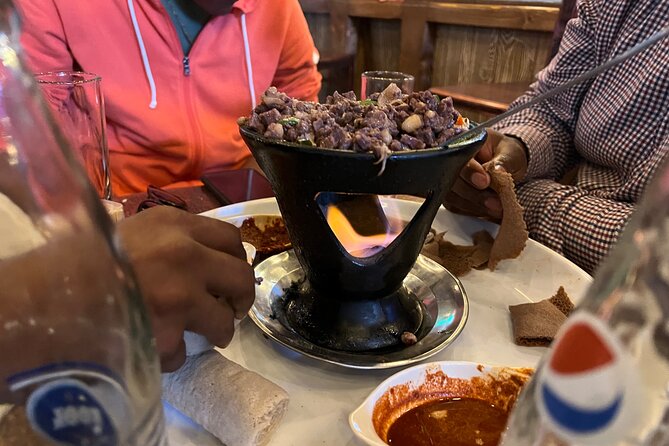
The food stop sequence keeps moving, and the restaurant portion is where you really feel the tour’s “arrive hungry” approach. At Yobez Traditional Restaurant, the focus is on Ethiopian dishes that fit both vegetarian and non-vegetarian tastes.
The highlight dish mentioned is Yebez as a traditional vegetarian option, with explanations connecting it to Ethiopia’s fasting season style. The fasting-season influence comes through in the vegetables and legumes listed: cabbage, potatoes, beans, lentils, and chickpeas. The program also points out that it’s not only vegetarian, since you’ll also see non-vegetarian options like chicken stew.
For carnivore-friendly tastes, Doro wot is the named example. It’s described as a spicy local chicken stew, made with spices like pepper, cayenne pepper, garlic, ginger, and berbere, plus caramelized onions and hard-boiled eggs. Even if you’re vegetarian, ordering a small taste of a meat dish helps you compare flavors and learn what makes Ethiopian stews different from what you might be used to.
This restaurant stop also helps you slow down for flavor and texture. If you’ve never eaten Ethiopian meals, this is where you’ll get used to how food is served and tasted, without the pressure of figuring it out alone.
Tomoca Coffee in Piazza: classic black coffee and buying roasted beans
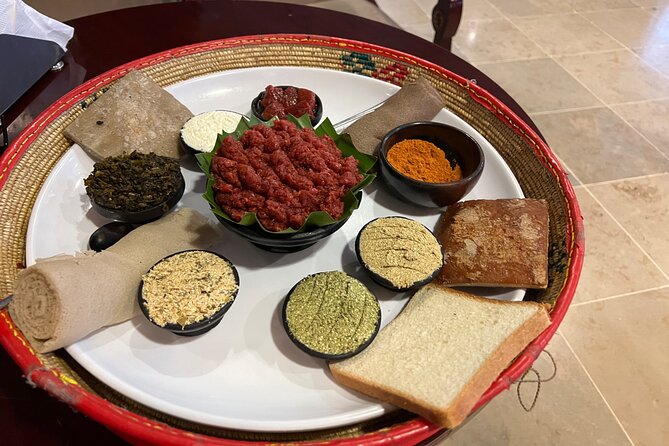
Next up is Tomoca Coffee, located in the Piazza area. It’s described as the oldest coffee shop in Ethiopia, operating since 1953. That’s not just trivia, it’s the kind of detail that helps you understand why people treat this stop like a real coffee landmark.
The coffee tasting is specifically included, and it’s not limited to one drink. You can try Ethiopian coffee in common styles like black coffee and coffee with milk, including a milk coffee version noted as a macchiato style. You’ll also have time to get roasted coffee or powder if that’s on your shopping list.
This is one of the best parts of the whole tour because it connects your market browsing to something you can actually take home. If you bought spice or coffee curiosity earlier, this is where it makes sense to turn that curiosity into a bag of beans.
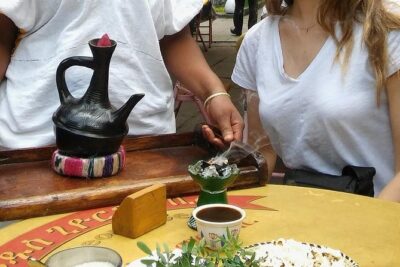
Even better, coffee here isn’t just a drink. You’re also getting coffee culture through the tour’s included coffee ceremony component, tied to Ethiopian tradition.
Lion of Judah: a quick stop with big meaning

The tour includes a short visit related to Lion of Judah. The name is explained as a symbolic title tied to the Bible, referencing the tribe of Judah and Jesus Christ. It’s also described as a symbol used for the Ethiopian monarchy, especially Emperor Haile Selassie.
This stop is short by design, but it gives you a mental hook. After you’ve seen fossils and market life, you’ve also got a thread that ties Ethiopia’s identity and symbolism into what’s around you.
How the included meals and coffee tasting really work
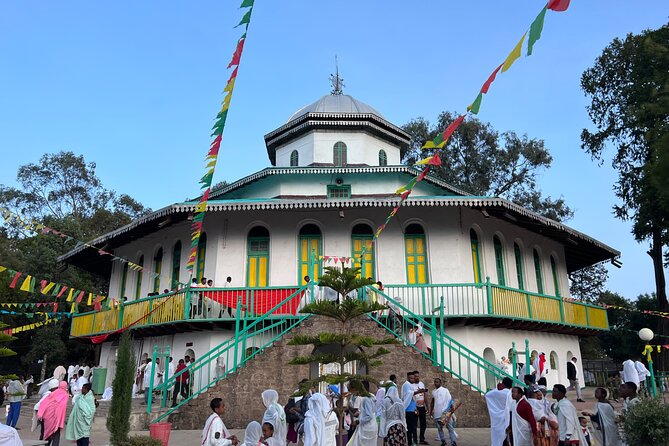
This is one of those tours where the marketing promise is actually clear: you’ll be well fed. The included program includes tasting of Ethiopian national foods in both vegetarian and non-vegetarian styles. That matters because Addis Ababa menus can be confusing if you’re new to Ethiopian cuisine.
You’ll also get organic fruit juices and a traditional coffee ceremony as part of the experience. That combination is practical. The juices help you cool down between spicy stews, and the coffee ceremony gives context for why coffee is treated like more than just a beverage.
One useful example from a previous three-hour layover experience involved a guide named Yonas, who matched vegetarian injera with coffee at Tomoca. Even if your exact guide and timing differ, it shows how the best-guided moments happen when the coffee stop isn’t isolated from the food stop.
If you’re traveling with mixed preferences, this tour is built to accommodate that. The program specifically calls out vegetarian and carnivore suitability, so you shouldn’t have to sacrifice your taste goals for someone else’s.
Timing, pickup, and the value of a small private group
You can expect a 4 to 7 hour day, depending on what day you take it and how much time you want at each stop. The tour is set up as a private experience and includes pickup, either from a meeting spot or directly if you request it.
The tour also uses an air-conditioned vehicle, which is a big deal in a city where you might otherwise spend too long in traffic. You get WiFi on board as well, helpful if you want to plan next stops or share photos quickly.
Booking timing is another practical factor. It’s said to be booked on average 29 days in advance, which suggests it’s popular enough that you’ll want to lock in early if your dates are firm. The group size cap of 8 adds to the “small, manageable” feel.
Your pace is flexible. If you want to linger over textiles at Shiro Meda or ask more questions around the museum sections, the private format makes that easier.
Price check: what $71.25 buys and what you may still spend
Here’s the straightforward way to think about the value. At $71.25 per person, you’re paying for a driver/guide with WiFi on board, transport in an air-conditioned vehicle, and admissions where listed, including entry to the National Museum of Ethiopia.
You’re also getting multiple included food elements: Ethiopian national food tasting (both vegetarian and vegan options are mentioned), fruit juices, and coffee tasting plus the coffee ceremony. On top of that, the program includes walking tours through the open-air Mercato Market area.
The things you’re not paying for are also clearly stated: tips for your driver/guide are not included. If you plan to tip, build that into your personal budget so there are no surprises.
Also note that the tour handles the day-of-week changes for markets. If you travel on a day when the main market is closed, you still get a market stop substitution rather than a dead end.
Who should book this tour, and who should skip it
This tour is a good fit if you want a guided mix of museum context plus real food and markets in one day. It’s especially strong for first-time visitors to Addis Ababa who want structure, but still want choice and pacing.
It’s also a solid option for vegetarians. The Yobez stop is built around vegetable and legume ingredients connected to fasting-season styles, and the tour explicitly says it works for vegan and vegetarian tastings.
If you hate eating multiple courses in a row, or you prefer single-stop experiences over a “do a lot” format, you might find the pace a little full. You’ll be tasting throughout the day, so it’s not the best choice if you want to snack lightly and keep downtime large.
Should you book this food and market tour?
I’d book it if your Addis Ababa plan includes at least one of these goals: understanding Ethiopian history in a single place, eating Ethiopian specialties without menu confusion, and shopping for textiles or coffee with a guide to steer you. The private format, small group size, and included food and coffee make it feel like you’re buying time and clarity, not just transportation.
Skip it if you only want a quick city look, or if your schedule clashes with museum hours or market days. Mondays can be an issue for the museum, and Sundays shift Merkato to Shiro Meda, so your day matters.
If you want one practical checklist item, here it is: before you pay, confirm the day of week you’re booking. Then plan your shopping expectations around the correct market, and you’ll have a smooth, hungry, well-fed day.
FAQ
How long is the Addis Ababa food and market tour?
The tour runs about 4 to 7 hours.
What is included in the price?
Your price includes a professional driver/guide, WiFi on board, an air-conditioned vehicle, Ethiopian national food tastings (vegetarian and non-vegetarian options are included), fruit juices, traditional coffee tasting and a coffee ceremony, and entry to the National Museum of Ethiopia. It also includes walking tours to the open-air Mercato Market area.
Is pickup offered?
Yes, pickup is offered. You can meet at the meeting spot or request pickup, whichever is easier.
What happens if I’m in Addis Ababa on a Sunday?
Merkato Market is closed on Sundays. The tour substitutes with Shiro Meda Market instead.
Is the National Museum open every day?
No. The National Museum is not open on Monday.
Are there options for vegetarians?
Yes. The tour says it is great for vegetarians, and it includes vegetarian dishes and vegan options as part of the food tasting.
Is the tour limited in group size?
Yes. There is a maximum of 8 travelers.
What is the cancellation policy?
Free cancellation is available. You can cancel up to 24 hours in advance for a full refund, and cancellations within 24 hours do not receive a refund.
Shopping in Addis
- Ethiopian Culinary Tour – Market, Food, Coffee Ceremony & more
★ 5.0 · 65 reviews - Addis Ababa +Mount Entoto View Point,Museums Palace Market Tours
★ 5.0 · 42 reviews - Market Tour and Cooking Class with a Coffee Ceremony at a Home in Addis Ababa
★ 5.0 · 32 reviews - Addis Mercato Market
★ 5.0 · 22 reviews - Vintage Coffee Shops, Restaurants, Sightseeing in Addis Ababa
★ 5.0 · 17 reviews
Browsing Ethiopia More Widely
- Full Day Tour of Addis Ababa with Hotel Pickup and Drop-off
★ 5.0 · 430 reviews - Addis Ababa: Debre Libanos, Blue Nile Gorge, and Cave Tour
★ 4.5 · 256 reviews - Addis Ababa Guided City Tour With Airport & Hotel Pick Up
★ 5.0 · 237 reviews - Breathtaking Nature, Wildlife and Cave Church Tour – Free Pickups
★ 5.0 · 225 reviews - Full-Day Private City Tour of Addis Ababa
★ 5.0 · 147 reviews
The Rest of the Ethiopia List
- Full Day Tour of Addis Ababa with Hotel Pickup and Drop-off
★ 5.0 · 430 reviews - Taste of Ethiopia
★ 5.0 · 406 reviews - Day Trip From Addis Ababa See Historical Monastery,Stunning Nature,Animals,Birds
★ 5.0 · 303 reviews - Addis Ababa: Debre Libanos, Blue Nile Gorge, and Cave Tour
★ 4.5 · 256 reviews - Addis Ababa Guided City Tour With Airport & Hotel Pick Up
★ 5.0 · 237 reviews
Other Ethiopia tours we have written up




Markets, compared.
 ★ 5.0Ethiopian Culinary Tour – Market, Food, Coffee Ceremony & moreFrom $8565 reviews
 ★ 5.0Addis Ababa +Mount Entoto View Point,Museums Palace Market ToursFrom $6542 reviews
 ★ 5.0Market Tour and Cooking Class with a Coffee Ceremony at a Home in Addis AbabaFrom $16832 reviews
 ★ 5.0Addis Mercato MarketFrom $9822 reviews
 ★ 5.0Ethiopian Culinary Tour – Market, Coffee Ceremony and MoreFrom $8510 reviews
 ★ 5.0Entoto hill and Mercato Market layover tourFrom $375 reviews
Browse the lists this tour appears in