
REVIEW · NORTHERN ETHIOPIA HISTORIC ROUTE
12- Day Historical Route of Ethiopia
A route like this makes Ethiopia feel manageable. You get private transportation plus domestic flights, and you hit major UNESCO sites from Addis Ababa to Lalibela in 12 days. I like that the trip is tightly planned but still leaves room to breathe, and I also like the steady rhythm of museums, churches, and scenery instead of one long, stressful scramble. One consideration: a few days involve long drives and at least one short walk in the Simien Mountains at higher altitude.
You also get a small-group vibe, max 4 travelers, which matters in Ethiopia. It means you can ask questions without shouting over a bus, and your guide can adjust pacing when the day runs long. From the reviews, Ashu and the Enat Ethiopia Tours team come through as the calming force behind the schedule, with the kind of flexibility that saves your trip when travel days get messy.
In This Review
- Key highlights at a glance
- A 12-day history sprint across Ethiopia, with flights and private driving
- Addis Ababa arrival, Lucy at the National Museum, and Entoto Mountain views
- Lake Tana and Bahir Dar: monasteries by boat, Ge’ez bibles, and Tisissat Falls
- Gondar’s UNESCO Royal Enclosure: castles, the Pavilion of Delight, and Timkat
- Simien Mountains National Park: gelada chances, a short walk, and a camping night
- From Simien to Axum: the long drive through the Tekeze River gorge
- Axum’s UNESCO core: St Mary of Zion, ancient trade routes, and the Ark belief
- Yeha and Adwa: 3,000-year-old temple carvings and an anti-colonial story
- Tigray rock-cut churches near Gheralta and Wukro: still active worship
- Lalibela road arrival, then rock-hewn churches like the New Jerusalem
- Lalibela’s second cluster: Yimrhane Kristos and Bete Emanuel’s Axumite-style details
- Price and value: what $2,597 covers and where you should plan for extra costs
- Who this tour fits best, and who should think twice
- Should you book this historical route with Enat Ethiopia Tours?
- FAQ
- What is the duration of the 12-day Historical Route of Ethiopia?
- Where does the tour start and end?
- Is pickup offered?
- What is the price per person?
- How many travelers are in the maximum group?
- What languages does the professional guide speak?
- Are meals included in the tour price?
- Are domestic flights included?
- Can I cancel for a full refund?
Key highlights at a glance
- Max 4 travelers for a calmer pace (and more time with your guide)
- UNESCO-heavy route from Simien to Axum to Lalibela
- Lake Tana boat trip with island churches and Ge’ez details
- Rock-cut church clusters in Tigray that are still active
- Domestic flights included, so you spend less time in transit
The historic route, other itineraries
- 5 Days North Ethiopia Tours★ 5.0 · 23 reviews
- Northern Ethiopia Historic Route★ 5.0 · 12 reviews
- North Ethiopia Round Trip Tours From Addis Ababa★ 5.0 · 11 reviews
- Historical tours – in five days, Addis Ababa, Axum, Laliebla and Gonder★ 5.0 · 9 reviews
A 12-day history sprint across Ethiopia, with flights and private driving
This is the kind of itinerary that turns Ethiopia’s geography into a story. You start in the capital, then move north and west through highland history, cross into the Tigray churches, and land in Lalibela where entire churches were carved out of living rock.
What I like most is how practical the logistics are. You travel by an air-conditioned vehicle with a professional guide, and the tour includes domestic flights. That combination keeps you from wasting vacation hours on airport chaos or long-distance bus hops.
The other big value lever is coverage. All fees and taxes are included, and most meals are handled too, including breakfast throughout and lunch, plus two dinners. You still pay personal needs and gratuities, but you should feel like the important stuff is taken care of.
Addis Ababa arrival, Lucy at the National Museum, and Entoto Mountain views
Your Ethiopian story begins in Addis Ababa. The city sits at around 2,438 meters, and that altitude helps make the weather relatively comfortable year-round, with averages around 25°C. Addis was founded in 1886 by Menelik II, and it also ranks among the highest capital cities worldwide, which explains why rooftops and hills can feel close even when the city is spread out.
On arrival, you’re met by Enat Ethiopia Tours representatives and transferred to your hotel. Then the city tour starts with the National Museum, a smart first stop because it sets context fast. The museum includes some of Ethiopia’s earliest human history, including the fossil remains of Lucy, dated to about 3.5 million years ago. Even if you do not consider yourself a museum person, seeing that scale of time makes the rest of the trip feel grounded.
Later in the trip, you return to Addis for a different angle. You go up to Entoto Mountain for panoramic views over the eucalyptus forests, then head down toward Shiro Meda, Addis Ababa’s large market for traditional clothes. In the evening, there’s a farewell dinner with cultural songs and dances, which is a simple way to close the loop after 11 days of churches and ruins.
Lake Tana and Bahir Dar: monasteries by boat, Ge’ez bibles, and Tisissat Falls
After Addis Ababa, you fly north to Bahir Dar, the capital of the Amhara region, and the gateway to Lake Tana. Lake Tana is Ethiopia’s largest lake, and it is dotted with islands that hold monasteries and churches. This matters because it is not just scenery. The water route is part of how the region’s faith and isolation developed over time.
Your time on Lake Tana includes a boat trip plus a visit to Ura Kidane Mihret Church on the Zeghie peninsula. Inside, you’ll find colorful religious paintings and an impressive display of illuminated bibles written in Ge’ez, the religious language connected to Amharic. It is the kind of detail that makes a stop feel specific, not generic.
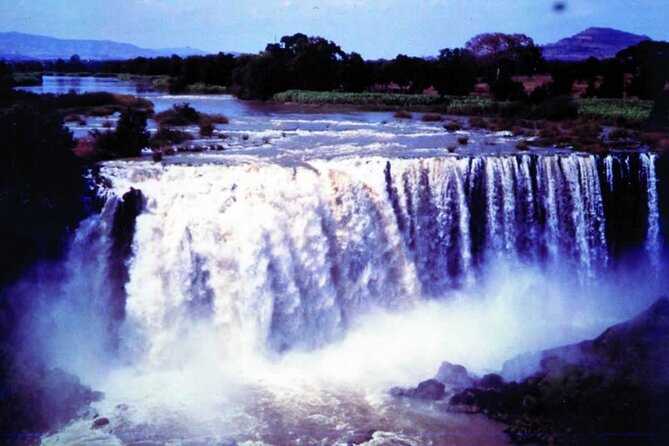
In the afternoon you visit Tisissat Falls, known in Amharic as water that smokes. It’s a classic Ethiopia moment, the kind where you see power in motion and understand why people build their lives around predictable water sources.
Gondar’s UNESCO Royal Enclosure: castles, the Pavilion of Delight, and Timkat
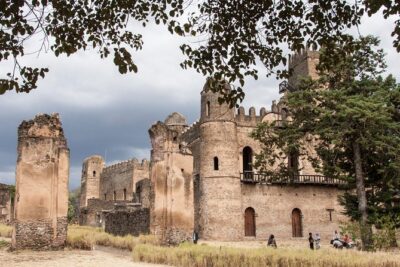
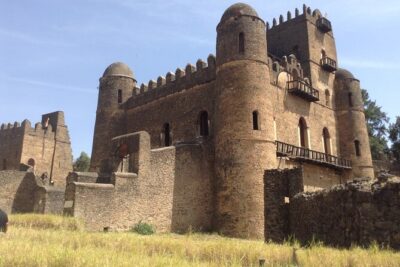
Gondar is where Ethiopia’s highland history gets visually dramatic. You drive about 3.5 hours north to reach the city, and the center of the show is the walled Royal Enclosure, a UNESCO site.
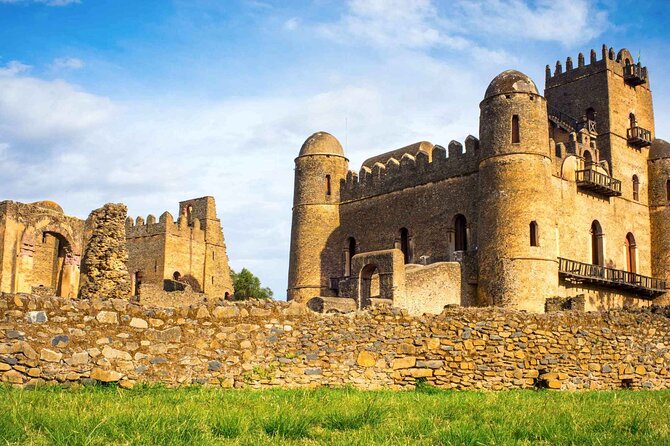
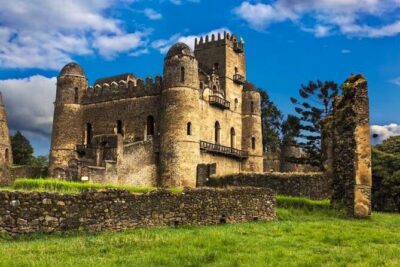
The standout is the 17th-century castle complex, especially the palace of King Fasiledas. The structures are remarkably well-preserved, with round turrets and wooden balconies. What I appreciate here is the mix of architecture and living culture. Nearby is the bathhouse of Fasil, famous because Ethiopians celebrate Timkat there every January. So even though you are looking at old stone, you are also tapping into a living calendar of tradition.
If you like sites where you can imagine court life, Gondar is a strong stop. It also breaks up the trip after the open feel of Bahir Dar, giving you a dense, walled-in experience that contrasts with Lake Tana’s water world.
More history on the ground
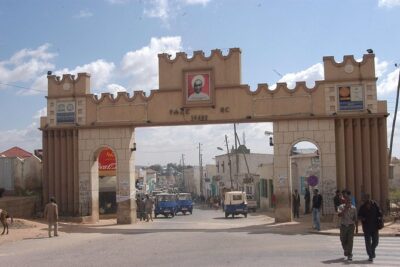
Simien Mountains National Park: gelada chances, a short walk, and a camping night
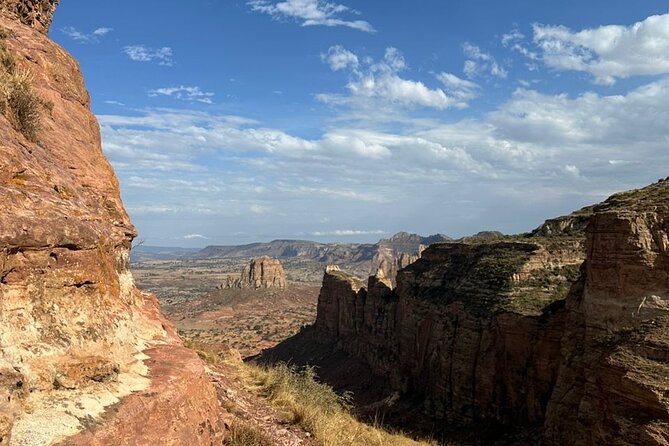
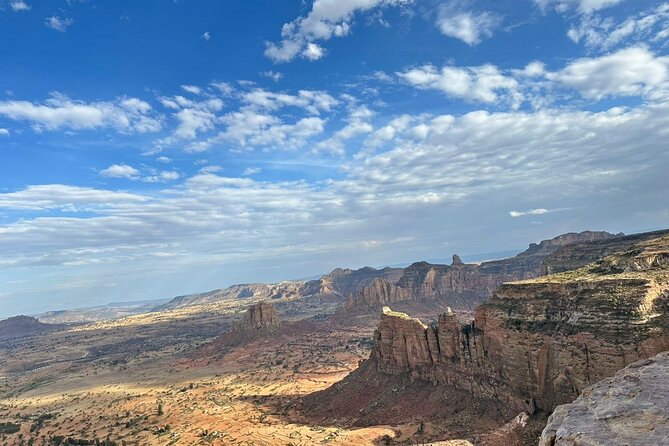
The drive toward the Simien Mountains starts near Debark and climbs into one of Ethiopia’s most distinctive ecosystems. This is another UNESCO site, and the point of coming is to see highland life at elevation, with views that can look unreal if you have spent most of your trip at lower altitude.
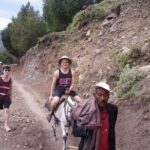
There’s an optional 1.5-hour walk in the late morning. The pace is described as mostly flat or downhill, which is helpful, but you still should take altitude seriously. The tour notes the maximum altitude reaching about 3,250 meters.
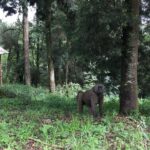
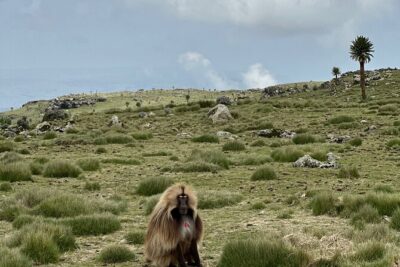
Here’s what you can realistically hope to spot: endemic gelada baboons, klipspringers, lammergeyer vultures, and bushbuck. Even if you do not see every animal, the purpose of this day is the scenery and the ecosystem feel, plus the chance to experience the park beyond a quick photo stop.
Overnight is camping in the Simien area. That is the tradeoff for the access and atmosphere. If you know you dislike camping nights, you may want to think carefully, because this is not a hotel-only route.
From Simien to Axum: the long drive through the Tekeze River gorge
The next day is a full driving day from the Simien Mountains region to Axum. It’s a rugged route through lowlands and the Tekeze River gorge. The driving is long, but the itinerary frames it as a photo-friendly day with dramatic views that make the miles feel worth it.
This is one of those Ethiopia reality checks. The scenery is the payoff, but you will still spend hours in the car. The good news is that private transport helps you stay comfortable, and the guide can manage the timing so the day does not feel like it drags.
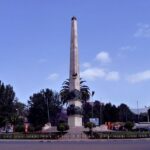
Axum is a fitting destination after the road. You arrive into a town tied to ancient routes and early Christianity, and you get time to relax after checking into your hotel. That balance, road day then decompression, is a smart way to keep history from turning into exhaustion.
Axum’s UNESCO core: St Mary of Zion, ancient trade routes, and the Ark belief
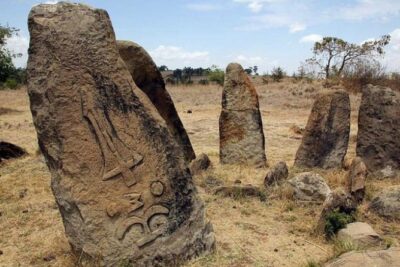
Axum is the seat of the ancient Kingdom of Axum, a major power on trading routes linking the Mediterranean and India. Axum controlled influence around the Red Sea through the port of Adulis, and it was advanced politically and technically in its time.
This stop is packed with big ideas. The itinerary also notes Axum as the origin of Christianity in Ethiopia, and it includes the belief that it is the resting place of the Ark of the Covenant. Whether you treat religious claims as faith, history, or both, the point is that the city is not just archaeological. It is part of people’s worldview.
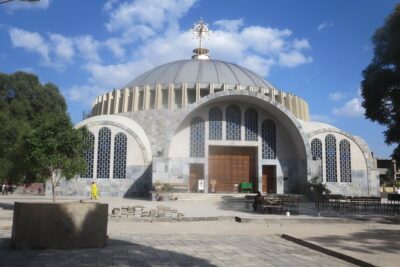
You’ll also visit the old church of St Mary of Zion, believed to be the first church built in Sub-Saharan Africa around 330 AD. Its ruins are in the precinct, so you see the physical markers of a deep timeline instead of only modern displays.
Yeha and Adwa: 3,000-year-old temple carvings and an anti-colonial story
From Axum, you head east to Yeha, described as Ethiopia’s oldest settlement, with roots possibly close to 3,000 years back. Yeha’s temple is dedicated to Ilmuqah, the moon god, and the itinerary notes connections to pagan temples in Yemen across the Red Sea. That cross-sea connection is a fascinating reminder that Ethiopia’s ancient world was never isolated.
The temple later became a church in the 6th century. One practical detail you will likely notice is the preserved friezes of ibex carved into the façade. These are the kinds of images that make ancient sites feel less like ruins and more like crafted spaces.
Then comes Adwa, a town in rugged mountain surroundings tied to Ethiopia’s resistance to colonial power. The tour frames it as the place where Ethiopians repelled a colonial power, described as the first African nation to do so. If you care about modern history with strong geography, Adwa can hit harder than you expect, because you see it set against mountains, not in a textbook.
Tigray rock-cut churches near Gheralta and Wukro: still active worship
This is where the trip becomes quietly powerful. You explore a rarely visited corner of Ethiopia and focus on rock-cut churches created prior to the 16th century. They were not widely known outside Ethiopia until the 1960s, and today about 150 are recognized, with most still actively used by the Orthodox Christian community.
You visit two clusters connected with Gheralta: Abreha We Atsbeha and Degum Selassie. Then you visit a sandstone church at Wukro, Chirkos, known for cruciform pillars and a barrel-vaulted ceiling. The architecture details matter because they show these churches are not just carved shells. The geometry and layout were designed for worship.
After the church clusters, you continue to Mekele and overnight there. This part of the itinerary emphasizes serenity in the Tigray landscapes. It is a needed pause after the density of historical sites, and it gives you a different Ethiopia mood: less crowd energy, more open quiet.
Lalibela road arrival, then rock-hewn churches like the New Jerusalem
Driving south to Lalibela is one of the bigger transitions on the route. The scenery shifts as you travel between mountains to the west and the start of the Danakil Depression terrain to the east. It’s the kind of change you feel in the air and the view lines, and it helps explain why Lalibela became such a focused religious center.
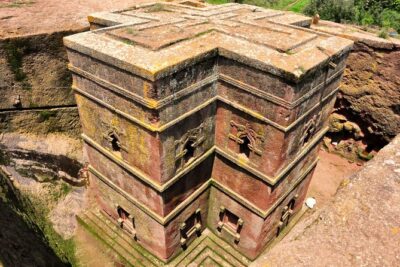
Lalibela is UNESCO-listed, and it is famous for rock-hewn churches. The itinerary describes Lalibela as the New Jerusalem and suggests construction around 800 years ago under King Lalibela. Rock churches exist in other places, but Ethiopia’s versions are special because of the method: churches are excavated on all sides of a granite block, leaving it isolated in the center. Then the rock is shaped inside and out, and the carvings show skilled workmanship.
You begin with the first cluster of churches. This cluster-first approach helps because you can compare forms as you walk through the complex. You also get time to absorb how the churches sit in their environment. You are not only looking at buildings, you are watching people use them as sacred places.
Lalibela’s second cluster: Yimrhane Kristos and Bete Emanuel’s Axumite-style details
In the next day’s visiting round, you focus on Yimrhane Kristos Church. The itinerary notes it as a masterpiece of Axumite wood-and-stone construction, with interior decoration including a wooden coffer ceiling inlaid with hexagons and medallions. You’ll see both figurative and geometric motifs.
After that, you drive back to Lalibela and visit the remaining rock-hewn churches. This includes Bete Gabriel and Rafael, Merkorous, Emanuel, and Abba Libanos. Of these, the tour singles out Bete Emanuel as the best, describing unique Axumite building features like indentations on the walls, symbols of multi-story building drawn from stelae of Axum, monkey heads, and false windows.
That detail list sounds niche, but it is exactly what makes a Lalibela visit worth slowing down for. If you rush, you miss the craft. If you take time, you start to see a visual language connecting Axumite design to medieval sacred architecture.
Price and value: what $2,597 covers and where you should plan for extra costs
At $2,597 per person for about 12 days, this tour is not budget travel. But in Ethiopia, it can still be good value because the big transportation costs are handled. Domestic flights are included, plus private transportation in an air-conditioned vehicle. For many travelers, that is the difference between a trip that feels controlled and one that feels like constant re-planning.
Meals are also a major part of the value equation. Breakfast is included every day, lunch is included on the stated days, and there are two included dinners. All fees and taxes are included too, which reduces the annoying habit of adding up entrance tickets and local service charges while you are already tired.
Where you should expect extra spending is also clear: dinner outside the included ones, personal needs, and gratitude. If you like to snack, buy water often, or want extra comfort purchases, budget a little. Also think about tipping in a way that matches your comfort level, since gratitude is not bundled in.
Finally, the small-group cap, max 4 travelers, is a hidden value. You might pay more per day than you would on a big group bus tour, but the experience usually feels calmer, and you can get more help when timing matters.
Who this tour fits best, and who should think twice
This route is a strong match if you care about history you can see with your own eyes. You move from museum-era Ethiopia to imperial capitals, and then to living sacred sites carved into rock. It is also a great fit if you like a guide who can explain what you are looking at while you keep moving.
It suits people with moderate physical fitness. There is an optional walk in Simien Mountains territory and days with long drives, so plan for stamina. You should also be comfortable with one camping night in the Simien area.
If you want a trip with lots of free afternoons, this is probably not it. The schedule is structured around major stops, so you should plan on staying engaged, even when the days feel scenic. Also, if you hate camping, you may want to consider a different route that uses hotels throughout.
Should you book this historical route with Enat Ethiopia Tours?
If your priority is a focused, efficient way to cover Ethiopia’s biggest UNESCO names, I think this is a smart booking. The combination of domestic flights, private driving, and an English-speaking guide makes the route feel doable without turning your trip into logistics homework. And the reviews highlight the same theme: Ashu and the team act like steady partners, helpful and flexible when you need it.
I’d book it if you want: small-group access, major monuments, and a clear trail from Addis Ababa to Lalibela with Tigray rock churches in between. I’d think twice if you do not want altitude, long drive days, or a camping night. Otherwise, this is the kind of itinerary where each stop builds the next one, until Lalibela feels less like a list item and more like a destination with a reason.
FAQ
What is the duration of the 12-day Historical Route of Ethiopia?
The tour runs for 12 days (approximately).
Where does the tour start and end?
It starts at Skylight Hotel parking in Addis Ababa. It ends back at the same meeting point.
Is pickup offered?
Yes, pickup is offered.
What is the price per person?
The price is $2,597.00 per person.
How many travelers are in the maximum group?
The maximum group size is 4 travelers.
What languages does the professional guide speak?
The guide is listed as available in English, Spanish, French, German, and Italian.
Are meals included in the tour price?
Yes. Accommodation includes breakfast, and the tour also includes lunch and two dinners as stated in the inclusions.
Are domestic flights included?
Yes. All domestic flights are included.
Can I cancel for a full refund?
Yes, free cancellation is available. You can cancel up to 24 hours in advance of the experience for a full refund.
Ethiopian History on the Ground
- Day Trip From Addis Ababa See Historical Monastery,Stunning Nature,Animals,Birds
★ 5.0 · 303 reviews - Hidden Treasures of Addis Ababa – Food, Culture and History Tour
★ 5.0 · 57 reviews - Northern Ethiopia Historic Route
★ 5.0 · 12 reviews - 5 Days Tour to World Heritage–listed Harrar, Dire Dawa and Awash NATIONAL PARK
★ 4.5 · 10 reviews - DAY TRIP TO THE UNESCO HERITAGE SITE TIYA & Melka Kunture
★ 4.5 · 10 reviews
The Rest of the Ethiopia List
- Full Day Tour of Addis Ababa with Hotel Pickup and Drop-off
★ 5.0 · 430 reviews - Taste of Ethiopia
★ 5.0 · 406 reviews - Day Trip From Addis Ababa See Historical Monastery,Stunning Nature,Animals,Birds
★ 5.0 · 303 reviews - Addis Ababa: Debre Libanos, Blue Nile Gorge, and Cave Tour
★ 4.5 · 256 reviews - Addis Ababa Guided City Tour With Airport & Hotel Pick Up
★ 5.0 · 237 reviews
Riding the Historic Route
- 5 Days North Ethiopia Tours
★ 5.0 · 23 reviews - Northern Ethiopia Historic Route
★ 5.0 · 12 reviews - North Ethiopia Round Trip Tours From Addis Ababa
★ 5.0 · 11 reviews - Historical tours – in five days, Addis Ababa, Axum, Laliebla and Gonder
★ 5.0 · 9 reviews - North Ethiopia Tours 12 Days From Addis Ababa
★ 5.0 · 8 reviews
Other Ethiopia tours we have written up


Northern Ethiopia Historic Route, compared.
 ★ 5.05 Days North Ethiopia ToursFrom $1,25023 reviews
 ★ 5.0Northern Ethiopia Historic RouteFrom $1,00012 reviews
 ★ 5.0North Ethiopia Round Trip Tours From Addis AbabaFrom $1,58811 reviews
 ★ 5.0Historical tours – in five days, Addis Ababa, Axum, Laliebla and GonderFrom $1,3949 reviews
 ★ 5.05-Day Northern Ethiopia Tour : 3D Simien Mountains Trek & Axum.From $4719 reviews
 ★ 5.0North Ethiopia Tours 12 Days From Addis AbabaFrom $2,2888 reviews
 ★ 4.5Northern Ethiopia & Trekking Simien Mountains , 10 DaysFrom $2,3585 reviews
★ 5.05 Days North Ethiopia ToursFrom $1,3205 reviews
Browse the lists this tour appears in