
REVIEW · NORTHERN ETHIOPIA HISTORIC ROUTE
10 Days North Historical Tour
Ancient churches carved from living rock are the star. This 10-day north Ethiopia route links Axum and Lalibela with Lake Tana boat time and Simien wildlife.
I especially like the built-in pacing, where you get big cultural stops plus real scenery time, not just museum-hopping. The other win for me is the private feel, since it is only your group, guided end to end. The one watch-out is the travel days, including several long drives and a higher-altitude park day that can feel like work if you are not used to elevation.
In This Review
- Key highlights I’d anchor your trip around
- Why Ethiopia’s Historic North Tour Starts Paying Off Right Away
- Addis Ababa Intro: Mount Entoto, Lucy at the National Museum, and George Cathedral
- Lake Tana Boat Day to Ura Kidane Mihret on the Zege Peninsula
- Gondar’s Imperial Enclosures and Debre Berhan Selassie’s Painted Ceiling
- Simien Mountains National Park: UNESCO Views, Gelada Encounters, and Sankaber at 3,220m
- Axum Days: Stelae, the Palace of Queen Sheba, and Key Church Sites
- Yeha and Adwa: Pre-Axumite Temple and a 1896 Turning-Point
- Lalibela: Rock-Hewn Churches, Underground Mazes, and a Full Day of Stone-Crafted Faith
- Back to Addis Ababa: 9 Hours on the Road and a Cultural Farewell Dinner
- Price and Logistics: What $2,432 Gets You, and What You Still Need to Plan
- Who This Tour Fits Best (and Who Might Feel the Pace)
- My verdict: Should you book this historic north Ethiopia tour?
- FAQ
- FAQ
- What is the starting point and where does the tour end?
- Is pickup offered?
- How long is the tour?
- What is included in the price?
- What is not included?
- Does the itinerary include any flights?
- Are entrance fees covered?
- What meals are included besides breakfast?
- Is the tour dependent on weather?
- Can I cancel for a full refund?
- Are there any limits on participation or animals?
Key highlights I’d anchor your trip around
- Axum stelae and the Mariam Tsion church area with major names and major stones
- Lalibela’s rock-hewn church day focused on 11 renowned churches
- Lake Tana boat trip to Zege peninsula monasteries including Ura Kidane Mihret
- Simien Mountains UNESCO park time plus a gentle walk near Sankaber at 3,220m
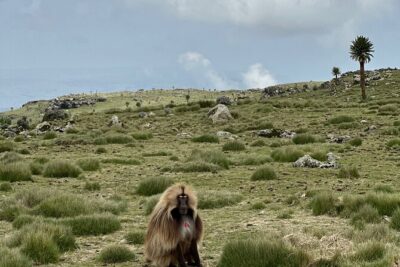
- Gelada baboon encounters as part of the park experience
- A farewell dinner in Addis Ababa with cultural songs, dances, and traditional food and drinks
The historic route, other itineraries
- 5 Days North Ethiopia Tours★ 5.0 · 23 reviews
- Northern Ethiopia Historic Route★ 5.0 · 12 reviews
- North Ethiopia Round Trip Tours From Addis Ababa★ 5.0 · 11 reviews
- Historical tours – in five days, Addis Ababa, Axum, Laliebla and Gonder★ 5.0 · 9 reviews
Why Ethiopia’s Historic North Tour Starts Paying Off Right Away
If you like travel with built-in momentum, this itinerary makes sense. You begin in Addis Ababa, then fan out to Bahir Dar (Lake Tana), Gondar, the Simien Mountains, Axum, Yeha, and Lalibela, then loop back to Addis Ababa at the end. It is a classic route for first-timers because it groups Ethiopia’s most famous historic nodes into a single, guided thread.
Value-wise, the price includes the stuff that quietly adds up, like all entrance fees and 9 night accommodation, plus breakfast every day (10 breakfasts are listed). That means you spend less time calculating ticket costs and more time actually seeing places.
One more practical note I like: your program includes pickup, and on arrival you are met at Bole International Airport and taken to your reserved hotel. The trip also runs with a guide throughout, which matters in Ethiopia, where local knowledge can make the difference between seeing sights and understanding what you are looking at.
Addis Ababa Intro: Mount Entoto, Lucy at the National Museum, and George Cathedral
Your first day is a flexible Addis Ababa orientation, especially if your flight lands early enough. You have an option for a 5 to 6 hour city tour, and the theme is clear: get your bearings fast, then learn Ethiopia through the big symbols.
Mount Entoto gives you the first wow factor, with the best views over the capital. It is the sort of start that helps the rest of the trip click, because you can see how the city sits against its surroundings.
Then you head into Ethiopian identity through museums and church art. At the Institute of Ethiopian Studies, you see artifacts that reflect the country’s regions and history. At the National Museum, the headline is the 3.5-million-year-old bones of Lucy. This is a rare chance to connect Ethiopia’s very deep past to the present, before you move on to medieval kingdoms and early Christianity.
For a cultural finish, you can also visit George Cathedral, known for ecclesiastical art including paintings by Ethiopian artist Afework Tekele. If you want one day to set context before you start chasing monuments, this is it.
What to consider: you might spend your first evening shifting from airplane mode to city walking and short drives. Build in patience if your arrival time squeezes the sightseeing window.
Lake Tana Boat Day to Ura Kidane Mihret on the Zege Peninsula
Day 2 is one of the most different-feeling days in the tour, because it swaps streets for water and forest paths. You travel from Addis toward Bahir Dar, then start with a boat trip on Lake Tana.
The target is the Zege peninsula monastery Ura Kidane Mihret, known for 14th-century round, grass-roofed churches and murals. Two church names come up in particular: Azoa Mariam and Ura Kidane Mihret. The churches’ mud-plastered round walls and conical thatched roofs are part of what makes the site visually distinct.
One detail I like: the monastery is described as hidden in the forest of the peninsula. That matters because it changes the mood. You are not just ticking off a church name, you are arriving at a place that feels tucked away, which makes the art and architecture feel more personal.
What to consider: travel days here include both road and air movement as scheduled, and the boat portion means you will want to be comfortable being outdoors and around water for part of the day.
Gondar’s Imperial Enclosures and Debre Berhan Selassie’s Painted Ceiling
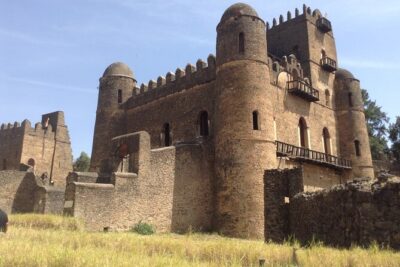
Gondar is a turning point from “early sacred sites” to “imperial spectacle.” On your way there, you visit the Castle Compound and the famous Debre Birhan Selassie Church, described as spectacularly painted.
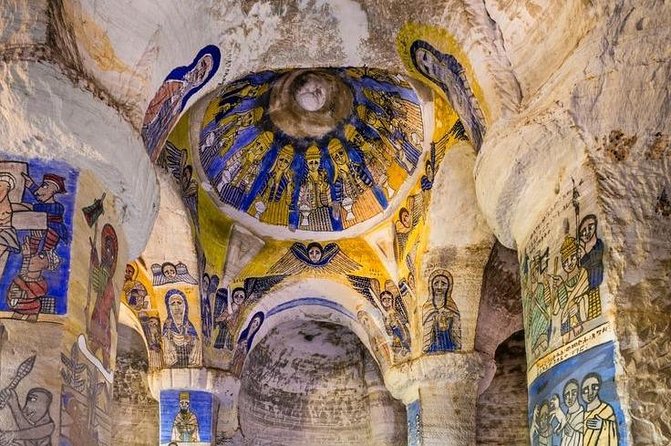
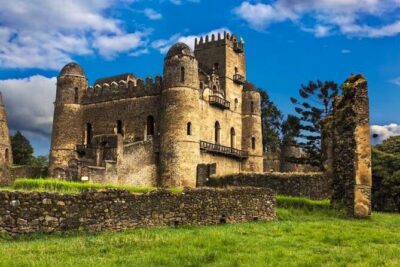
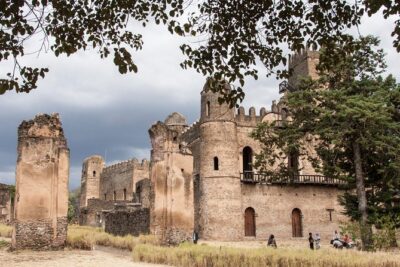
The afternoon expands the sense of royal power with the royal enclosures of Fassil Ghibe and the castles of the Gonderian emperors. Ethiopian church art is the star again at Debre Berhan Selassie Church, where murals cover the interior and the wooden ceiling is known for the angels’ faces. If you have been thinking of Ethiopian art as something you only see on stones and manuscripts, Gondar helps you see it as a living, painted space.
What I’d watch for: Gondar is not a single-photo stop. You will likely spend time moving between enclosures and church areas, so plan for a slower rhythm, not a sprint. The payoff is that you start noticing patterns in architecture and symbolism.
More history on the ground
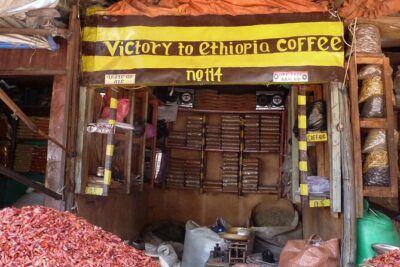
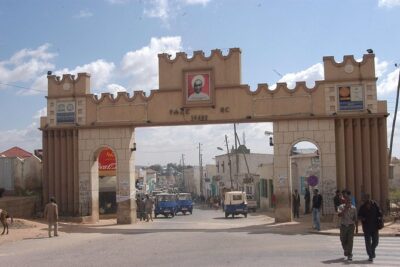
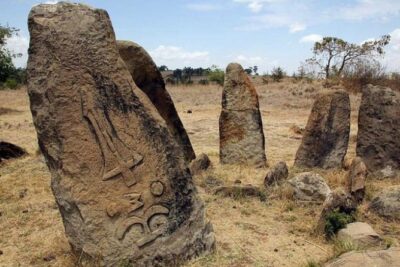
Simien Mountains National Park: UNESCO Views, Gelada Encounters, and Sankaber at 3,220m

This is the day for nature and for the kind of animal experience that feels earned. You drive into Simien Mountains National Park, a UNESCO World Heritage site since 1996.
You also arrive at Simien Lodge, described as the highest lodge in Africa, around noon. That alone sets expectations. Even before you walk, you are thinking about altitude and distance.
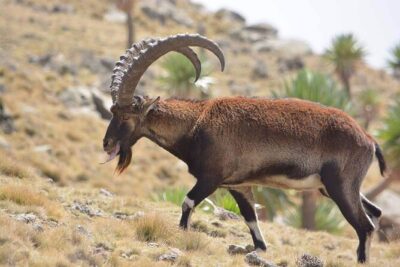
After lunch, you explore the park, with a highlight being the close interaction with friendly Gelada baboons. That does not mean a hands-on safari, but it does mean you might see them at close range while you are in their environment.
You also drive up to Sankaber (3,220m) for deep valleys and gorge views, plus the highest waterfall in Ethiopia. Then there is a gentle 2-hour walk to take it in.
What to consider: this is the highest elevation day on your route. Go slow, take water breaks when you need them, and do not treat the walk as just a casual stroll.
Weather reality check: the tour notes it requires good weather. In practice, that matters most in a park day where visibility and comfort can change quickly.
Axum Days: Stelae, the Palace of Queen Sheba, and Key Church Sites

Axum is what happens when a place becomes a myth you can walk around. You drive there from Gondar, and the day is framed by long views along the way. Axum sits at 1,637m and is described as a holy city where Ethiopian Christianity is said to have begun over 2,000 years ago. You will hear the Axumite kingdom described as the cradle of Ethiopian civilization, and the itinerary supports that claim with monuments tied to specific rulers.
Your first Axum day is a city arrival and setting. Your second Axum day is a full historic tour.
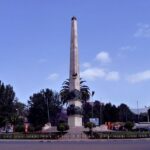
The headline stop is the Axum stelae or obelisks, described as the largest single piece of stone erected by human beings anywhere in the world. Even if you know the facts, seeing something that big in person changes the scale of what you think stonework means.
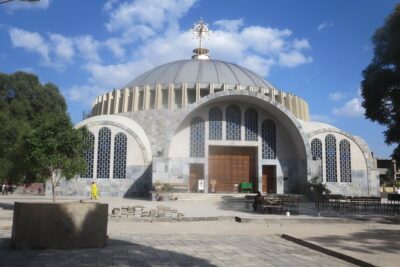
Then you move across layers of power and religion. You visit the castles of former monarchs, the Mariam Tsion Church built on the site of Ethiopia’s first church, and the Palace of Queen Sheba. You also see inscriptions connected to King Ezana, plus the tombs of kings Kaleb and Gebre Meskel.
What to consider: Axum is thick with names and dates. If you tend to get information overload, pace yourself. Spend longer looking at the stones and church details, then let the guide fill the background in smaller chunks.
Yeha and Adwa: Pre-Axumite Temple and a 1896 Turning-Point
Day 7 shifts the mood to an earlier timeline, with a strong stop at Yeha. You visit the temple of Yeha about 50 km away, taking around 1 hour. This is a pre-Axumite settlement, known for a stone temple with 12-meter-high walls estimated at 2,500 years old.
The itinerary also includes a human-history stop: you pass through Adwa, connected to the 1896 battle between Ethiopians and Italians. This is the kind of stop that adds weight to the ancient sites you’ve been seeing. It reminds you that the story of Ethiopia did not stop at the end of antiquity.
What to consider: this day is shorter in distance than some others, but it still relies on road time. If you prefer to use days for sightseeing only, you may feel the travel rhythm more than on a purely walking-focused day.
Lalibela: Rock-Hewn Churches, Underground Mazes, and a Full Day of Stone-Crafted Faith
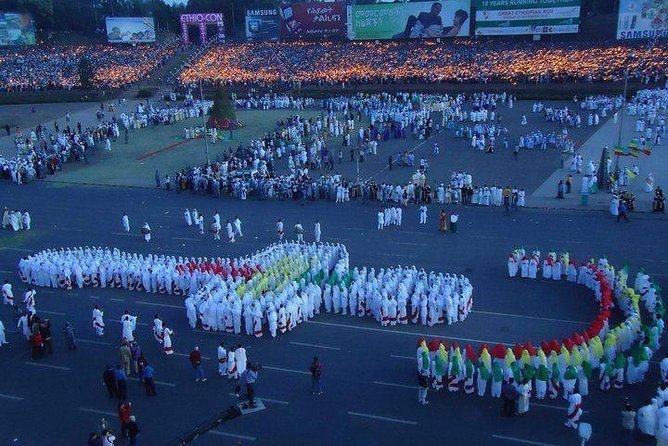
Lalibela is the emotional climax for many people, and the itinerary does not tease it. You reach Lalibela in the late afternoon after an 8-hour drive, then the next day is the big church day.
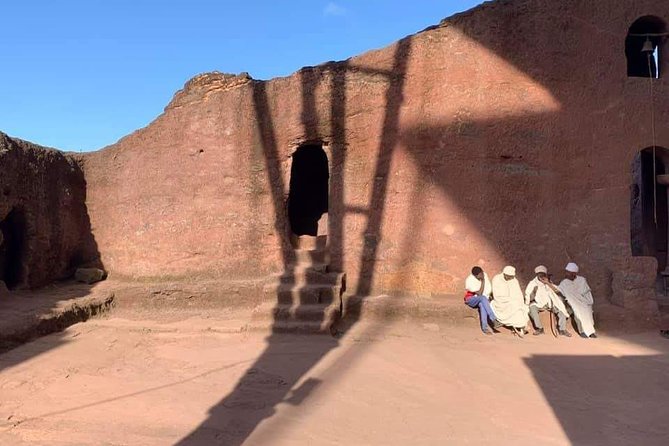
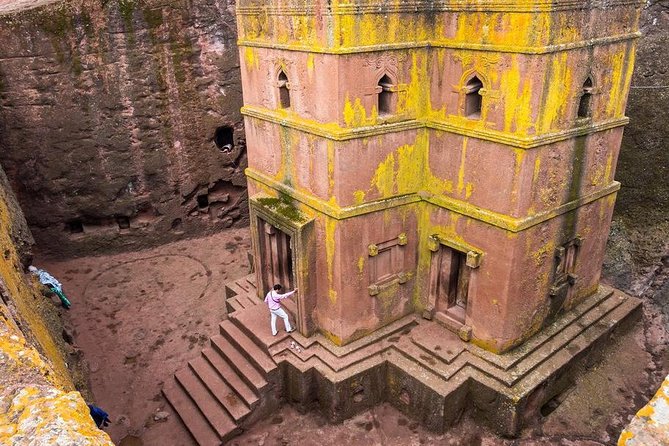
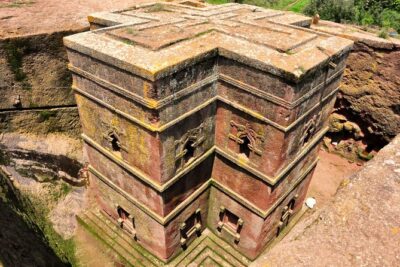
Day 9 focuses on the 11 renowned rock-hewn churches of Lalibela, sometimes called the 8th wonder of the world. The key point is how they were built: they are physically carved from the rock on which they stand. That means you are not looking at separate structures sitting on a hill, you are looking at a rock system that became architecture.
The churches vary in their carving style. Some are sculptured out of solid volcanic rock, others connect via underground tunnel and maze-like passages, and some are described as quarried enlargements of caves. Even the list of the first group of six churches gives you structure for your day: Bet Golgotha, Bet Mikeal, Bet Mariam, Bet Maskel, Bet Dangal, and Bet Medhanealem.
And yes, Bet Medhanealem is flagged as the largest rock-hewn church in the world, built like a Greek temple.
What to consider: this is one of the most concentrated sightseeing days of the whole trip. You will likely spend most of the day moving from church to church. If you are someone who loves photos, you will still want to leave time for slow looking, because the details are part of the story.
Back to Addis Ababa: 9 Hours on the Road and a Cultural Farewell Dinner
Your last day brings you back toward Addis Ababa with a long drive of about 9 hours. That is a lot of seat time after ten days on the move, so I treat this day as a reset. Use it to stretch, recharge, and keep your attention on the arrival, not the middle of the route.
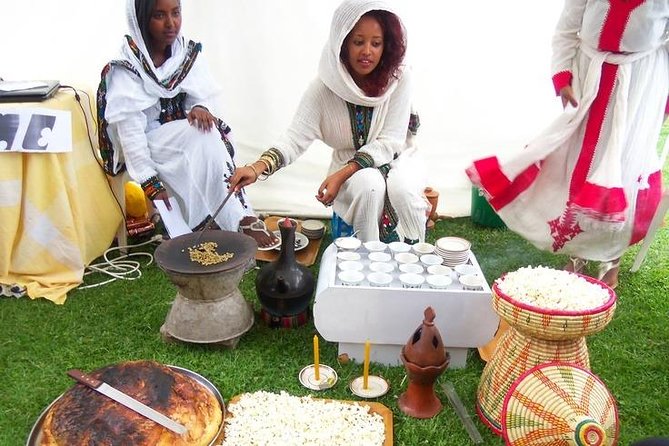
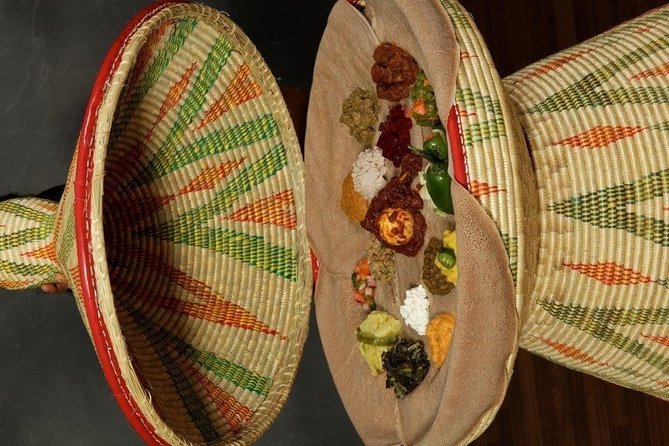
In the evening, the program includes a farewell dinner at a traditional restaurant. It is described with cultural songs and dances plus traditional food and drinks. This is your chance to cap the trip with something social and local, not just more monuments.
Then you are transferred to Bole International Airport for your departure.
What to consider: if you are booking your flight home, plan a buffer in Addis when possible. The day is scheduled as a long drive, so late-day traffic realities can be unpredictable.
Price and Logistics: What $2,432 Gets You, and What You Still Need to Plan
At $2,432 per person for an approx. 10 days, the big question is: what is included and what is not.
What you get:
- All entrance fees (so you do not pay separately at the big sites)
- 9 night accommodation
- Breakfast (10)
What you need to budget separately:
- International and domestic air tickets
- Visa fees
- Excess luggage charges
- Flights and personal fee (not clearly itemized, but it signals additional day-to-day spending)
Here is how I think about value. The included entrance fees remove one layer of cost and hassle, especially on a route packed with named monuments and churches. The included accommodation and daily breakfast stabilize your trip. And because it is set up as a private tour, you are not trying to coordinate a group schedule while also managing the travel logistics yourself.
The part to watch is flights. The itinerary mentions flying to Bahir Dar, but domestic air tickets are listed as not included. So you should expect to arrange and pay those separately.
Who This Tour Fits Best (and Who Might Feel the Pace)
This tour is a strong match if you want a structured route through Ethiopia’s historic north, with enough guidance to keep you from getting lost in logistics. It is also a good fit for people who enjoy heritage sites like stelae, royal enclosures, and rock-hewn churches, plus one major nature day.
It is also worth noting what the operator style seems to focus on. In past interactions described by the company’s team, people highlight excellent communication and a guide called Abebe who is described as professional and highly committed. That kind of continuity can make a huge difference on a trip with multiple regions.
It may feel less ideal if:
- you hate long driving days (there are several, including about 9 hours on the final day)
- you want a slower, more open-ended trip with lots of free time
- you are highly sensitive to altitude, since you reach Sankaber at 3,220m in Simien
Most travelers can participate, and service animals are allowed, which is good to know if you have specific needs.
My verdict: Should you book this historic north Ethiopia tour?
I’d book it if you want a guided, high-yield route through Axum, Gondar, Lalibela, and Simien, with key stops like Lake Tana monasteries and a planned farewell dinner. The inclusion of entrance fees, accommodations, and daily breakfast makes it easier to budget, and the private group setup is a real comfort.
I would pause if you are trying to avoid long travel days or if you are unsure about handling elevation in Simien. If either of those is you, ask the operator how flexible the pacing can be on the park day and whether you can adjust walking time around Sankaber.
FAQ
FAQ
What is the starting point and where does the tour end?
The tour starts in Addis Ababa, Ethiopia, and it ends back at the meeting point.
Is pickup offered?
Yes, pickup is offered. On arrival at Bole International Airport, you will be met by a representative and taken to your reserved hotel.
How long is the tour?
It is listed as 10 days (approx.).
What is included in the price?
The price includes all entrance fees, 9 night accommodation, and breakfast (10).
What is not included?
International and domestic air tickets, visa fees, excess luggage charges, flights and personal fee are not included.
Does the itinerary include any flights?
The schedule includes flying together with your guide to Bahir Dar, but domestic air tickets are not listed as included, so you should plan for separate flight costs.
Are entrance fees covered?
Yes, all entrance fees are included.
What meals are included besides breakfast?
The program includes an evening farewell dinner in Addis Ababa with cultural songs, dances, and traditional food and drinks. The provided included list specifically mentions breakfast.
Is the tour dependent on weather?
Yes, it requires good weather. If canceled due to poor weather, you are offered a different date or a full refund.
Can I cancel for a full refund?
Free cancellation is available up to 24 hours in advance of the experience start time for a full refund.
Are there any limits on participation or animals?
Most travelers can participate, and service animals are allowed.
Browsing Ethiopia More Widely
- Full Day Tour of Addis Ababa with Hotel Pickup and Drop-off
★ 5.0 · 430 reviews - Addis Ababa: Debre Libanos, Blue Nile Gorge, and Cave Tour
★ 4.5 · 256 reviews - Addis Ababa Guided City Tour With Airport & Hotel Pick Up
★ 5.0 · 237 reviews - Breathtaking Nature, Wildlife and Cave Church Tour – Free Pickups
★ 5.0 · 225 reviews - Full-Day Private City Tour of Addis Ababa
★ 5.0 · 147 reviews
The Rest of the Ethiopia List
- Full Day Tour of Addis Ababa with Hotel Pickup and Drop-off
★ 5.0 · 430 reviews - Taste of Ethiopia
★ 5.0 · 406 reviews - Day Trip From Addis Ababa See Historical Monastery,Stunning Nature,Animals,Birds
★ 5.0 · 303 reviews - Addis Ababa: Debre Libanos, Blue Nile Gorge, and Cave Tour
★ 4.5 · 256 reviews - Addis Ababa Guided City Tour With Airport & Hotel Pick Up
★ 5.0 · 237 reviews
Riding the Historic Route
- 5 Days North Ethiopia Tours
★ 5.0 · 23 reviews - Northern Ethiopia Historic Route
★ 5.0 · 12 reviews - North Ethiopia Round Trip Tours From Addis Ababa
★ 5.0 · 11 reviews - Historical tours – in five days, Addis Ababa, Axum, Laliebla and Gonder
★ 5.0 · 9 reviews - North Ethiopia Tours 12 Days From Addis Ababa
★ 5.0 · 8 reviews
Other Ethiopia tours we have written up

Northern Ethiopia Historic Route, compared.
 ★ 5.05 Days North Ethiopia ToursFrom $1,25023 reviews
 ★ 5.0Northern Ethiopia Historic RouteFrom $1,00012 reviews
 ★ 5.0North Ethiopia Round Trip Tours From Addis AbabaFrom $1,58811 reviews
 ★ 5.0Historical tours – in five days, Addis Ababa, Axum, Laliebla and GonderFrom $1,3949 reviews
 ★ 5.05-Day Northern Ethiopia Tour : 3D Simien Mountains Trek & Axum.From $4719 reviews
 ★ 5.0North Ethiopia Tours 12 Days From Addis AbabaFrom $2,2888 reviews
 ★ 4.5Northern Ethiopia & Trekking Simien Mountains , 10 DaysFrom $2,3585 reviews
★ 5.05 Days North Ethiopia ToursFrom $1,3205 reviews
Browse the lists this tour appears in