
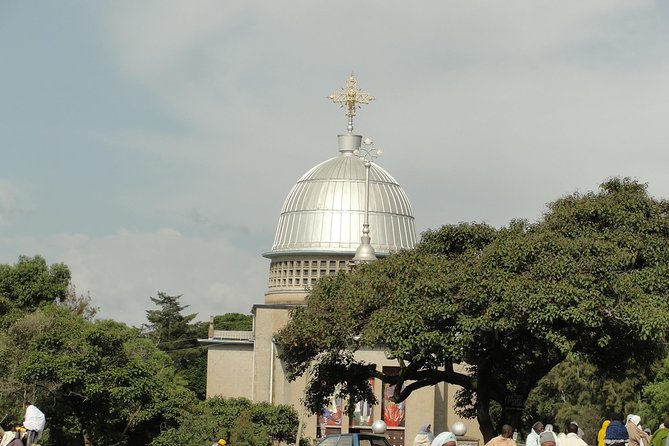
REVIEW · DEBRE LIBANOS & THE PORTUGUESE BRIDGE
Day Trip From Addis Ababa To Debre Libanos & Blue Nile Gorge
One cliffside monastery and one huge gorge, in a single day. I especially like the mix of Ethiopian Orthodox pilgrimage history and real out-in-nature time around the Blue Nile Gorge, not just a drive-by photo stop. The potential drawback is that wildlife sightings and birding can never be guaranteed, and the day asks for moderate physical fitness because you will be moving on uneven ground.
The vibe stays relaxed because you get hotel pickup and an air-conditioned vehicle, plus a local guide who helps you connect the dots between places. In particular, a guide like Becki can make the countryside feel personal, and that matters on a day trip. Budget note: at $117.95 per person, this works best when you want guided access to multiple sites plus included lunch, rather than doing these stops on your own.
In This Review
- Key Points to Know Before You Go
- Debre Libanos and the Blue Nile Gorge in One Day
- Starting in Addis Ababa: Pickup, Timing, and Group Size
- Debre Libanos Monastery: Saint Tekle Haymanot and Cliffside Terraces
- Portuguese Bridge: A Narrow Span With River Power
- Jemma Valley Birding in the Gorge Country
- Lunch, Water, and Tea, a Real Reset Midday
- What to Pack and How to Move Comfortably
- Price Value: $117.95 for Transport, Tickets, and a Local Guide
- Who Should Book This Trip, and Who Might Want Another Option
- Book It or Skip It? My Practical Recommendation
- FAQ
- FAQ
- What time does the day trip start?
- How long is the experience?
- Is hotel pickup included?
- Is lunch included, and is it available for vegan and vegetarian diets?
- What is included in the tour besides lunch?
- Are admission tickets included for the stops?
- What is the group size limit?
- What physical fitness level is recommended?
- Are there chances to see wildlife?
Key Points to Know Before You Go
- Debre Libanos Monastery dates to the 13th century and is tied to Saint Tekle Haymanot’s long meditation in a cave.
- Cliff and gorge setting: the monastery sits on a terrace between a cliff and the gorge of a tributary of the Abbay (Blue Nile) River.
- Portuguese Bridge looks dramatic, especially when rain swells the cascade below it.
- Jemma Valley birdwatching is a real theme, with Harwood’s Francolin listed as a main target.
- Lunch is included with Ethiopian fare, made for vegan and vegetarian needs.
- Small group cap (max 25) helps keep the day from feeling like a cattle call.
The same run north out of Addis, done differently
- Addis Ababa: Debre Libanos, Blue Nile Gorge, and Cave Tour★ 4.5 · 256 reviews
- Day Trip From Addis Ababa To Debre Libanos & Portuguese Bridge★ 4.5 · 64 reviews
- Day trip Debre Libanos, Bule nile George &Portugal Bridge★ 4.4 · 25 reviews
- Debre Libanos Monastery and Jemma River Gorge – Day Tour from Addis Ababa★ 5.0 · 20 reviews
Debre Libanos and the Blue Nile Gorge in One Day
This is the kind of Addis Ababa day trip that makes you feel like you saw two different Ethiopia moods. One moment you are in a monastery complex shaped by faith, caves, and church authority. The next moment you are looking at gorge country and listening for birds in river valleys.
I like that the itinerary is built around specific places with names you can remember, not vague countryside wandering. You get Debre Libanos Monastery, the Portuguese Bridge, and then a gorge-area birding stop near the Jemma and Abbay river system.
The main thing to keep in mind is that the day’s timing is tight. A 6 to 9 hour experience means you will spend most of the day in transit plus three focused stops, so come with patience, wear good shoes, and plan to enjoy the stops at a steady pace rather than expecting endless lingering.
Starting in Addis Ababa: Pickup, Timing, and Group Size
The tour starts at 9:00 am, and the total time is listed as 6 to 9 hours. That range makes sense because travel time depends on traffic and conditions, and the day includes multiple site visits.
You also get hotel pickup offered, and you ride in an air-conditioned vehicle. For many visitors, the AC part is not just comfort, it helps you arrive at the first stop with energy. The group size is kept to a maximum of 25 travelers, which is big enough for comfort but small enough that a guide can still manage questions and movement.
One practical tip: build in buffer for bathroom breaks and photo stops, because the itinerary times are set for a smooth flow. If you tend to move fast, try slowing down slightly during the monastery portion, since the walking areas and viewpoints can be a bit irregular.
And if plans change, the experience offers free cancellation up to 24 hours in advance for a full refund. That’s a nice safety net when you are also juggling other Ethiopia bookings.
Debre Libanos Monastery: Saint Tekle Haymanot and Cliffside Terraces
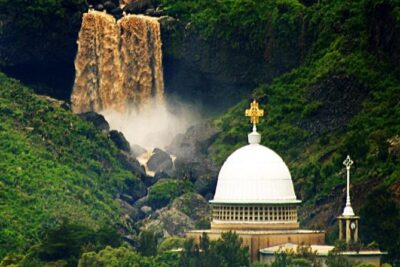
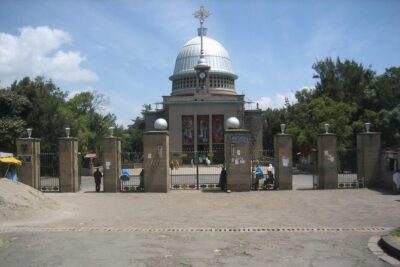
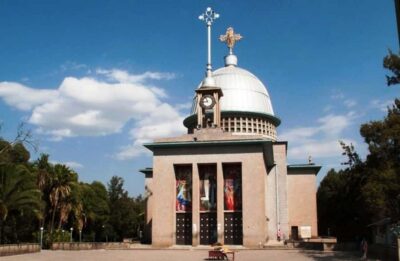
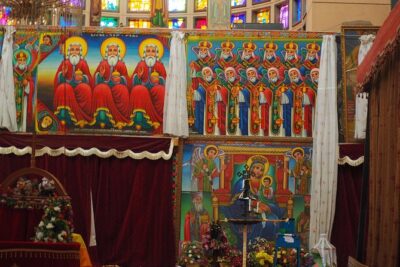
The day’s anchor stop is Debre Libanos Orthodox Church (the monastery complex area), located northwest of Addis Ababa. Tradition connects the monastery’s founding to the 13th century and Saint Tekle Haymanot, who is said to have meditated in a cave for 29 years.
What I find compelling here is the way authority and geography meet. The monastery’s chief abbot, called the Ichege, was described as the second most powerful official in the Ethiopian Church after the Abuna. That might sound like a big title, but the setting makes it feel real, because you are literally looking out over gorge and cliff country.
Plan on about 2 hours for this stop, and admission is included. From what you will see on site, don’t expect every original structure to still be standing. The information provided notes that none of the original buildings of Debre Libanos survive, although there may be interesting things to be found around neighboring cliffs.
That detail matters for expectations. You are visiting a living pilgrimage place, with current church buildings and terraces, not a perfectly preserved museum of medieval stones. The trade-off is that it stays meaningful in everyday use, not frozen behind ropes.
What to watch for during the monastery time
- Terrace views where the cliff edge and gorge feel close
- The way the complex is arranged between high ground and river country
- Photogenic angles looking toward the tributary gorge of the Abbay (Blue Nile)
A heads-up on getting there
Because this is a cliffside complex, you may encounter uneven surfaces. Bring footwear with grip, and take your time when moving between viewpoints.
Portuguese Bridge: A Narrow Span With River Power
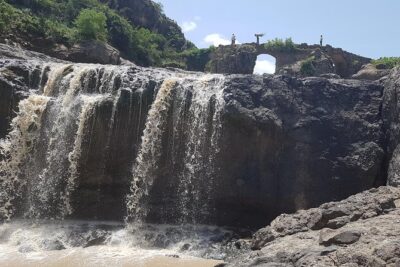
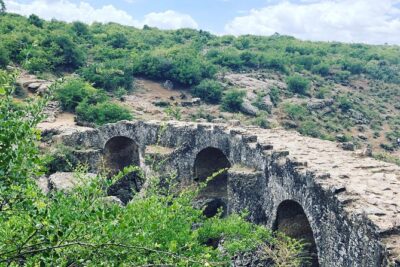
After the monastery, the tour goes to the Portuguese Bridge near Debre Libanos. The name can be confusing at first, because the story links multiple time periods. The information says the Portuguese erected it in the 16th century style, but Ethiopians built the bridge at the turn of the 19th century using that older Portuguese style.
Either way, the result is a narrow span that makes a strong picture. And the best part is what happens under it. In the rainy season, you get a gushing cascade just below, adding movement and drama.
This stop runs about 1 hour 10 minutes, and admission is included. That time window is long enough to get a few angles, take a breath, and enjoy the sound of water if conditions are right.
What can limit the experience here
If you travel in a drier spell, the cascade may be less forceful than you hoped. The bridge still looks good, but the river drama depends on weather.
So I recommend treating this stop as a contrast point. Monastery first for spiritual and historical atmosphere, bridge next for river power and scenery, even if the water level changes.
Other one-day runs out of town
Jemma Valley Birding in the Gorge Country
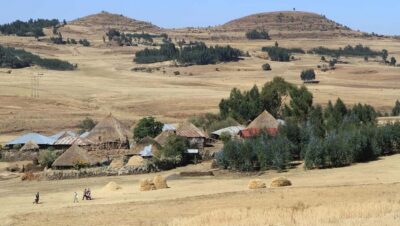
The final major experience block is centered around gorge and valley country near Debre Libanos and Fiche. This is where the tour shifts from architecture to ecology, with a special focus on birds.
Here’s what makes it interesting: the Jemma River system and surrounding area are described as well known for bird watching tours. The Jemma joins the Wenchit before reaching the Abbay (Blue Nile) River.
The tour notes Harwood’s Francolin as a main target for bird watchers, described as endemic and range restricted. It also lists other possible species you might spot, including:
- Banded Barbet
- Black-headed Forest Oriole
- White-billed Starling
- Red-billed Starling
- White-winged Cliff Chat
- White-backed Black Tit
- White-cheeked Turaco
- Hemprich’s Hornbill
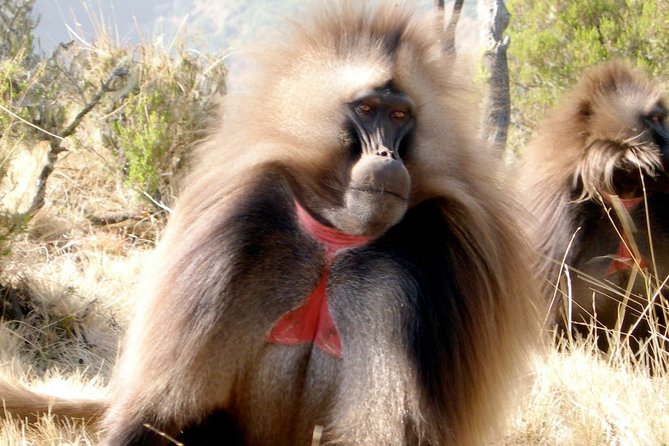
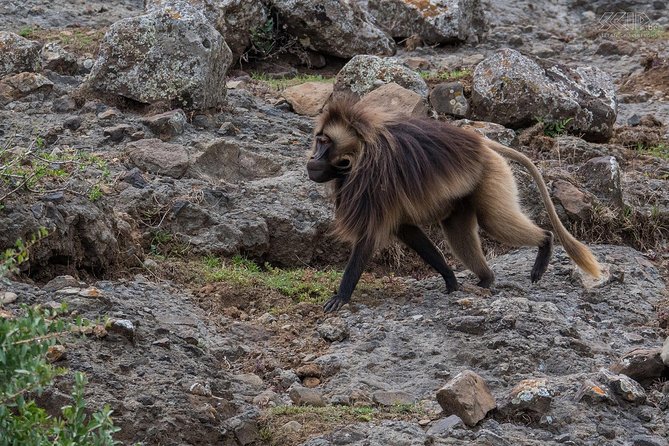
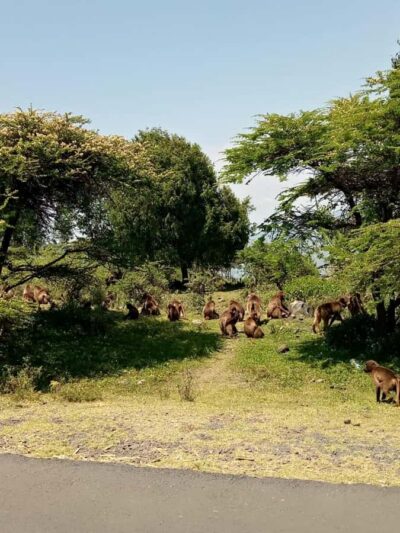
In addition, the plan mentions the chance to see one of Ethiopia’s endemic mammals. And across the day, there is also a general chance to see local wildlife like baboons and birds.
This part of the day is shorter, about 30 minutes, and admission is free at this stop. That short window means you should be ready to look quickly and follow your guide’s cues. If you are the type who wants to stand perfectly still for long periods, you can still do that, but keep an eye on timing and group flow.
A practical expectation
This is not a guarantee of seeing everything. Birds can be quiet, and animals can keep their distance. What you should expect is a guided attempt in a real birding zone, with your guide pointing out likely habitat and helping you scan efficiently.
If you enjoy birding, this is where the day earns its keep. If you do not, you can still enjoy the gorge context and wildlife possibility, but your main payoff will be the views and atmosphere rather than a long bird-watching session.
Lunch, Water, and Tea, a Real Reset Midday
Food is included, and I appreciate that it is set up to serve specific dietary needs. The lunch is described as Ethiopian fare for vegan and vegetarian options, plus bottled water and coffee and/or tea.
That matters on a day like this because you are out in the countryside for most of the day. Even if the sights are great, hunger and dehydration can ruin your enjoyment. The included water and tea help you reset without hunting for a restaurant on the fly.
One more small but useful detail: the tour includes all fees and taxes. That reduces the chance you will hit surprise costs at a stop when you are already tired.
I recommend treating lunch as your downshift moment. Eat, drink, and take 10 minutes to cool your head before you head into the bridge and gorge segments.
What to Pack and How to Move Comfortably
This is a moderate fitness day, so pack like you are doing a mix of walking and viewpoint climbing. Even without long hikes, monastery terraces and gorge country can be uneven.
Here’s what I would bring:
- Comfortable walking shoes with grip
- A light layer, since temperatures can shift away from Addis Ababa
- Sun protection (hat and sunscreen)
- A small day bag for water and a camera
- If you are serious about birds, consider binoculars (not provided in the inclusions listed)
Also, plan for weather. When rain has been falling, the Portuguese Bridge area can be more dramatic thanks to the cascade. When it has not, focus on the bridge form and river texture instead.
And one more practical mindset: keep your expectations flexible. You are not just checking boxes. You are traveling through a real area where wildlife moves on its own schedule.
Price Value: $117.95 for Transport, Tickets, and a Local Guide
At $117.95 per person, this is not a budget-only day trip. But you are also getting a lot folded in: guided visits to multiple sites, hotel pickup, air-conditioned vehicle transport, lunch, bottled water, coffee and/or tea, and included fees and taxes.
Admission is also included where indicated. The monastery stop includes admission ticket, and the Portuguese Bridge stop includes admission ticket. Even the structure of the timings suggests you are paying for guided access plus organized time at each site, not just a ride to one viewpoint.
So the value question comes down to you. If you want to maximize your time and reduce hassle, this price can feel fair. If you only care about one photo spot, it may feel expensive.
I also like the small group cap of 25 travelers. A larger bus day trip often turns into rushed sprints between stops. Here, the cap suggests you can still ask questions and get real guidance, especially during the monastery visit.
Who Should Book This Trip, and Who Might Want Another Option
Book this if you want a balanced mix of Ethiopia’s cultural and natural sides. The monastery portion suits people who like religion and local tradition, especially with the Saint Tekle Haymanot story and the Ichege role. The gorge and birding portion suits people who like wildlife watching, or at least enjoy the chance to see baboons and endemic species.
This trip also fits you if you prefer a guided structure. A day trip with named stops, set timing, and included lunch is great when you only have so many hours to spare in Addis Ababa.
You might want to choose differently if you need long, unstructured time in nature. The birding stop is only about 30 minutes, so it is more of a sample of the region than a full day of wildlife tracking.
And if you dislike walking on uneven ground, be cautious. The day is marked for moderate physical fitness, and monasteries on terraces are not always smooth.
Book It or Skip It? My Practical Recommendation
If your goal is to see Debre Libanos and then understand how that area connects to the Blue Nile River system, I think this is a strong choice. The itinerary is built around meaningful stops, and the included lunch plus guided time makes it feel like a complete outing rather than a string of interruptions.
I also recommend it for value on a short schedule. Starting at 9:00 am and covering multiple sites means you get a lot of Ethiopia in one day without spending your time figuring out transport and ticket logistics.
My main caution is simple: wildlife and bird sightings are chances, not promises. If you book with a flexible mindset, you will enjoy the experience for the monastery atmosphere, the Portuguese Bridge setting, and the guided look at gorge country.
FAQ
FAQ
What time does the day trip start?
The tour starts at 9:00 am.
How long is the experience?
It runs approximately 6 to 9 hours.
Is hotel pickup included?
Yes, pickup is offered.
Is lunch included, and is it available for vegan and vegetarian diets?
Yes. Lunch of Ethiopian fare is included, with vegan and vegetarian options.
What is included in the tour besides lunch?
The tour includes bottled water, coffee and/or tea, all fees and taxes, and an air-conditioned vehicle. A mobile ticket is also provided.
Are admission tickets included for the stops?
Admission ticket details are included for the monastery stop and the Portuguese Bridge stop, and the birding stop is listed as free admission.
What is the group size limit?
The tour has a maximum of 25 travelers.
What physical fitness level is recommended?
A moderate physical fitness level is recommended.
Are there chances to see wildlife?
Yes. The tour is designed for chances to see local wildlife, including birds and baboons. Birding in the Jemma Valley is also a key theme.
One Day, Out and Back
- Day Trip From Addis Ababa See Historical Monastery,Stunning Nature,Animals,Birds
★ 5.0 · 303 reviews - Day Trip From Addis Ababa To Debre Libanos & Portuguese Bridge
★ 4.5 · 64 reviews - Day trip Debre Libanos, Bule nile George &Portugal Bridge
★ 4.4 · 25 reviews - Day trip to Adadi Mariyam and Melka kunture
★ 4.5 · 20 reviews - Escape From Addis – Day Trip To Debre Libanos And The Portuguese Bridge
★ 5.0 · 16 reviews
The Rest of the Ethiopia List
- Full Day Tour of Addis Ababa with Hotel Pickup and Drop-off
★ 5.0 · 430 reviews - Taste of Ethiopia
★ 5.0 · 406 reviews - Day Trip From Addis Ababa See Historical Monastery,Stunning Nature,Animals,Birds
★ 5.0 · 303 reviews - Addis Ababa: Debre Libanos, Blue Nile Gorge, and Cave Tour
★ 4.5 · 256 reviews - Addis Ababa Guided City Tour With Airport & Hotel Pick Up
★ 5.0 · 237 reviews
Debre Libanos and the Portuguese Bridge
- Day Trip From Addis Ababa See Historical Monastery,Stunning Nature,Animals,Birds
★ 5.0 · 303 reviews - Addis Ababa: Debre Libanos, Blue Nile Gorge, and Cave Tour
★ 4.5 · 256 reviews - Day Trip From Addis Ababa To Debre Libanos & Portuguese Bridge
★ 4.5 · 64 reviews - Day trip Debre Libanos, Bule nile George &Portugal Bridge
★ 4.4 · 25 reviews - Debre Libanos Monastery and Jemma River Gorge – Day Tour from Addis Ababa
★ 5.0 · 20 reviews
Other Ethiopia tours we have written up
Debre Libanos & the Portuguese Bridge, compared.
 ★ 5.0Day Trip From Addis Ababa See Historical Monastery,Stunning Nature,Animals,BirdsFrom $90303 reviews
 ★ 4.5Debre Libanos, Blue Nile Gorge, and Cave TourFrom $94256 reviews
 ★ 4.5Day Trip From Addis Ababa To Debre Libanos & Portuguese BridgeFrom $10064 reviews
 ★ 4.4Day trip Debre Libanos, Bule nile George &Portugal BridgeFrom $9025 reviews
 ★ 5.0Debre Libanos Monastery and Jemma River Gorge – Day Tour from Addis AbabaFrom $27220 reviews
 ★ 5.0Day Trip To See Monastrys,Amazing landscapes & AnimalsFrom $12013 reviews
 ★ 4.5DAY TRIP TO Debre Libanos Monastery Cave Church Nature and WildlifeFrom $27512 reviews
 ★ 5.0Private Day Trip to Debre Libanos Portuguese Bridge Galada BaboonFrom $1999 reviews
Browse the lists this tour appears in